
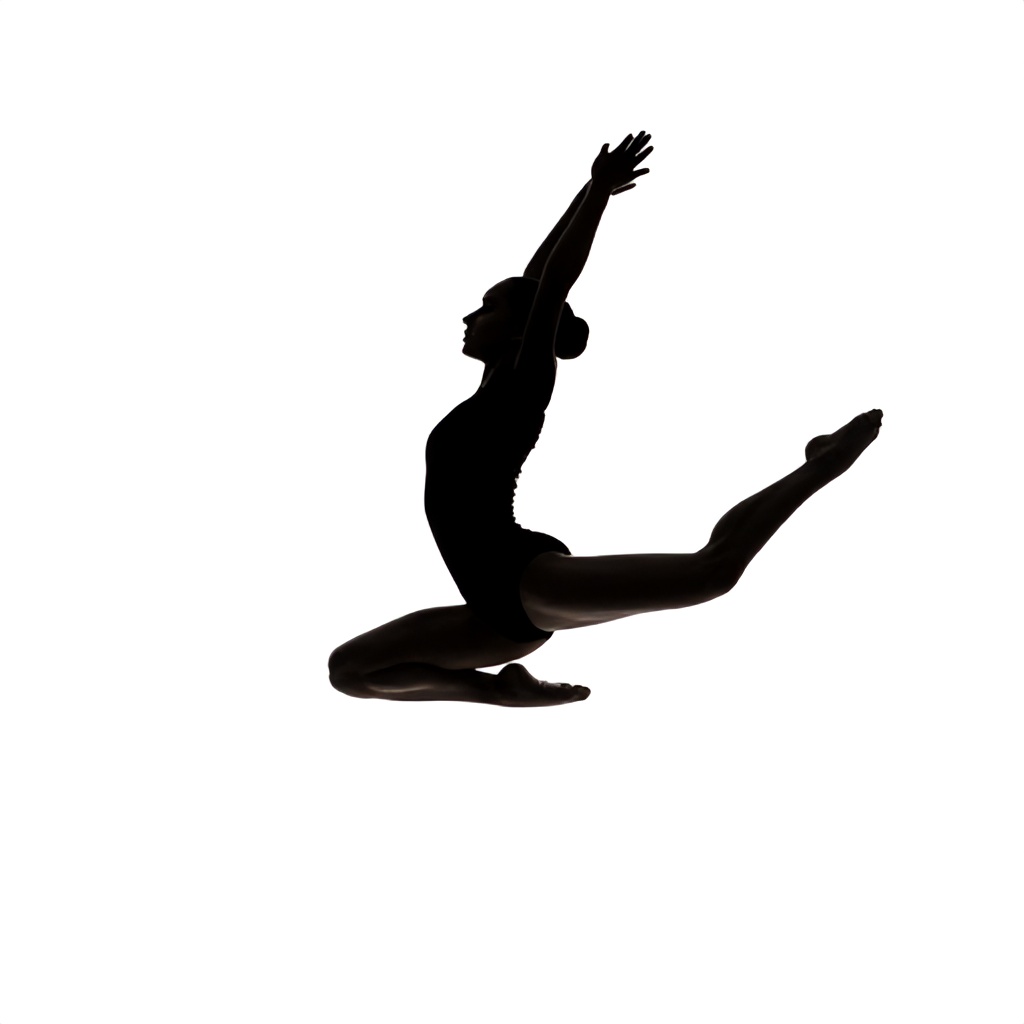
Silhouettes turn gymnastic flexibility into pure shape, stripping away distracting colors and textures to leave only the raw, elegant outline of the human form. By focusing entirely on high-contrast imagery, you emphasize the lines of a pose rather than the facial expression or the background environment. This style of photography relies on precise light placement and an understanding of body mechanics to communicate strength and grace through shadow alone.

Setting the Scene for Silhouette Art
The most important element for creating these images is a strong light source positioned directly behind your subject. You need a bright backdrop, such as an open window, a sunset sky, or a plain white wall illuminated by a powerful flash. When the background is significantly brighter than the foreground, the camera exposes for the highlights, effectively turning the athlete into a solid, dark shape.
Minimalist photography works best here. Clear the frame of unnecessary clutter. If you are shooting indoors, move furniture or props out of the way. If you are outside, choose a location with a clean horizon line or a soft, featureless sky. The goal is to ensure the viewer’s eye goes straight to the silhouette art without any visual noise competing for attention.
Technical Settings for High-Contrast Imagery
Manual mode is your best friend when capturing gymnastic artistry. You want to underexpose the subject intentionally to achieve that deep, rich black. Start by setting a fast shutter speed to freeze fluid movement. If you are shooting a jump or a leap, a speed of at least 1/1000th of a second is necessary to keep the limbs sharp.
- Set your ISO as low as possible, ideally 100 or 200, to keep the image clean and free of digital grain.
- Use a narrow aperture, such as f/8 or f/11, to ensure the entire body is in focus from head to toe.
- Spot meter on the brightest part of the background, not the subject.
Mastering Body Mechanics and Graceful Poses
Not every movement translates well into a silhouette. Because you are losing the internal details of the body, the pose must be distinct and readable. Focus on open shapes. If an arm is bent, ensure there is a clear gap between the limb and the torso. When limbs overlap the body, the silhouette loses its definition, turning a graceful pose into a confusing blob of shadow.
Think about the silhouette as a graphic icon. Profile views are typically the most effective for showcasing gymnastic flexibility. A side-on shot of a backbend or a split allows the viewer to trace the lines of the body clearly. Encourage the athlete to elongate their limbs and point their toes, as these small details define the dancer aesthetics that make the final image feel intentional and polished.
Directing for Expressive Movement
Communication is vital during the shoot. Since the athlete cannot see the monitor, describe the shape you want to see. Use terms like reach, extend, and lengthen. If the pose feels stiff, ask them to find a more fluid movement. Sometimes, the best shots happen between static poses, during the transition where the body is mid-stretch or mid-rotation.
- Ask the athlete to perform a slow, controlled movement rather than a sudden snap.
- Capture a burst of images as they move through the peak of their flexibility.
- Check the LCD screen frequently to ensure the limbs are not overlapping in a way that hides the form.
The Role of Ethereal Lighting
Lighting dictates the mood of your performance art. A harsh, bright sun creates a sharp, defined edge, which is perfect for showing off athletic strength. A softer, diffused light—like the glow of a cloudy day or a large softbox—creates a more ethereal lighting effect where the edges of the silhouette might fade slightly into the background. This softer approach adds a layer of mystery and elegance to the portrait.
Consider the angle of the light. If the light source is slightly to the side, you might catch a faint rim of light along the edge of the athlete. This rim lighting can help separate the subject from the background, adding depth to an otherwise flat image. It is a subtle technique that bridges the gap between a simple black shape and a detailed, artistic composition.
Editing for Impact
Post-processing is where you refine the visual storytelling. Even if you get the shot right in-camera, a little adjustment in software makes the difference between a good photo and a striking piece of art. Increase the contrast to ensure the blacks are truly black and the whites are bright and clean.
Use a brush tool to darken any areas of the subject that might have picked up stray light. If the athlete is wearing clothing that catches a reflection, paint over those spots with a black brush set to a high density. This ensures the form and shadow remain consistent throughout the entire frame. For a clean, modern look, convert the image to black and white, or keep it in color if the background provides a beautiful, subtle gradient.
Choosing the Right Angles for Athletic Strength
Perspective changes how the viewer perceives the athlete. Shooting from a low angle looking up makes the subject appear larger than life, emphasizing power and physical agility. This is a great choice for jumps or high-impact poses. On the other hand, shooting from eye level creates a more intimate, balanced, and serene atmosphere, which works well for slow, controlled stretches.
Pay attention to the negative space around the subject. A tiny silhouette in a vast, empty frame can feel lonely or contemplative. A large silhouette that fills most of the frame feels bold, energetic, and assertive. Balance and poise are not just about the athlete’s physical capabilities; they are about how you frame that body within the boundaries of your digital canvas.
Common Pitfalls to Avoid
One of the biggest mistakes in silhouette photography is cluttered clothing. Baggy shirts or loose hair can ruin a clean outline. Encourage the athlete to wear form-fitting gear, like leotards or leggings, to highlight the lines of the body. If the hair is long, suggest a tight bun or a sleek ponytail to maintain a sharp, recognizable profile.
Another issue is the background light source being too dim. If the background isn’t bright enough, the camera will try to expose for the subject, resulting in a muddy, grey image rather than a crisp black silhouette. Always test your lighting before the athlete begins their routine. If the subject is still visible in the shadows, the background needs to be brighter or the subject needs to be moved further away from the light source.
Final Touches for Aesthetic Framing
Think about the composition as a whole. Does the silhouette lead the eye through the frame? Is there a sense of balance between the subject and the negative space? Sometimes, rotating the image slightly or cropping it into a square can improve the overall aesthetic framing. Trust your eye when it comes to the final placement of the subject.
The beauty of this genre lies in its simplicity. By removing the distraction of color, you force the audience to appreciate the dedication and training required for such physical agility. Every point of a toe and extension of an arm becomes a statement. Keep the process simple, focus on the light, and allow the natural grace of the athlete to carry the weight of the image.