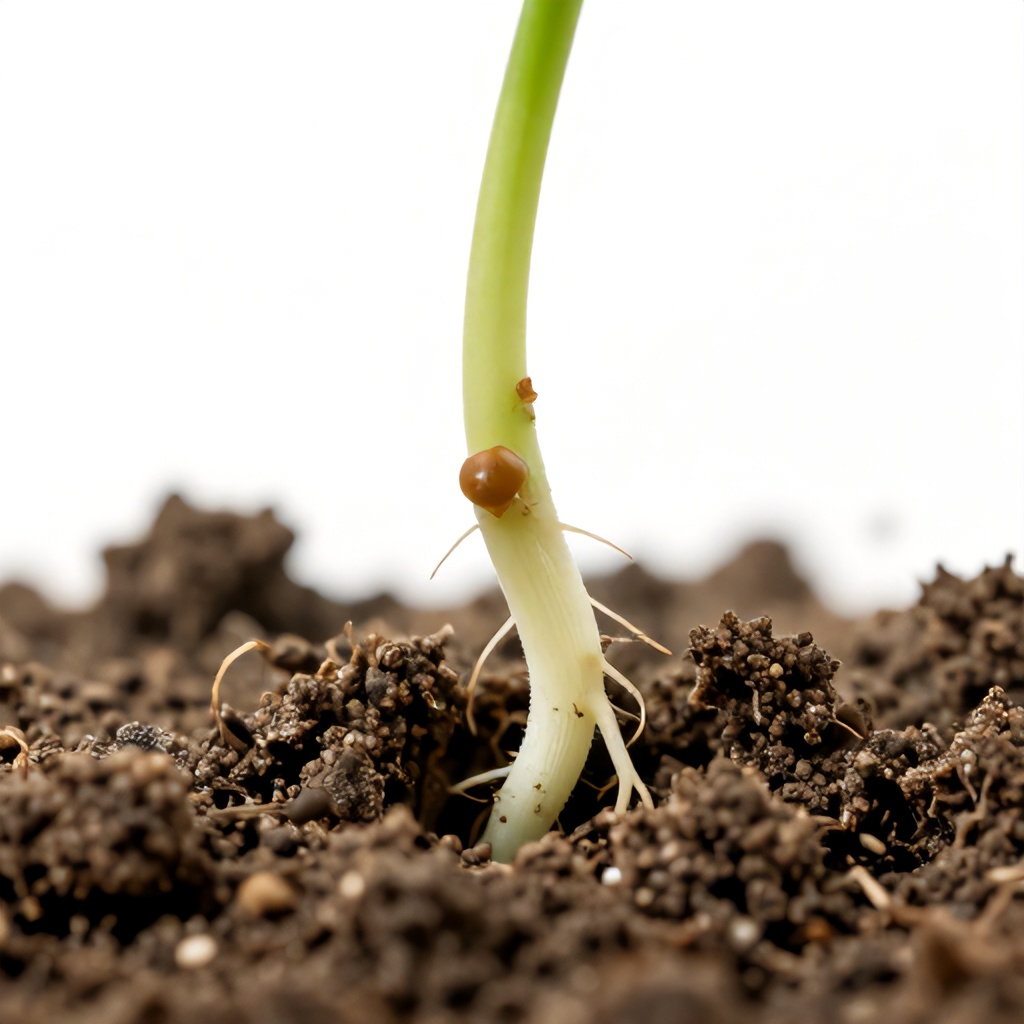
Peering closely at the world beneath our feet reveals an astonishing hidden drama: the intricate push and pull between a young root stretching into its environment and the complex textures of the soil around it. This microscopic study of sprouting roots and organic surface indentations shows us how plants first anchor themselves and seek sustenance, a process far more sophisticated than simply pushing through dirt.
Seeing the Unseen: The Power of Micro-Observation
Our naked eyes only scratch the surface of plant life. To truly appreciate the initial stages of a plant’s journey, we need to zoom in, way in. This is where a microscopic study becomes indispensable, transforming blurry details into sharp, observable features. It’s like gaining a superpower, allowing us to witness the delicate structures and interactions that dictate plant survival.
Why High-Magnification Matters
High-magnification imaging unveils the subtle mechanics of root growth. Without it, we would miss the tiny root hairs that absorb water, the protective root cap, and the precise ways a plant’s first root, the radicle, navigates its immediate surroundings. These minute details are absolutely critical for understanding early plant development. Observing them up close provides tangible evidence of biological processes that are otherwise invisible, offering a deeper appreciation for the resilience of even the smallest sprout.
Tools for Micro-Observation
A simple magnifying glass can offer a glimpse, but for true micro-observation, a microscope is essential. Compound microscopes are workhorses for viewing thin slices of plant tissue or individual cells. For examining surface features and the overall architecture of a sprouting seed and its substrate, a stereomicroscope (or dissecting microscope) is incredibly useful. Advanced techniques like scanning electron microscopy (SEM) provide stunning, three-dimensional images of the biological surface, revealing textures and interactions at an even finer scale. These tools allow us to conduct a detailed observational study, capturing the dynamic relationship between plant and environment.
The Miracle of Sprouting Roots
Germination is a remarkable event, a burst of life from a dormant seed. Once conditions are right – enough water, warmth, and oxygen – the seed awakens. This process culminates in the emergence of the radicle, the plant’s embryonic root, marking the official start of its independent life. It’s a moment of profound transformation, setting the stage for all future plant development.
Germination and Radicle Emergence
The first sign of life from a germinating seed is often the radicle, pushing its way out. This tiny rootlet is surprisingly strong, capable of exerting considerable force to break through the seed coat and then into the surrounding material. Under high-magnification, you can observe the tip of the radicle, often blunt and robust, as it first appears. This initial push is vital for anchoring the seedling and beginning its quest for water and nutrients. The speed and direction of radicle emergence are influenced by both the seed’s internal programming and the physical properties of its immediate environment, including the organic texture of the soil.
Root Cap and Root Hairs: Tiny Titans
At the very tip of every growing root is a protective layer of cells called the root cap. This cap shields the delicate meristematic tissue – the region of active cell division – from damage as the root pushes through the soil. Cells are constantly sloughed off and replaced, lubricating the root’s passage. Just behind the root cap, you’ll find root hairs, which are tiny, single-celled extensions that dramatically increase the root’s surface area. These microscopic hairs are the primary sites for water and nutrient absorption, reaching into the smallest crevices of the substrate. Their presence is a clear indicator of a healthy, actively growing root, a crucial aspect of overall plant development.
The Mechanics of Root Growth
Root growth isn’t just about pushing forward; it’s a complex interplay of cell division, elongation, and differentiation. Cells produced by the meristematic tissue behind the root cap rapidly elongate, effectively pushing the root tip deeper into the substrate. This elongation is what creates the force needed to penetrate soil. Meanwhile, cells further back begin to specialize, forming the vascular tissues that transport water and nutrients, and the outer layers that protect the root. This continuous process of growth and specialization is fundamental to the plant’s ability to establish itself and thrive, all driven by microscopic cellular actions.
Organic Surfaces: A World of Texture and Indentations
The environment a sprouting root encounters is rarely smooth or uniform. Instead, it’s a diverse landscape of organic texture, mineral particles, and biological material. These surfaces are full of microscopic features, including countless organic indentations, that play a significant role in how roots interact with their surroundings. Understanding these features is key to comprehending the challenges and opportunities for a young plant.
What are Organic Indentations?
Organic indentations are the naturally occurring dips, grooves, pores, and cavities found on the surface of biological materials and the soil itself. These can range from the microscopic pits on a decaying leaf to the spaces between soil aggregates or the pores within a piece of wood. They are not random imperfections but often the result of biological processes, decomposition, or the physical packing of materials. These natural cavities provide micro-habitats and pathways that roots can exploit, making them a vital part of the root’s early life.
Examples in Nature
Consider a seed germinating on a piece of decaying wood or within a clump of soil. The wood surface, under high-magnification, reveals a network of former xylem vessels, ray cells, and pits – all forming organic indentations. In soil, roots encounter aggregates of mineral particles bound together by organic matter, creating a porous, earthy texture. Between these aggregates are larger spaces, and on their surfaces are smaller circular depressions or irregular grooves. Even a fallen leaf, as it breaks down, develops a complex biological surface with myriad openings and textures. Each of these varied surface features offers a unique challenge or opportunity for the exploring root.
The Biological Surface: A Root’s First Frontier
The biological surface is the immediate interface between the root and its environment. It’s a dynamic zone where chemical signals are exchanged, and physical forces are exerted. The root cap and root hairs are constantly exploring this surface, sensing its contours and chemical composition. A hydrated surface, for instance, allows for easier passage and better nutrient diffusion. The presence of beneficial microbes on this surface can also influence root growth, highlighting the complex biological interactions happening at this microscopic scale. This initial interaction dictates the root’s path and its ability to access essential resources.
The Dance Between Root and Surface
The interaction between a sprouting root and its substrate is a dynamic and intimate dance, a finely tuned process of exploration, adhesion, and penetration. It’s not just about brute force; it involves sophisticated chemical communication and precise physical maneuvering. This complex relationship is fundamental to the plant’s ability to establish itself and thrive in its chosen environment.
How Roots Interact with the Substrate
When a radicle emerges, it doesn’t just blindly push forward. It “feels” its way, responding to gradients of moisture, nutrients, and even gravity. The root tip secretes mucilage, a slimy substance that lubricates its passage and helps it adhere to soil particles, preventing it from being washed away. This allows the rootlets to gain purchase, stabilizing the young seedling. This constant sensing and adapting to the organic texture of the substrate is a marvel of botanical study, ensuring the root follows the path of least resistance or greatest reward.
Physical Penetration and Chemical Signaling
Roots employ a combination of physical force and chemical signaling to penetrate the substrate. The elongating cells behind the root cap generate the force, while the root cap protects the tip. Simultaneously, roots release organic acids and enzymes that can modify the surrounding soil, making it easier to penetrate and releasing bound nutrients. This chemical communication also helps roots respond to obstacles, sometimes growing around them or, if possible, through them. This intricate balance between physical push and chemical persuasion is a prime example of biological material adapting to its environment.
Hydrated Surface Conditions and Their Impact
Water is life, and for a sprouting root, a hydrated surface is absolutely critical. Water softens the soil, making physical penetration easier. It also acts as a medium for the diffusion of nutrients, allowing root hairs to absorb them efficiently. In dry conditions, the soil becomes harder, and nutrient uptake is severely hampered, stressing the young seedling. The presence of a consistent, moist environment around the biological surface is therefore paramount for successful root growth and the establishment of the plant. This highlights why proper watering is so vital during germination and early plant development.
Rootlets Finding Purchase in Earthy Texture
The varied earthy texture of soil, with its organic indentations and mineral grains, provides numerous points of anchorage for developing rootlets. These tiny secondary roots branch off from the main radicle, exploring the micro-landscape of the soil. They exploit circular depressions and natural cavities, wrapping around particles to stabilize the plant and increase its surface area for absorption. Each rootlet acts as an independent explorer, seeking out pockets of moisture and nutrients, effectively colonizing its immediate environment. This intricate network of rootlets is a testament to the plant’s adaptive strategies.
Biological Openings and Nutrient Uptake
Beyond simply providing anchorage, the organic indentations and biological openings within the substrate are crucial for nutrient uptake. These spaces allow water and dissolved minerals to collect, making them accessible to the root hairs. Roots actively seek out these areas, growing towards nutrient-rich pockets. The porous nature of healthy soil, full of these micro-channels and natural cavities, is therefore essential for efficient nutrient acquisition. Without these biological openings, the root’s ability to absorb vital elements would be severely limited, impacting the plant’s overall health and growth.
Why This Microscopic Study Matters
Understanding the minute details of root establishment isn’t just for scientists; it has real-world implications for anyone interested in gardening, agriculture, or environmental health. This botanical study provides fundamental insights into plant resilience and resource acquisition, offering practical knowledge that can improve our interactions with the natural world.
Understanding Plant Development for Better Outcomes
By observing the microscopic processes of germination and root growth, we gain a clearer picture of what conditions a young plant truly needs to thrive. Knowing how root caps protect, how root hairs absorb, and how roots interact with different soil textures can inform better planting techniques, soil preparation, and watering schedules. This knowledge helps us create optimal environments for plant development, leading to healthier crops and more vibrant gardens. It moves us beyond guesswork to evidence-aware practices.
Environmental Insights
This microscopic study also offers valuable environmental insights. It helps us understand how plants colonize new areas, how they contribute to soil stability, and how they respond to different soil compositions, including those affected by pollution or degradation. By studying root interactions with various organic indentations and biological materials, we can develop better strategies for ecological restoration, erosion control, and sustainable land management. It underscores the critical role of healthy soil structure for all terrestrial ecosystems.
Scientific Imaging and Its Contributions to Botanical Study
Advances in scientific imaging, from high-resolution microscopy to advanced computer analysis, have revolutionized botanical study. These tools allow researchers to capture incredibly detailed images of sprouting roots and their interactions with the substrate, often in real-time. This visual data provides irrefutable evidence for theories of plant physiology and ecology, opening new avenues for research into plant stress responses, nutrient cycling, and even genetic engineering. The ability to visualize these microscopic processes is a cornerstone of modern plant science, continually expanding our understanding of biological material.
How You Can Observe (Safely and Simply)
You don’t need a university lab to appreciate the wonders of microscopic root growth. With a few simple tools and a bit of patience, you can conduct your own micro-observation and gain a deeper appreciation for the plant world around you. This hands-on experience is a fantastic way to connect with nature.
Simple Home Setups
Start with a good quality magnifying glass (10x or 20x magnification is usually sufficient) or an inexpensive USB microscope that connects to your computer. Place seeds (beans, lentils, or radish seeds are good choices) on a damp paper towel in a clear plastic bag or shallow dish. Keep them moist and warm. As they sprout, you can carefully observe the radicle emergence and early root growth. For observing the interaction with substrate, try germinating seeds directly on a thin layer of soil in a clear container, pressing the seed against the side for easy viewing. This allows you to see the rootlets exploring the earthy texture.
What to Look For in an Organic Specimen
As you observe your sprouting seeds, look for the emergence of the radicle. Notice its color, shape, and how it pushes through the seed coat. Pay attention to the development of root hairs – they look like a fuzzy halo around the main root. If you’re observing in soil, try to spot how the root tip interacts with individual soil particles or organic indentations. Can you see it changing direction? Is it growing into natural cavities? Look for evidence of a hydrated surface, where water droplets might cling to the root or soil. These simple observations provide direct evidence of the concepts discussed in this microscopic study.