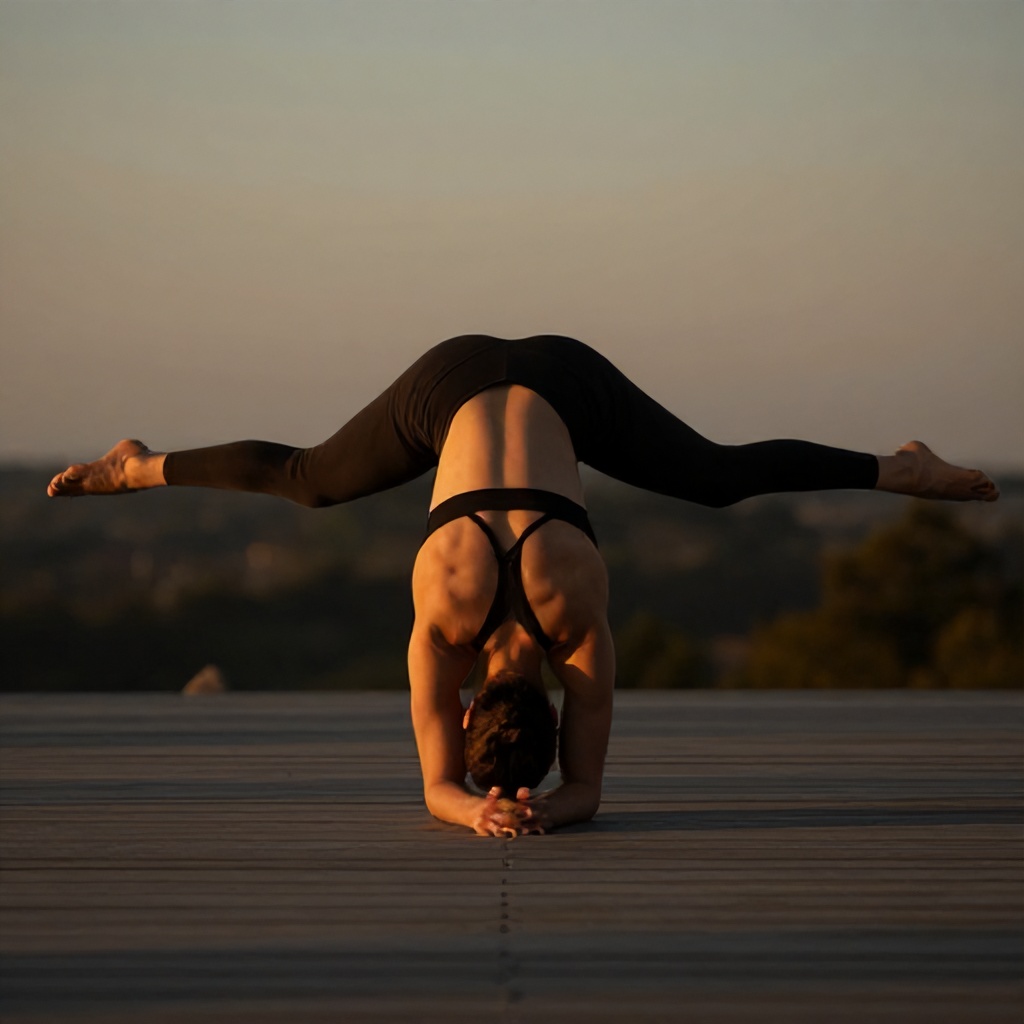
Mastering the Forearm Stand Backbend
Achieving a deep backbend within Pincha Mayurasana requires a precise blend of shoulder girdle strength, spinal flexibility, and core stability. This advanced yoga asana pushes the boundaries of traditional inversion practice by asking the body to maintain balance while the thoracic spine moves into significant extension. Most practitioners find that the challenge lies not just in the strength of the arms, but in the ability to distribute the arch evenly across the entire length of the spine rather than collapsing into the lower back.

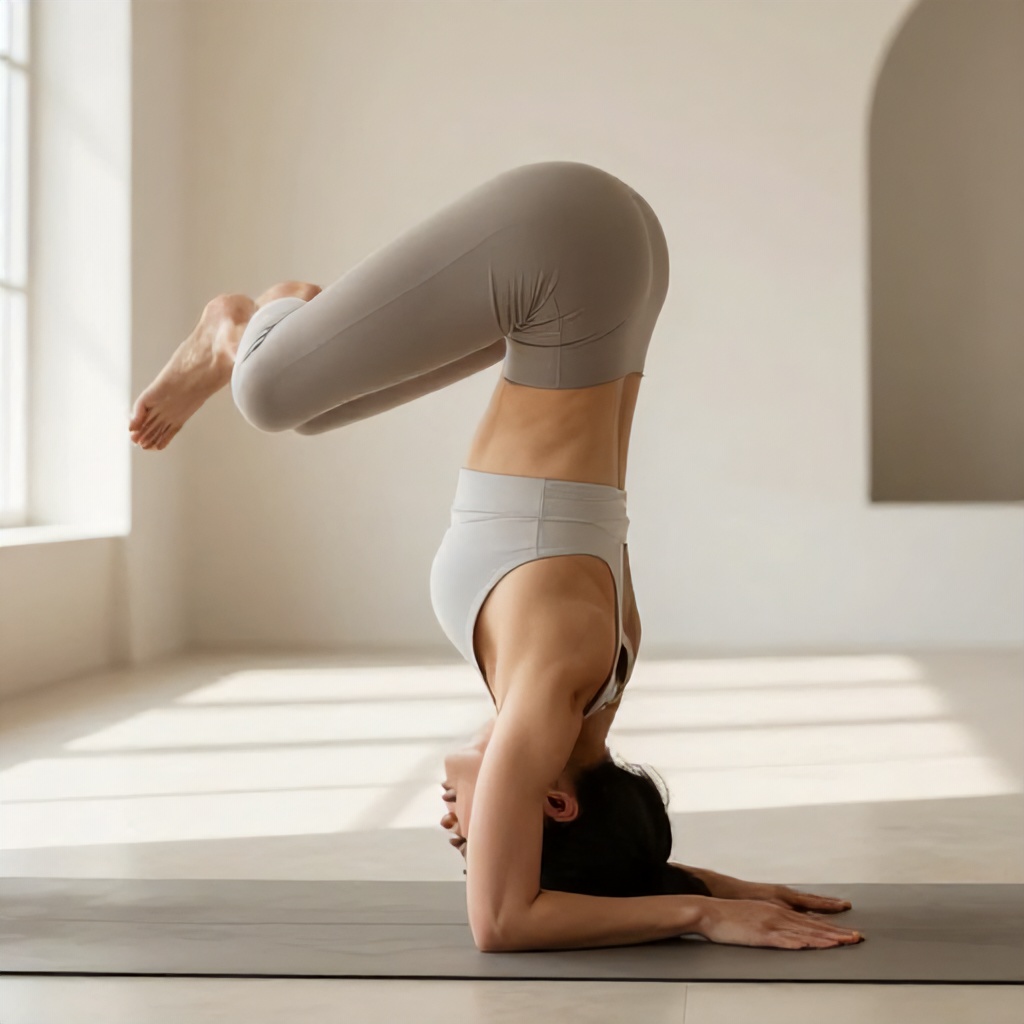
Before attempting this movement artistry, ensure your foundational forearm stand is rock solid. You need to hold a straight-line inversion for at least sixty seconds consistently. If you struggle with balance in a standard vertical position, adding a backbend will likely lead to falling out of the pose or straining the lumbar region. Safety remains the priority in any advanced yoga discipline.
Anatomical Alignment for Deep Extension
Proper body alignment serves as the architecture for your inversion. When you kick up into your forearm stand, the elbows should be shoulder-width apart, with the forearms pressing firmly into the mat. Think of creating a solid base that acts like a tripod. If your elbows splay outward, you lose the structural integrity needed to support the weight of your legs as they move toward the floor.
The shoulder girdle strength required here is immense. You must actively push the floor away, engaging the serratus anterior muscles to keep the shoulder blades stable. If the shoulders collapse, the neck takes on unnecessary pressure, which can lead to injury. Keep your gaze focused on a single point between your hands to maintain physical poise and mental clarity.
Engaging the Core for Spinal Protection
Core stability acts as the anchor for your spinal flexibility. Many people assume that a backbend is purely about loosening the back muscles, but the opposite is true. You need a strong, active core to protect the vertebrae. By drawing the lower ribs in and engaging the transverse abdominis, you create a supportive corset around your spine.
When you begin to move your feet toward your head, focus on lengthening the tailbone toward the heels. This creates space in the lumbar spine. Without this lengthening, the compression in the lower back becomes dangerous. Think of the movement as an expansion rather than a crunch. You are reaching through your toes while simultaneously grounding through your elbows.
Step-by-Step Progression for the Backbend
Progressing into this pose takes time, patience, and consistent movement artistry. Do not rush the process. Start by practicing against a wall to build confidence and muscle memory. The wall provides a safety net, allowing you to explore the limits of your range of motion without the fear of falling.
- Begin in a standard forearm stand with your heels resting lightly against a wall.
- Walk your feet down the wall just a few inches, keeping your core engaged and your shoulders active.
- Focus on lifting your chest away from the floor, creating a gentle curve in the upper back.
- Breathe deeply into the ribcage, allowing the lungs to expand against the resistance of the pose.
- Return to the vertical position slowly, using your abdominal muscles to pull your legs back over your hips.
As you gain comfort with this, you can move away from the wall. The transition from a straight line to a deep backbend requires significant body control. Start by bending one knee, then the other, allowing the weight of the legs to pull the spine into a natural arc. Keep the glutes engaged to support the pelvis, but avoid clenching them so tightly that they restrict movement.
Developing Shoulder Girdle Strength
The shoulders are the foundation of your inversion therapy. If your shoulders are tight, your backbend will be limited. Incorporate daily stretches that target the pectorals and the lats. Open shoulders allow for a greater range of motion in the thoracic spine, which is the area that should be doing the majority of the bending.
Try using yoga blocks to assist your training. Place the blocks under your hands in a forearm stand to elevate the chest slightly. This extra height provides more room for the head and neck, reducing the intensity of the stretch while you build the necessary strength. Consistent practice of these drills will improve your athletic yoga performance over time.
Common Mistakes to Avoid
Avoiding common errors is essential for long-term progress. One frequent mistake is allowing the head to hang loosely. Keep the neck in a neutral position, aligned with the rest of the spine. Looking too far back too soon can strain the cervical vertebrae. Only drop the head back when you have achieved a significant arch in the upper back.
Another issue is the collapse of the lumbar spine. This usually happens when the practitioner lacks the necessary flexibility in the thoracic region and tries to compensate by bending the lower back. If you feel a pinching sensation in your lower back, stop immediately. Back off the pose and focus on thoracic mobility exercises, such as cat-cow stretches or puppy pose, before trying the inversion again.
- Do not hold your breath. Deep, rhythmic breathing helps regulate the nervous system and keeps the muscles oxygenated.
- Do not practice on a surface that is too soft. A firm yoga mat provides the stability needed for balance training.
- Do not force the pose. If your body feels tight or resistant, listen to those signals.
- Do not neglect your warm-up. Spend at least fifteen minutes preparing the spine and shoulders before attempting advanced inversions.
The Role of Flexibility Training
Flexibility training is not just about stretching; it is about conditioning the nervous system to feel safe in extreme ranges of motion. When you move into a deep backbend, your body may trigger a protective reflex that causes muscles to tighten. By practicing consistently, you teach your brain that these positions are safe, allowing the muscles to relax and lengthen.
Incorporate dynamic stretching into your routine. Instead of just holding static poses, move through them. For example, transition from a bridge pose into a wheel pose, then back down. This movement helps the body understand how to engage and release muscles in sequence. This is the essence of yoga technique—fluidity combined with precision.
Refining Your Yoga Form
Aesthetic yoga photography often highlights the beauty of the pose, but the internal experience is what matters most. Focus on the internal sensations. Where do you feel the stretch? Is it in the chest, the shoulders, or the abdomen? By paying attention to these details, you can adjust your alignment to make the pose more sustainable and effective.
Consider recording your practice. Watching yourself on video can reveal alignment issues that you might not feel. You might notice that your hips are shifting to one side or that your elbows are drifting apart. Use this information to refine your yoga form. Small adjustments often lead to the biggest breakthroughs in advanced yoga.
Integrating Balance Training
Balance training is a critical component of any inversion practice. When you are upside down, your sense of equilibrium is challenged. You must rely on proprioception—the body’s ability to sense its position in space. To improve this, practice balancing on one leg in standing poses like tree pose or warrior three. These poses build the same neural pathways needed for inversions.
When you are in the forearm stand, focus on the contact points between your forearms and the mat. Imagine rooting down through the elbows to create a stable foundation. If you feel yourself tipping, use your fingers to grip the mat, acting like claws. This small adjustment can provide the extra stability needed to hold the pose for longer durations.
Building Endurance in the Pose
Endurance comes from repetition and steady progress. Do not expect to hold a deep backbend for minutes on end during your first few attempts. Start with five-second holds and gradually increase the time as your muscles adapt. The goal is to maintain a steady, controlled breath throughout the entire duration of the hold.
If you find that your muscles start to shake, this is a sign of fatigue. It is better to come out of the pose with control than to collapse. Controlled exits are just as important as the entry. Use your core to bring your legs back to center before lowering them to the floor. This prevents sudden drops that can cause injury.
Mental Focus and Discipline
The mental aspect of yoga discipline is just as important as the physical. Advanced poses require a high level of concentration. When you are upside down, distractions can easily lead to a loss of balance. Create a quiet, focused environment for your practice. Turn off your phone and minimize external noise.
Before you begin, set an intention for your practice. This could be as simple as focusing on your breath or maintaining a specific alignment cue. Having a clear focus helps keep the mind steady. When the mind is calm, the body follows. This connection is the foundation of all successful yoga practice.
Safety Considerations for Inversion Therapy
Inversion therapy can be beneficial for spinal health, but it is not for everyone. If you have high blood pressure, glaucoma, or any history of neck or back injuries, consult with a medical professional before attempting these poses. Your health is the most important factor in your yoga journey.
Always listen to your body. Pain is a clear signal to stop. Discomfort, such as the feeling of a muscle stretching, is normal, but sharp or shooting pain is not. If you experience any pain, back off immediately and rest. There is no prize for forcing a pose, and the risk of injury is not worth the temporary satisfaction of achieving a shape.
Consistency and Long-Term Progress
The path to mastering the forearm stand backbend is a marathon, not a sprint. It takes months, sometimes years, of consistent practice to build the necessary strength and flexibility. Celebrate the small wins along the way. Maybe today you held the pose for two seconds longer than yesterday. Maybe today your shoulders felt a little more open.
Keep a journal of your practice. Note what worked and what didn’t. Tracking your progress can be incredibly motivating. It allows you to see how far you have come and provides a roadmap for where you want to go. Remember that every session is a chance to learn and grow.
As you continue your practice, you will find that the benefits extend far beyond the mat. The strength and flexibility you build will translate into better posture, reduced tension, and a greater sense of body awareness in your daily life. This is the true power of yoga—it empowers you to move through the world with more ease and confidence.
Stay committed to the process. Focus on the quality of your movement rather than the quantity of your poses. By prioritizing safety, alignment, and mindful practice, you will eventually achieve the deep backbend you are working toward. Keep showing up, keep breathing, and keep exploring the possibilities of your own body.
Final Thoughts on Advanced Yoga Practice
Advanced yoga is a personal journey of discovery. It is about understanding your own limits and gently pushing them, always with respect and care. The forearm stand backbend is a beautiful expression of this journey, combining strength, grace, and flexibility in a single, powerful pose.
Whether you are a seasoned practitioner or someone looking to take their practice to the next level, remember that the most important part of yoga is the practice itself. The pose is just a tool to help you connect with your body and mind. Enjoy the process, stay patient, and trust that with time and dedication, you will achieve your goals.
Continue to explore different variations and modifications. Every body is different, and what works for one person may not work for another. Be willing to experiment and find what feels best for you. Your yoga practice should be a source of joy and vitality, not a source of stress or frustration. Keep it light, keep it fun, and keep practicing.