Best Cardio Workout for Fat Loss Using High Intensity Interval Training

Crush Fat with HIIT: Your Guide to High Intensity Interval Training

High Intensity Interval Training (HIIT) is your secret weapon for a seriously effective aerobic workout that torches body fat. Forget endless hours on the treadmill at a moderate pace; HIIT is about short bursts of intense effort followed by brief recovery. This isn’t just about burning calories during your workout; it’s about igniting your metabolism and tapping into your body’s natural fat-burning power.

Why HIIT Works for Fat Loss

The magic behind High Intensity Interval Training lies in its ability to trigger a powerful hormonal response. When you push your body to its limits during those intense intervals, you encourage the release of Human Growth Hormone (HGH). HGH is a natural hormone produced by your body, and while its levels naturally decrease as we age, HIIT can help give them a significant boost.

This surge in HGH, combined with an elevated metabolism that lasts for hours after your workout, is a double whammy for fat loss. As you get older, a natural decline in HGH and a slower metabolism can contribute to fat gain. HIIT directly combats these factors, making it a highly efficient strategy for shedding unwanted body fat.

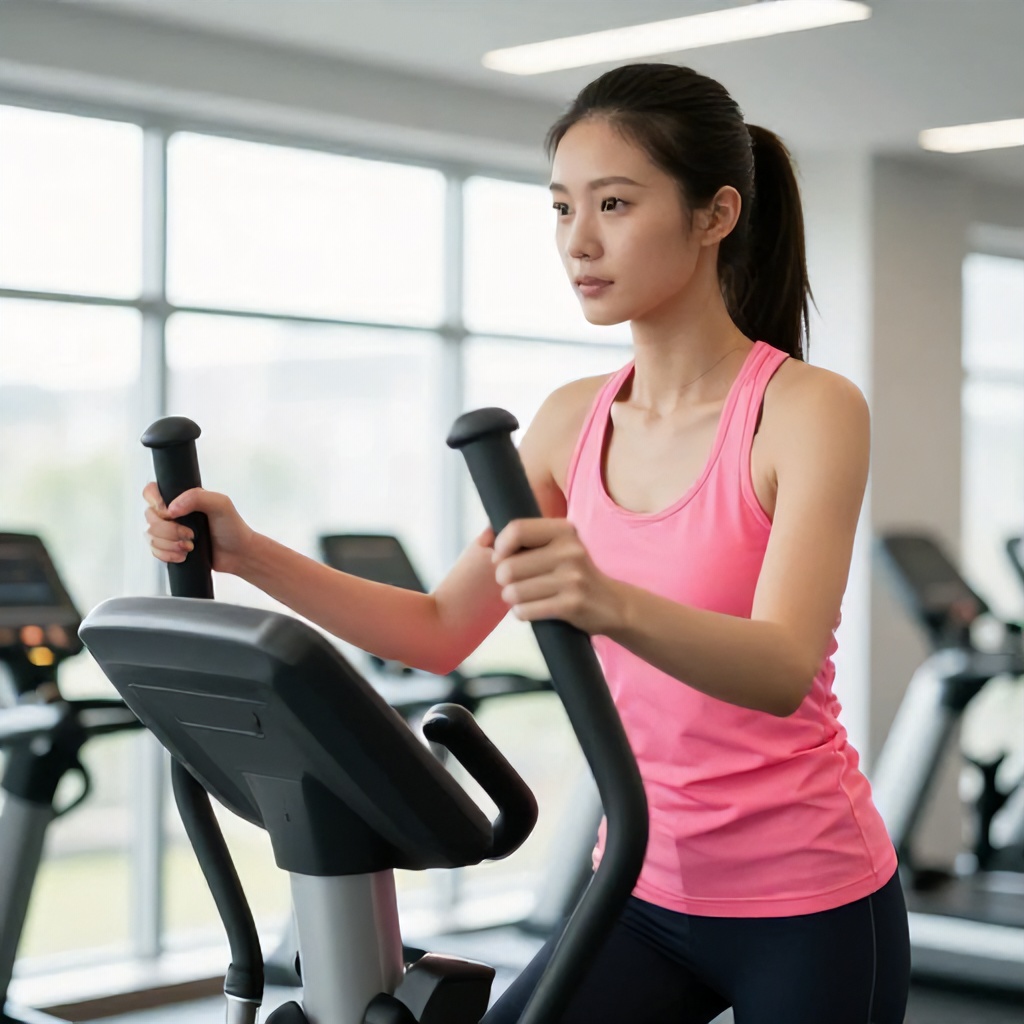
Your First HIIT Treadmill Workout Routine

Ready to put this into action? Here’s a specific High Intensity Interval Training workout program designed to get your HGH levels soaring and your metabolism humming. This routine can be adapted for home fitness, even with no fitness equipment, but we’ll start with a treadmill example.

  1. Begin with a 5-minute warm-up on the treadmill at a moderate pace. Aim for a speed between 3.5 and 4.0 on most standard treadmills. This gets your body ready for the intensity to come.
  2. After your warm-up, increase the treadmill speed to a jogging pace for one minute. Start around 7.0 or 8.0 and see how that feels.
  3. Immediately slow back down to your established moderate pace for one minute. This is your active rest period.
  4. Now, pick up the pace again to your previous jogging speed, but add 0.5 to the speed. So, if you jogged at 7.0 before, aim for 7.5 this time.
  5. Again, return to your moderate pace for a one-minute active rest.
  6. Continue alternating every minute between jogging and walking for 20-30 minutes. Keep your walking speed consistent, but aim to increase your jogging speed by 0.5 each interval. The goal is to push yourself to jog as fast as you can maintain for that one minute.

You’ll notice that the first few intervals feel manageable. As you progress, things will get challenging. This is exactly what you want! Your body is being pushed beyond its usual aerobic threshold, signaling it to adapt and burn more fat.

As your fitness improves, you’ll eventually be able to push into a full sprint during those high-intensity bursts. This level of intensity is where the real fat-burning transformation happens. Your body will adapt by shedding stubborn body fat.

Maximizing Your Fat Burning Potential

To truly blast every last bit of body fat, consider incorporating a 10-20 minute session of steady state cardio after your HIIT intervals. This is a fantastic way to obliterate any remaining stubborn body fat.

Pro Tip for Maximum Fat Burning

Working above your aerobic threshold for those intense one-minute intervals, followed by short active rest periods, is key to triggering that HGH release. Studies suggest that training on an empty stomach can enhance HGH production. It’s also recommended to avoid eating immediately after your workout to maximize these effects.

This leads to a crucial dietary consideration for those seeking the absolute maximum effects from their HIIT sessions.

Important Dietary Timing for HIIT

To really tap into the HGH release and fat-burning benefits of HIIT, it’s advised to avoid consuming any calories for 3-4 hours before your workout and for at least one hour after training. This fasting window helps optimize your body’s hormonal response.

You might hear some people in the fitness world talk about an “HGH flush.” This is a potential indicator that your body is responding to the training stimulus and releasing HGH.
Beyond the Treadmill: HIIT Anywhere

The beauty of HIIT is its versatility. You don’t need fancy equipment to get a killer workout. Many HIIT exercises can be done as a home workout or as part of your home fitness routine. Think jumping jacks, burpees, high knees, mountain climbers, and squat jumps.

For example, a bodyweight HIIT routine could look like this: 30 seconds of maximum effort burpees, followed by 30 seconds of rest. Then, 30 seconds of high knees at top speed, followed by 30 seconds of rest. Repeat this circuit for 15-20 minutes. The principle remains the same: push hard, recover briefly, and repeat.

The goal is always to work at an intensity that makes it difficult to hold a conversation during the work interval. This ensures you’re truly pushing your limits and reaping the full benefits of High Intensity Interval Training for fat loss.

Understanding Your Limits and Progression

It’s important to listen to your body. As you get fitter, you’ll find that what was once a challenging sprint becomes more manageable. This is a sign of progress! Keep pushing yourself to increase the intensity, duration of the work intervals, or decrease the rest periods.

For those who are new to exercise or have been inactive for a while, starting with shorter work intervals and longer rest periods is perfectly fine. Gradually increase the intensity and duration as your fitness improves. The key is consistency and progressively challenging yourself.

This type of aerobic workout program is incredibly effective. I’m convinced that this approach to High Intensity Interval Training will burn fat for virtually everyone who sticks with it. It’s a powerful tool in your arsenal against fat gain and a fantastic way to improve your overall cardiovascular health.

Frequently Asked Questions about HIIT for Fat Loss

What is the difference between HIIT and steady state cardio?

Steady state cardio involves maintaining a consistent, moderate intensity for an extended period, like jogging at a steady pace. HIIT, on the other hand, alternates between very high-intensity bursts and short recovery periods. HIIT is generally more time-efficient for fat burning and triggers a greater hormonal response.

Can I do HIIT every day?

It’s generally not recommended to do intense HIIT workouts every single day. Your body needs time to recover and repair. Aim for 2-4 HIIT sessions per week, allowing at least one rest day in between, or incorporating lower-intensity workouts on other days.

How long should a HIIT workout be?

HIIT workouts are typically shorter than traditional cardio sessions, often ranging from 10 to 30 minutes. The intensity is so high that longer durations are usually not sustainable or necessary for achieving results.

What if I can’t sprint?

If sprinting isn’t feasible due to your current fitness level or any physical limitations, you can substitute it with other high-intensity movements like fast cycling, burpees, jumping jacks, or high knees. The key is to push yourself to your maximum effort during the work intervals.
Start Strength Training for Weight Loss at Home Without Gym Equipment

Start Strength Training for Weight Loss at Home, No Gym Needed

You can absolutely build strength and lose weight without ever stepping foot in a gym. Forget the fancy machines and intimidating weights; your own body is a powerful tool, and with a few smart strategies, you can create a super effective home workout routine that melts fat and sculpts muscle.

This isn’t about quick fixes or fad diets. It’s about building sustainable habits that make you feel strong, energized, and confident. Strength training, in particular, is a game-changer for weight loss because it revs up your metabolism, helping you burn more calories even when you’re resting. Plus, the more muscle you have, the more efficient your body becomes at burning fat.

Why Strength Training is Your Weight Loss Ally

Think of muscle as your body’s internal furnace. The more muscle mass you have, the higher your resting metabolic rate. This means you’re burning more calories throughout the day, simply by existing. When you combine this with a healthy diet, the results for weight loss can be dramatic and long-lasting.

Cardio is great for burning calories during your workout, but strength training offers a dual benefit: it burns calories during the session and then continues to boost your metabolism for hours afterward. This “afterburn effect” is significant. It’s like giving your body a metabolism upgrade.

Beyond the calorie burn, strength training helps you reshape your body. As you build muscle, you’ll notice a more toned and sculpted appearance. This isn’t just about looking good; it’s about feeling capable and strong in your own skin. It improves posture, reduces the risk of injury, and can even boost your mood.

Getting Started: The Foundation

Before you jump into complex exercises, it’s important to build a solid foundation. This means understanding proper form and starting with movements that are accessible. Consistency is far more important than intensity when you’re just beginning. Aim for 2-3 strength training sessions per week, with at least one rest day in between to allow your muscles to recover and rebuild.

Listen to your body. Pushing too hard too soon can lead to injury, which will derail your progress. It’s better to do fewer repetitions with perfect form than many with sloppy technique. You’ll get there!

Your Bodyweight Arsenal: Essential Exercises

Your body is your gym! These fundamental bodyweight exercises form the core of an effective at-home strength training program. They target major muscle groups, providing a full-body workout.

Lower Body Powerhouses

Strong legs are the foundation of a strong body. They also house some of your largest muscle groups, meaning they contribute significantly to calorie burn.

Squats

The king of lower body exercises. Squats work your quads, hamstrings, glutes, and even your core.

  • Stand with your feet shoulder-width apart, toes pointing slightly outward.
  • Keep your chest up and your back straight.
  • Lower your hips as if you’re sitting back into a chair, bending your knees.
  • Aim to get your thighs parallel to the floor, or as low as you comfortably can with good form.
  • Push through your heels to return to the starting position.
  • Start with 3 sets of 10-15 repetitions.

Lunges

Lunges are fantastic for working each leg independently, helping to address any imbalances.

  • Step forward with one leg, lowering your hips until both knees are bent at approximately a 90-degree angle.
  • Your front knee should be directly above your ankle, and your back knee should hover just off the floor.
  • Keep your torso upright.
  • Push off your front foot to return to the starting position.
  • Alternate legs for 3 sets of 10-12 repetitions per leg.

Glute Bridges

Don’t underestimate the power of glute bridges for activating your glutes and hamstrings.

  • Lie on your back with your knees bent and feet flat on the floor, hip-width apart.
  • Your arms should be by your sides.
  • Squeeze your glutes and lift your hips off the floor until your body forms a straight line from your shoulders to your knees.
  • Hold for a second at the top, then slowly lower back down.
  • Perform 3 sets of 15-20 repetitions.

Upper Body Builders

Building upper body strength improves your posture, makes everyday tasks easier, and contributes to overall muscle mass.

Push-Ups

A classic for a reason, push-ups target your chest, shoulders, and triceps. If standard push-ups are too challenging, start on your knees.

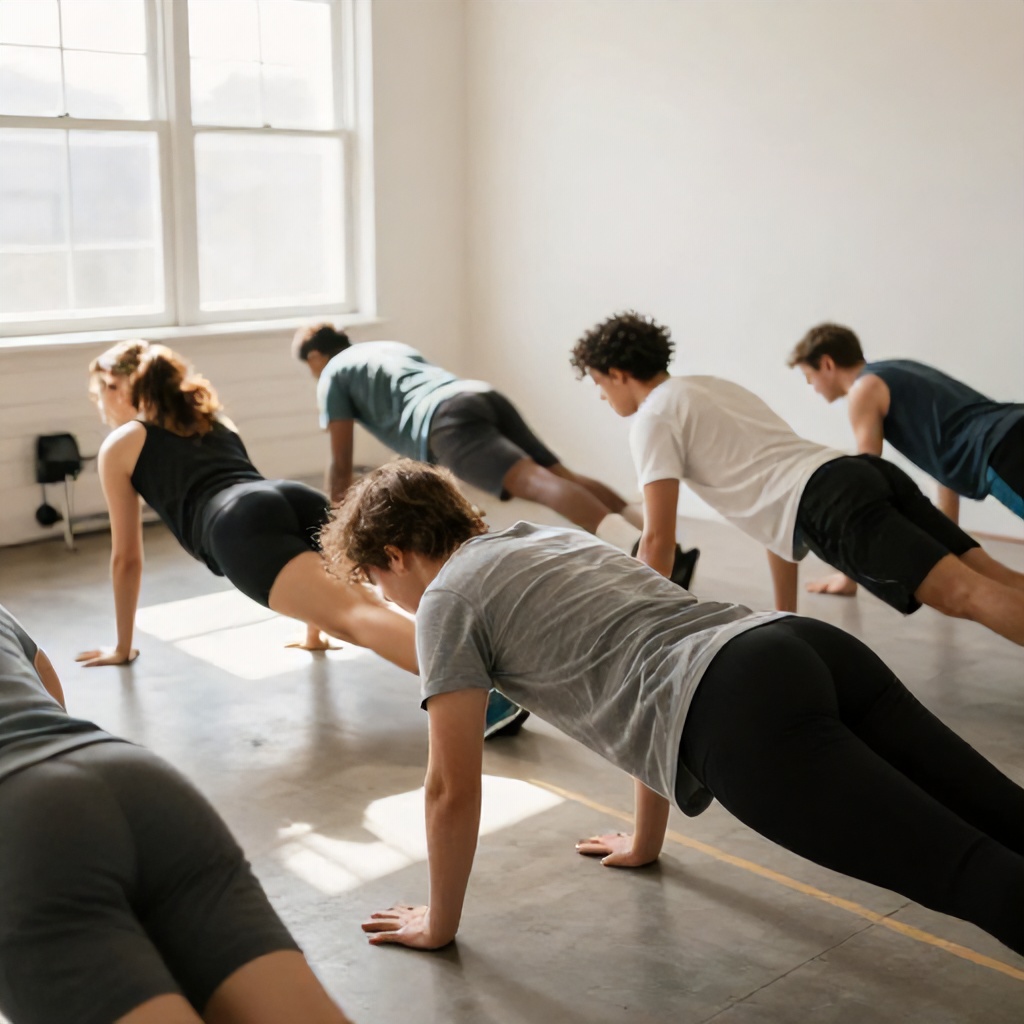
  • Begin in a plank position, with your hands slightly wider than shoulder-width apart.
  • Keep your body in a straight line from head to heels.
  • Lower your chest towards the floor by bending your elbows.
  • Push back up to the starting position.
  • Aim for 3 sets of as many repetitions as you can with good form.

Plank

This is a core-strengthening superstar. A strong core is essential for almost every movement and helps prevent back pain.

  • Position yourself on your forearms and toes, keeping your body in a straight line from head to heels.
  • Engage your abdominal muscles, glutes, and quads.
  • Avoid letting your hips sag or rise too high.
  • Hold for 3 sets, aiming for 30-60 seconds per hold.

Triceps Dips (using a chair or sturdy surface)

Target your triceps effectively with this simple yet powerful exercise.

  • Sit on the edge of a sturdy chair or bench, placing your hands on the edge next to your hips, fingers pointing forward.
  • Slide your hips forward off the chair, supporting your weight with your hands and heels.
  • Lower your body by bending your elbows, keeping them tucked in towards your body.
  • Push back up to the starting position.
  • Perform 3 sets of 10-15 repetitions.

Core and Back Strength

A strong core and back are vital for stability, posture, and preventing injuries.

Bird-Dog

This exercise improves balance and works your core, back, and glutes.

  • Start on your hands and knees, with your wrists under your shoulders and knees under your hips.
  • Keep your back flat and your core engaged.
  • Simultaneously extend your right arm straight forward and your left leg straight back.
  • Keep your hips level and avoid arching your back.
  • Hold for a moment, then return to the starting position.
  • Repeat on the other side (left arm, right leg).
  • Perform 3 sets of 10-12 repetitions per side.

Supermans

A great exercise for strengthening the muscles of your lower back and glutes.

  • Lie face down on the floor with your arms and legs extended.
  • Keeping your neck neutral, simultaneously lift your arms, chest, and legs off the floor, squeezing your glutes and lower back muscles.
  • Hold for a brief moment, then slowly lower back down.
  • Perform 3 sets of 12-15 repetitions.

Progressing Your Workouts

As you get stronger, you’ll need to challenge your muscles to keep seeing results. This is where progressive overload comes in – gradually increasing the demand on your muscles.

Increase Repetitions

Once you can comfortably complete the higher end of the suggested repetitions for an exercise, add a few more. For example, if you’re doing 15 squats, try for 18 or 20.

Increase Sets

Adding another set to your existing exercises is a simple way to increase the overall volume of your workout.

Decrease Rest Times

Shortening the rest periods between sets can increase the intensity and cardiovascular challenge of your workout.

Change Tempo

Slow down the eccentric (lowering) phase of an exercise. For example, in a squat, take 3-4 seconds to lower yourself down. This increases time under tension and muscle fatigue.

Introduce Variations

Once you’ve mastered the basic form, explore variations. For squats, try jump squats or pistol squat progressions. For push-ups, try diamond push-ups or decline push-ups.

Adding Resistance Without Equipment

While bodyweight is fantastic, you can also increase resistance using everyday items.

  • Water Bottles or Cans: Fill water bottles or use soup cans for added weight during exercises like bicep curls or overhead presses.
  • Backpack: Load a backpack with books, water bottles, or other heavy items. Wear it during squats, lunges, or even push-ups for added resistance.
  • Towels: Use towels for exercises like sliding lunges or hamstring curls on smooth floors. This adds an element of instability, engaging more muscles.
  • Stairs: Incorporate stairs into your routine. Stair climbs are a fantastic cardio and lower body workout. You can also do calf raises or step-ups on a stair.

Structuring Your Home Workouts

Having a plan makes it easier to stick to your goals. Here are a few ways to structure your sessions.

Full Body Routine

Perform 1-2 exercises for each major muscle group in every workout. This is excellent for beginners and for those with limited time.

Example: Squats, Push-ups, Lunges, Plank, Glute Bridges, Bird-Dog.

Upper/Lower Split

Dedicate one workout day to upper body exercises and another to lower body. This allows for more focused work on each area.

Example Day 1 (Lower Body): Squats, Lunges, Glute Bridges, Calf Raises.

Example Day 2 (Upper Body/Core): Push-ups, Triceps Dips, Plank, Bird-Dog, Supermans.

Circuit Training

Perform a series of exercises back-to-back with minimal rest in between. Once you complete the circuit, rest for a minute or two and repeat. This is great for burning calories and improving cardiovascular fitness along with strength.

Example Circuit: Squats, Push-ups, Lunges, Plank, Glute Bridges, Bird-Dog. Perform each exercise for 45 seconds, followed by 15 seconds of rest. Repeat the entire circuit 3-4 times.

Fueling Your Progress: Nutrition Matters

Strength training and weight loss go hand-in-hand with smart nutrition. You can’t out-train a bad diet.

  • Prioritize Protein: Protein is essential for muscle repair and growth. Include lean protein sources like chicken, fish, beans, lentils, tofu, and Greek yogurt in your meals.
  • Complex Carbohydrates: Opt for whole grains, fruits, and vegetables for sustained energy.
  • Healthy Fats: Avocados, nuts, seeds, and olive oil are important for hormone production and overall health.
  • Hydration: Drink plenty of water throughout the day. It aids digestion, metabolism, and muscle function.
  • Calorie Awareness: While you don’t need to obsess over numbers, being mindful of your calorie intake is key for weight loss. Focus on nutrient-dense foods that keep you feeling full and satisfied.

Consistency is Key

The most effective workout plan is the one you can stick with. Don’t aim for perfection; aim for progress. Some days will be harder than others, but showing up, even for a shorter or less intense workout, is better than skipping it altogether.

Celebrate your small victories. Notice how your clothes fit differently, how much stronger you feel lifting groceries, or how your energy levels have improved. These are all signs that your hard work is paying off. You’ve got this!

Exit mobile version