
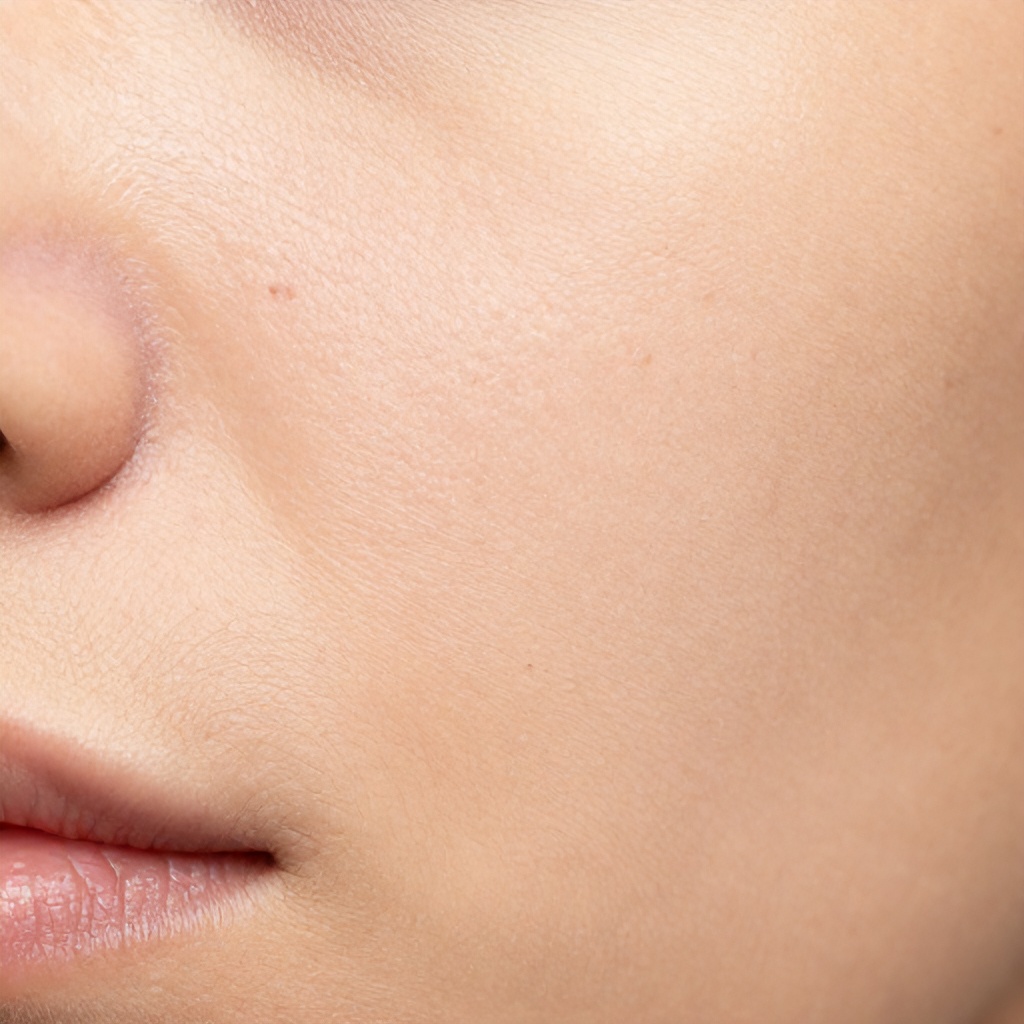
Seeing your facial skin texture up close, complete with visible pores and dark spots, is a completely normal experience that often looks more dramatic in a magnified view than it does to the naked eye. Our skin, a living organ, is full of intricate details, and understanding these features helps us care for it better and appreciate its natural state.

Understanding Your Skin Up Close
The human skin surface is never perfectly smooth. It’s a complex landscape of tiny ridges, valleys, and openings. What we perceive as “skin texture” is really the sum of these micro-details, influenced by everything from genetics to environmental factors. When you examine your skin in a mirror, especially under bright or direct light, you’re getting a detailed view of these characteristics.
Sometimes, we catch a glimpse of our skin in extreme close-up, perhaps through a magnifying mirror or a high-resolution image from a phone camera. This macro photography can reveal aspects of our dermal appearance that are usually invisible, sometimes leading to undue self-criticism. It’s important to remember that this super-magnified perspective isn’t how others see you in daily life.
The Truth About Visible Pores
What Are Pores?
Pores are tiny openings on the skin surface, each serving a vital function. They are essentially the openings for hair follicles and sebaceous glands, which produce sebum, our skin’s natural oil. This oil helps keep our skin hydrated and protected. Pores are absolutely essential for healthy skin function.
Why Do Pores Look “Enlarged”?
While pore visibility varies from person to person, there are several reasons why some pores appear more noticeable or “enlarged pores.” Genetics play a significant role; some individuals simply have naturally larger pores. However, other factors also contribute:
- Excess Sebum Production: Oily skin types tend to have more visible pores because the sebaceous glands produce more oil, which can collect and expand the pore opening.
- Dead Skin Cell Buildup: When dead skin cells mix with sebum, they can clog pores, making them appear larger and sometimes leading to blemishes.
- Sun Exposure: Chronic sun exposure can damage the collagen and elastin fibers around pores. This loss of structural support makes the skin less firm, causing pores to sag and look more prominent.
- Aging: As we age, our skin naturally loses elasticity and firmness. This natural process can make pores appear larger over time.
- Dehydration: Paradoxically, dehydrated skin can sometimes make pores more noticeable as the skin tries to compensate by producing more oil, or the lack of plumpness makes the skin texture appear rougher.
Managing Pore Visibility
While you can’t permanently shrink your pore size (it’s genetically determined), you can certainly minimize their appearance and keep them clear:
- Gentle Cleansing: Wash your face twice daily with a mild cleanser to remove excess oil, dirt, and makeup.
- Exfoliation: Regular, gentle exfoliation helps remove dead skin cells that can clog pores. Chemical exfoliants like salicylic acid (a BHA) are particularly effective because they are oil-soluble and can penetrate into the pore lining.
- Non-Comedogenic Products: Choose skincare and makeup products labeled “non-comedogenic” to avoid clogging pores.
- Retinoids: Topical retinoids (like retinol or tretinoin) can help regulate cell turnover, reduce oil production, and improve skin texture, making pores appear smaller over time.
- Niacinamide: This form of Vitamin B3 can help improve skin elasticity and reduce sebum production, indirectly minimizing pore appearance.
- Sun Protection: Consistent use of broad-spectrum SPF 30 or higher prevents collagen breakdown, which helps maintain skin firmness and reduces pore visibility.
Decoding Dark Spots and Discoloration
What Are Dark Spots?
Dark spots, often called hyperpigmentation, refer to patches of skin that become darker than the surrounding skin. This darkening occurs when there’s an overproduction of melanin, the pigment that gives skin its color. These blemishes can appear as small, flat spots or larger, irregular patches.
Common Types of Dark Spots
Several types of dark spots can affect the facial skin and other areas:
- Sun Spots (Solar Lentigines/Age Spots): These are perhaps the most common type. They are flat, brown, or black spots that appear on areas frequently exposed to the sun, like the face, hands, and décolletage. They are directly caused by prolonged sun exposure and become more prevalent with age, hence the name “age spots.”
- Post-Inflammatory Hyperpigmentation (PIH): These dark spots occur after skin inflammation or injury. Common causes include acne breakouts, cuts, burns, or even aggressive skin treatments. The skin produces excess melanin as it heals, leaving behind a brown, black, or sometimes reddish-purple mark.
- Melasma: This type of hyperpigmentation appears as larger, often symmetrical patches of brown or grayish-brown skin, typically on the face (forehead, cheeks, upper lip). Melasma is primarily triggered by hormonal changes (e.g., pregnancy, birth control pills) combined with sun exposure.
Causes and Triggers for Discoloration
The primary driver behind most dark spots is sun exposure. UV radiation stimulates melanocytes (melanin-producing cells) to create more pigment as a protective mechanism. Other triggers include:
- Hormonal fluctuations (as seen in melasma).
- Inflammation or injury to the skin.
- Certain medications that increase photosensitivity.
- Genetics can make some individuals more prone to hyperpigmentation.
Preventing and Treating Dark Spots
Prevention is always easier than treatment when it comes to dark spots. Consistent sun protection is the single most important step:
- Daily Sunscreen: Use a broad-spectrum sunscreen with an SPF of 30 or higher every single day, rain or shine. Reapply every two hours when outdoors.
- Protective Clothing: Wear wide-brimmed hats and sunglasses to shield your facial skin from direct sun.
- Avoid Peak Sun Hours: Seek shade, especially between 10 AM and 4 PM when UV radiation is strongest.
For existing dark spots, several ingredients and treatments can help fade them:
- Vitamin C: A powerful antioxidant that brightens skin and inhibits melanin production.
- Retinoids: Help speed up cell turnover, allowing pigmented cells to shed more quickly.
- Alpha Hydroxy Acids (AHAs): Glycolic acid and lactic acid exfoliate the skin surface, helping to fade discoloration.
- Niacinamide: Can help prevent the transfer of pigment to skin cells.
- Hydroquinone: A prescription-strength ingredient that effectively lightens dark spots by inhibiting melanin production. Use under professional guidance.
- Professional Treatments: Chemical peels, laser therapy, and intense pulsed light (IPL) treatments can effectively target and break down pigment, but require consultation with a dermatologist.
Improving Overall Skin Texture and Tone
Achieving a smoother skin surface and a more even epidermal texture involves a holistic approach that combines good skincare habits with protective measures. The goal is to support your skin’s natural renewal processes and protect it from damage.
Regular, gentle exfoliation is key to removing dead skin cells that can make the skin feel rough or dull. Both chemical exfoliants (like AHAs and BHAs) and very fine physical exfoliants can contribute to a softer feel. Hydration is also paramount; well-hydrated skin appears plumper, smoother, and reflects light more evenly, minimizing the appearance of fine lines and textural irregularities.
Incorporating antioxidants, such as Vitamin C and E, into your routine helps protect the skin from environmental damage that can degrade collagen and elastin, affecting overall skin texture. Retinoids, as mentioned, are powerhouse ingredients for improving cell turnover, stimulating collagen production, and refining skin texture over time.
Lifestyle choices also play a role. A balanced diet rich in fruits, vegetables, and healthy fats provides essential nutrients for skin health. Adequate sleep allows the skin to repair itself, and managing stress can prevent inflammatory responses that impact skin tone and clarity.
The Role of Lighting and Perception
How we perceive our skin, including its texture, pore visibility, and any skin imperfections, is heavily influenced by the lighting conditions. What looks like a prominent pore or a noticeable dark spot in one light might be nearly invisible in another.
Consider the difference between harsh, direct overhead light and soft, ambient light. Natural lighting, especially diffused daylight, tends to be more forgiving, casting fewer harsh shadows and making skin appear smoother. Soft light, like that from a window on an overcast day, minimizes the appearance of bumps and dips, creating a more flattering dermal appearance. Conversely, strong, directional light can exaggerate every tiny detail, highlighting every pore and textural variation.
A high-resolution image captured with a powerful camera can reveal every minute detail, often more than the human eye can discern in person. This detailed view, while technically accurate, doesn’t always represent how you look to others during normal interactions. It’s easy to become overly critical when confronted with such magnified reality.
Embracing the natural variations and imperfections of your skin is a healthy perspective. No one has perfectly poreless, uniformly toned skin. Our skin tells a story of our lives, our expressions, and our experiences. Focusing on overall skin health and feeling comfortable in your own skin is far more important than striving for an unattainable, filtered ideal.
Beyond the Face: Skin Texture Elsewhere
While we often focus on facial skin, the principles of skin texture, visible pores, and dark spots apply to other areas of the body as well. The skin on your neck, décolletage, and even the clavicle region can show signs of sun damage, such as sun spots and changes in epidermal texture, due to frequent exposure.
Just like on the face, these areas benefit from consistent sun protection and targeted skincare to maintain a smoother skin surface and even tone. Even areas with body art, like tattoos, benefit from good skin health. Healthy, well-hydrated skin with minimal discoloration provides a better canvas for any artwork, ensuring its vibrancy and clarity over time. Understanding and caring for your skin as a whole contributes to its overall health and appearance, no matter where on your body it is.