
Gentle Yoga Poses for Stress and Anxiety Relief at Home
You can find significant relief from stress and anxiety by practicing simple, gentle yoga poses right in your own home. These movements are designed to calm your nervous system, release physical tension, and bring a sense of peace to your mind without requiring any special equipment or advanced flexibility.

Why Gentle Yoga Works Wonders for Stress
When we’re stressed or anxious, our bodies often go into a “fight or flight” mode. This can manifest as shallow breathing, tense muscles, a racing heart, and a mind that won’t stop churning. Gentle yoga acts as a counterbalance to this response. It encourages deep, diaphragmatic breathing, which signals to your brain that you are safe and can relax.
The slow, deliberate movements help to release stored tension in areas like the neck, shoulders, and hips – common places where we hold stress. By focusing on the physical sensations in your body and the rhythm of your breath, you create a mental break from worries and intrusive thoughts. It’s a practice of grounding yourself in the present moment, which is incredibly powerful for quieting an anxious mind.
Unlike more vigorous forms of exercise, gentle yoga prioritizes mindfulness and self-compassion. There’s no pressure to achieve perfect poses or push your limits. It’s about what feels good and supportive for your body and mind on any given day. This non-judgmental approach is key to its effectiveness in managing stress and anxiety.
Getting Started: Setting Up Your Space
Creating a calming environment is the first step. You don’t need a dedicated yoga studio; your living room or bedroom will do perfectly.
- Find a quiet space where you won’t be interrupted for at least 15-30 minutes.
- Clear away clutter to create a sense of spaciousness.
- Consider dimming the lights or using a soft lamp.
- If you like, light a candle or diffuse a calming essential oil like lavender or chamomile.
- A yoga mat is helpful for cushioning, but a soft rug or even a blanket can work in a pinch.
Comfortable, loose-fitting clothing is essential. You want to be able to move freely without restriction. Hydration is also good, so have a glass of water nearby.
The Poses: Your Home Sanctuary
These poses are sequenced to promote relaxation from head to toe. Move slowly and mindfully, focusing on your breath throughout each posture.
1. Mountain Pose (Tadasana)
This is the foundation of many standing poses and a wonderful way to begin. It’s about finding a sense of grounded stability.
- Stand with your feet hip-width apart, or closer together if that feels more stable.
- Distribute your weight evenly across both feet.
- Gently engage your thigh muscles, but don’t lock your knees.
- Lengthen your spine, drawing your shoulders down and back, away from your ears.
- Let your arms hang naturally at your sides, palms facing forward or inward.
- Rest your gaze softly ahead of you or close your eyes.
- Focus on your breath: inhale deeply through your nose, filling your belly, and exhale slowly through your nose or mouth.
- Hold for 5-10 breaths, feeling the earth beneath you and your body standing tall and strong.
This pose helps to improve posture and bring awareness to your body. It’s a simple yet powerful way to center yourself.
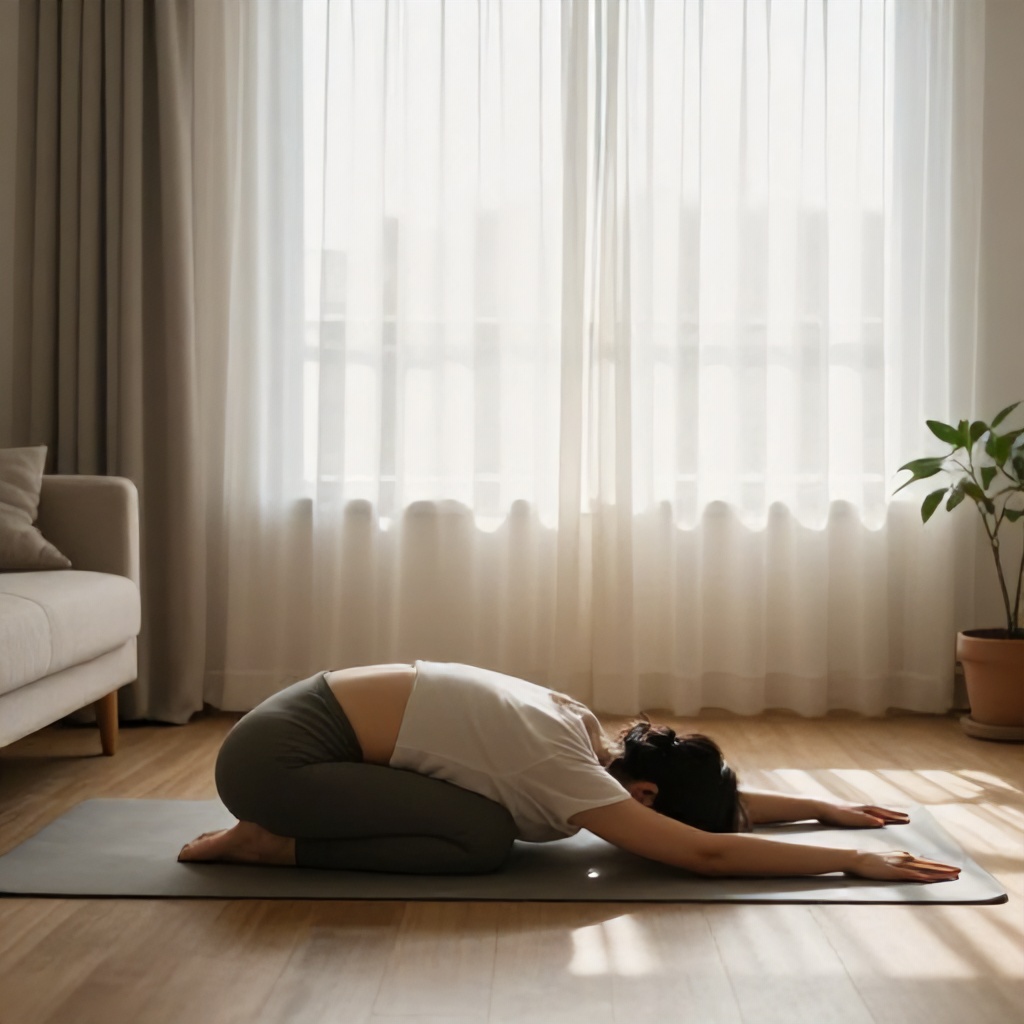
2. Child’s Pose (Balasana)
Child’s Pose is a deeply restorative and comforting pose, perfect for melting away tension and finding a sense of safety.
- Start on your hands and knees in a tabletop position.
- Bring your big toes to touch and widen your knees to the width of your mat, or keep them closer together if that’s more comfortable.
- Exhale and sink your hips back towards your heels.
- Rest your torso down between or on your thighs.
- Extend your arms forward along the mat, or bring them back alongside your body with palms facing up.
- Rest your forehead on the mat. If your forehead doesn’t reach, you can stack your fists or use a folded blanket.
- Allow your shoulders to relax completely.
- Breathe deeply into your back, feeling your ribs expand with each inhale and soften with each exhale.
- Stay here for 1-5 minutes, or as long as feels good. This pose is a gentle surrender.
Child’s Pose is a natural resting pose that encourages introspection and calms the mind. It’s like giving yourself a gentle hug.
3. Cat-Cow Pose (Marjaryasana-Bitilasana)
This gentle flow between two poses synchronizes breath with movement, releasing tension in the spine and promoting flexibility.
- Begin on your hands and knees, with your wrists directly under your shoulders and your knees directly under your hips.
- Inhale as you drop your belly towards the mat, arch your back, and lift your gaze and tailbone towards the ceiling (Cow Pose). Feel a gentle stretch across your chest and abdomen.
- Exhale as you round your spine towards the ceiling, tuck your chin towards your chest, and draw your navel towards your spine (Cat Pose). Feel a stretch across your upper back.
- Continue flowing between these two poses with your breath for 5-10 rounds.
- Focus on the sensation of movement in your spine and the gentle rhythm of your breath.
This pose is excellent for warming up the spine and releasing tension that can build up from sitting or stress. It also brings awareness to the breath-movement connection.
4. Downward-Facing Dog (Adho Mukha Svanasana) – Modified
While often seen as an energizing pose, Downward-Facing Dog can be incredibly grounding and releasing when approached gently. If it feels too intense, modify it.
- Start on your hands and knees.
- Tuck your toes under and lift your hips up and back, forming an inverted V-shape.
- Keep a generous bend in your knees, especially if your hamstrings feel tight. The goal is to lengthen your spine, not to straighten your legs.
- Press firmly through your hands, spreading your fingers wide.
- Let your head hang freely between your arms, releasing any tension in your neck.
- You can pedal your feet by bending one knee and straightening the other, gently stretching your calves and hamstrings.
- Breathe deeply, imagining you are sending your breath all the way up your spine and out through your heels.
- Hold for 5-8 breaths.
This pose can help to calm the brain and relieve mild depression. It also stretches the shoulders, hamstrings, and calves. The inversion aspect can also be very calming.
5. Thread the Needle Pose (Urdhva Mukha Pasasana Variation)
This pose is a beautiful gentle twist that releases tension in the upper back and shoulders, areas that often hold stress.
- Start on your hands and knees.
- Inhale and reach your right arm up towards the ceiling, opening your chest.
- Exhale and “thread” your right arm underneath your left armpit, bringing your right shoulder and the side of your head to the mat.
- Keep your hips lifted over your knees.
- Your left hand can stay planted on the mat for support, or you can walk it forward to deepen the stretch.
- Breathe into the twist, feeling a release in your upper back and shoulder.
- Hold for 5-8 breaths.
- To release, press into your left hand and unwind, returning to tabletop.
- Repeat on the other side.
This pose is fantastic for relieving tension in the upper back and neck, promoting a sense of release and spaciousness.
6. Supported Bridge Pose (Setu Bandhasana) – With Block
Bridge Pose is an energizing backbend that can also be very calming when supported. It opens the chest and can relieve anxiety.
- Lie on your back with your knees bent and feet flat on the floor, hip-width apart.
- Place a yoga block (or a thick book) under your sacrum (the flat bone at the base of your spine). Ensure the block is stable.
- Let your arms rest by your sides, palms facing down.
- Allow your body to be fully supported by the block.
- Close your eyes and breathe deeply. Feel your chest gently opening.
- This is a resting pose. There’s no need to lift your hips further.
- Stay here for 2-5 minutes, focusing on the gentle expansion of your chest and the release of tension in your shoulders and neck.
- To release, gently press into your feet and lift your hips just enough to slide the block out from under you. Slowly lower your spine back to the mat.
The supported version of Bridge Pose is incredibly restorative. It gently opens the heart space, which can be constricted by stress and anxiety, and offers a sense of calm and upliftment.
7. Reclining Bound Angle Pose (Supta Baddha Konasana)
This is a deeply relaxing pose that opens the hips and groin, areas that often store emotional tension. It’s a wonderful pose for winding down.
- Lie on your back.
- Bend your knees and bring the soles of your feet together.
- Let your knees fall open to the sides.
- Place your hands on your belly or by your sides, palms up.
- If the stretch in your inner thighs feels too intense, place blocks or rolled blankets under your knees for support.
- Allow your body to relax completely into the pose.
- Close your eyes and focus on your breath. Feel your hips and groin softening with each exhale.
- Stay here for 3-5 minutes, or longer if it feels comfortable.
This pose is excellent for releasing tension in the hips and groin, which can be a significant source of stored stress. It promotes a feeling of openness and calm.
8. Corpse Pose (Savasana)
Savasana is arguably the most important pose in yoga for deep relaxation and integration. It’s where the benefits of your practice truly sink in.
- Lie flat on your back with your legs extended, a comfortable distance apart.
- Let your feet fall open naturally.
- Rest your arms by your sides, a little away from your body, with your palms facing up.
- Allow your shoulders to relax away from your ears.
- Close your eyes.
- Scan your body from your toes to the crown of your head, consciously releasing any remaining tension.
- Let your breath be natural and effortless.
- Allow yourself to simply be present, without any effort or expectation.
- Stay here for at least 5-10 minutes. This is your time to rest and absorb the benefits of your practice.
Savasana allows your nervous system to reset. It’s a time for profound rest, helping to reduce stress hormones and promote a sense of deep peace and well-being.
Integrating Yoga into Your Routine
Consistency is more important than intensity when it comes to managing stress and anxiety with yoga. Even a short, 15-minute practice a few times a week can make a significant difference.
- Morning Boost: Start your day with a few gentle stretches like Cat-Cow and Mountain Pose to set a calm tone.
- Midday Reset: If you’re feeling overwhelmed, take a few minutes for Child’s Pose or Reclining Bound Angle Pose to find some grounding.
- Evening Wind-Down: Before bed, a sequence including Thread the Needle, Supported Bridge, and Savasana can prepare you for restful sleep.
Listen to your body. Some days you might feel like holding poses longer, and other days you might prefer shorter holds or more rest. The goal is to be kind to yourself and create a practice that feels supportive and nurturing.
Remember, yoga is a practice, not a performance. Be patient with yourself, celebrate small victories, and enjoy the process of finding greater calm and balance in your life through these simple, accessible poses.