
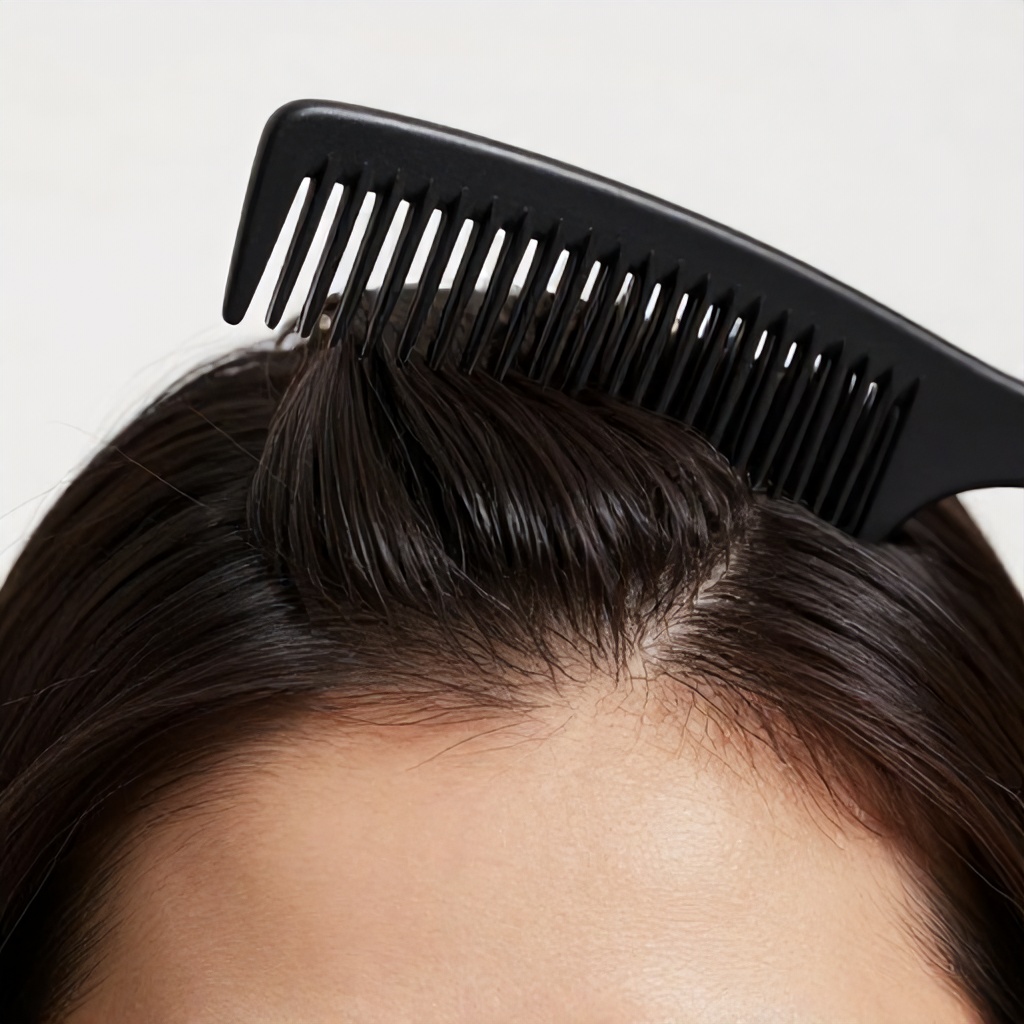
Incorporating a fine comb into your regular personal care routine offers a powerful, yet often overlooked, approach to meticulous scalp grooming and effective hair treatment, moving beyond simple detangling to truly enhance hair and scalp health.

The Unsung Hero: Why a Fine Comb Matters for Scalp Care
Most people view a comb as a tool for styling or untangling knots. And while it certainly does those jobs, a fine-toothed instrument possesses capabilities that go far beyond superficial hair management. This precision grooming tool can become an essential part of your hair care regimen, providing benefits that even the most expensive shampoos and conditioners might miss if not applied correctly.
The closely spaced teeth of a fine comb allow for an incredibly detailed hair inspection. This isn’t just about making your hair look neat; it’s about getting up close and personal with your scalp and individual strands. This level of intimacy with your hair health can reveal early signs of issues, ensure proper distribution of beneficial products, and even stimulate the scalp in a way that promotes stronger, healthier hair growth.
Choosing Your Fine Comb: More Than Just Teeth
Not all fine combs are created equal. To truly benefit from meticulous scalp grooming, selecting the right tool is paramount. The material and tooth spacing play a significant role in its effectiveness and gentleness on your scalp and hair.
Material Matters
- Hard Rubber or Cellulose Acetate: These are excellent choices. They often feature smooth, seamless teeth that glide through hair without snagging. They also generate less static electricity compared to plastic, which means less frizz.
- Wood: Wooden fine combs, especially those made from sandalwood or peach wood, are incredibly gentle. They naturally distribute scalp oils, reduce static, and offer a soothing feel. However, they require more careful cleaning and maintenance to prevent splintering or bacterial buildup.
- Metal: While some fine combs have metal teeth, these can be quite harsh on the scalp and hair, potentially causing scratches or breakage. They are often best reserved for specific tasks like lice removal, where their rigidity is an advantage, but should be used with extreme caution.
Tooth Spacing and Tip Design
Look for a fine comb with teeth that are perfectly uniform and smoothly finished. Any rough edges or mold lines can scrape your scalp or damage your hair cuticle. The tips of the teeth should be rounded, not sharp, to ensure comfortable and safe contact with your scalp. While the name implies “fine,” there can still be slight variations in tooth spacing. For general scalp stimulation and product application, a slightly wider fine tooth might be more comfortable than an extremely dense lice comb, for instance.
The Art of Meticulous Scalp Grooming: A Step-by-Step Guide
Integrating a fine comb into your grooming process requires a gentle touch and a methodical approach. This isn’t a race; it’s a careful, deliberate act of scalp care.
Step 1: Preparation is Key
Start with clean, dry or slightly damp hair. If your hair is very tangled, use a wide-tooth detangling comb first to remove any major knots. Trying to force a fine comb through tangled hair will only cause breakage and discomfort. Ensure your hair is free of heavy styling products that could gum up the comb’s teeth.
Step 2: Sectioning for Precision
Just like a stylist, section your hair. Use clips to separate your hair into manageable parts – perhaps four to six sections, depending on your hair’s thickness and length. This allows you to focus on smaller areas, ensuring no part of your scalp is missed during the detailed hair inspection.
Step 3: The Gentle Combing Technique
- Start at the Scalp: Place the fine comb gently against your scalp at the roots of one section.
- Small Strokes: Using very light pressure, comb outwards from the scalp for about an inch or two. Don’t drag the comb all the way down the hair shaft immediately. The goal here is scalp stimulation and examination.
- Observe and Repeat: Lift the comb, inspect the teeth for any debris, flakes, or hairs. Then, move to an adjacent area of the scalp within the same section and repeat. Continue this process, systematically covering the entire scalp.
- Pressure Control: The pressure should be firm enough to make contact with the scalp, but never so hard that it causes pain or redness. Think of it as a gentle massage.
This systematic approach ensures thorough scalp hygiene and allows you to perform a detailed hair inspection, noting any changes in your hair follicles health or scalp condition.
Step 4: Frequency for Optimal Hair Maintenance
For general scalp stimulation and product distribution, two to three times a week might be sufficient. If you’re dealing with specific issues like dandruff or applying a scalp treatment, you might increase the frequency as advised by a professional or product instructions. Consistency is more important than intensity.
Targeted Hair Treatment Application with a Fine Comb
One of the most powerful uses of a fine comb is its ability to ensure even and precise scalp treatment application. Many serums, oils, and tonics are designed to work directly on the scalp and hair roots, and a fine comb can significantly boost their effectiveness.
Applying Serums and Tonics
After applying a few drops of your chosen scalp serum or tonic directly to your scalp, use the fine comb to gently distribute the product. The teeth help to spread the liquid evenly across the scalp surface, ensuring that all hair follicles receive the benefits. This method also helps to work the product into the skin, rather than just coating the hair strands, which is especially important for formulations targeting hair growth or scalp health.
Distributing Hair Masks
When applying a hair mask that benefits both the hair and scalp, a fine comb can be incredibly useful. After applying the mask generously, use the comb to pull the product through from roots to ends. This ensures uniform coverage, preventing some areas from being oversaturated while others are missed. For masks specifically targeting the scalp, follow the same gentle, section-by-section technique described above to work the product into the skin.
Beyond Aesthetics: The Tangible Benefits of Precision Grooming
The commitment to meticulous scalp grooming with a fine comb yields a surprising array of benefits for both your hair and scalp health.
Enhanced Scalp Health
- Improved Circulation: The gentle stimulation from the comb’s teeth can boost blood flow to the scalp. Better circulation means more nutrients and oxygen reach the hair follicles, which are essential for robust hair growth and hair follicles health.
- Exfoliation and Debris Removal: A fine comb effectively dislodges dead skin cells, product buildup, and environmental pollutants that can accumulate on the scalp. This gentle exfoliation prevents clogged follicles, which can lead to irritation, dandruff, and even hair thinning. It’s a key aspect of scalp hygiene.
- Even Product Distribution: As mentioned, the comb ensures that your expensive scalp treatments, oils, and conditioners are spread uniformly, maximizing their efficacy and preventing waste.
Stronger, Shinier Hair
By promoting a healthier scalp environment, you’re laying the groundwork for healthier hair. Hair growing from a well-nourished, clean scalp tends to be stronger, less prone to breakage, and has a natural luster. Regular combing can also help distribute natural scalp oils down the hair shaft, providing natural conditioning and improving hair texture. This contributes significantly to overall hair health and hair maintenance.
Early Detection and Prevention
The detailed hair inspection afforded by a fine comb makes it an invaluable tool for early detection of various issues. You might spot:
- Dandruff or Flakes: Regular combing helps identify and gently remove flakes before they become a more noticeable problem.
- Scalp Irritation or Redness: Subtle signs of inflammation can be caught early, allowing for prompt intervention.
- Hair Thinning or Loss: Noticing changes in hair density or excessive shedding on the comb can prompt you to seek advice sooner.
- Greying Hair Management: For those managing greying hair, a fine comb allows for precise observation of new grey hairs at the root, helping you track their progression or apply targeted root touch-ups with greater accuracy.
This proactive approach is a cornerstone of effective hair maintenance.
Addressing Specific Concerns with Your Fine Comb
Certain hair and scalp issues benefit particularly well from the precision of a fine-toothed instrument.
Dandruff Removal
While a fine comb won’t cure the underlying cause of dandruff, it is an excellent tool for gentle dandruff removal. After loosening flakes with a scalp brush or during your meticulous scalp grooming routine, use the fine comb to carefully lift and remove visible flakes from the hair strands and scalp surface. Always follow up with an appropriate anti-dandruff shampoo and treatment.
Lice Detection and Removal
A specialized lice comb, which is an extremely fine-toothed instrument, is the gold standard for detecting and removing head lice and nits. Its super-close teeth are designed to catch even the smallest eggs.
- Wet Hair: It’s often easiest to comb for lice on wet, conditioned hair, as this slows down the lice.
- Section Thoroughly: Work through the hair in very small sections, starting from the scalp.
- Comb from Root to Tip: Systematically comb each section from the root all the way to the tip.
- Clean the Comb: After each pass, wipe the comb on a paper towel and inspect it for lice or nits. Rinse the comb under hot water or soak it in rubbing alcohol between sections if needed.
This process requires patience and thoroughness but is highly effective.
Hair Texture Improvement
For those with fine or oily hair, regular, gentle combing can help distribute natural oils more evenly, preventing oil buildup at the roots and dryness at the ends. For all hair types, the gentle stimulation can encourage healthier hair growth, which over time, contributes to improved hair texture and overall vitality.
Integrating into Your Personal Care Routine
Making meticulous scalp grooming a regular part of your personal care routine doesn’t have to be a chore. Start small, perhaps by adding a five-minute fine comb session before you wash your hair, or when you apply a scalp serum. As you begin to see and feel the benefits, it will naturally become an enjoyable and essential step in your hair care regimen.
Think of it as a small investment of time that pays off significantly in the long run for your hair health and scalp health. Just like brushing your teeth, consistent, gentle care makes a world of difference.
Common Mistakes to Avoid
Even with the best intentions, it’s easy to make mistakes that can diminish the benefits or even harm your hair and scalp.
- Combing Tangled Hair: Never force a fine comb through tangled hair. Always detangle with a wide-tooth comb or your fingers first.
- Excessive Pressure: Too much pressure can scratch your scalp, cause irritation, or even damage hair follicles. Be gentle.
- Combing Dry, Brittle Hair: If your hair is very dry and prone to breakage, consider using the fine comb on slightly damp hair with a leave-in conditioner to reduce friction.
- Neglecting Cleaning: Your fine comb collects dead skin cells, product residue, and hair. Clean it regularly with soap and water to maintain scalp hygiene and prevent buildup from being redeposited onto your scalp.
By avoiding these pitfalls, you ensure that your meticulous scalp grooming efforts are always beneficial.