
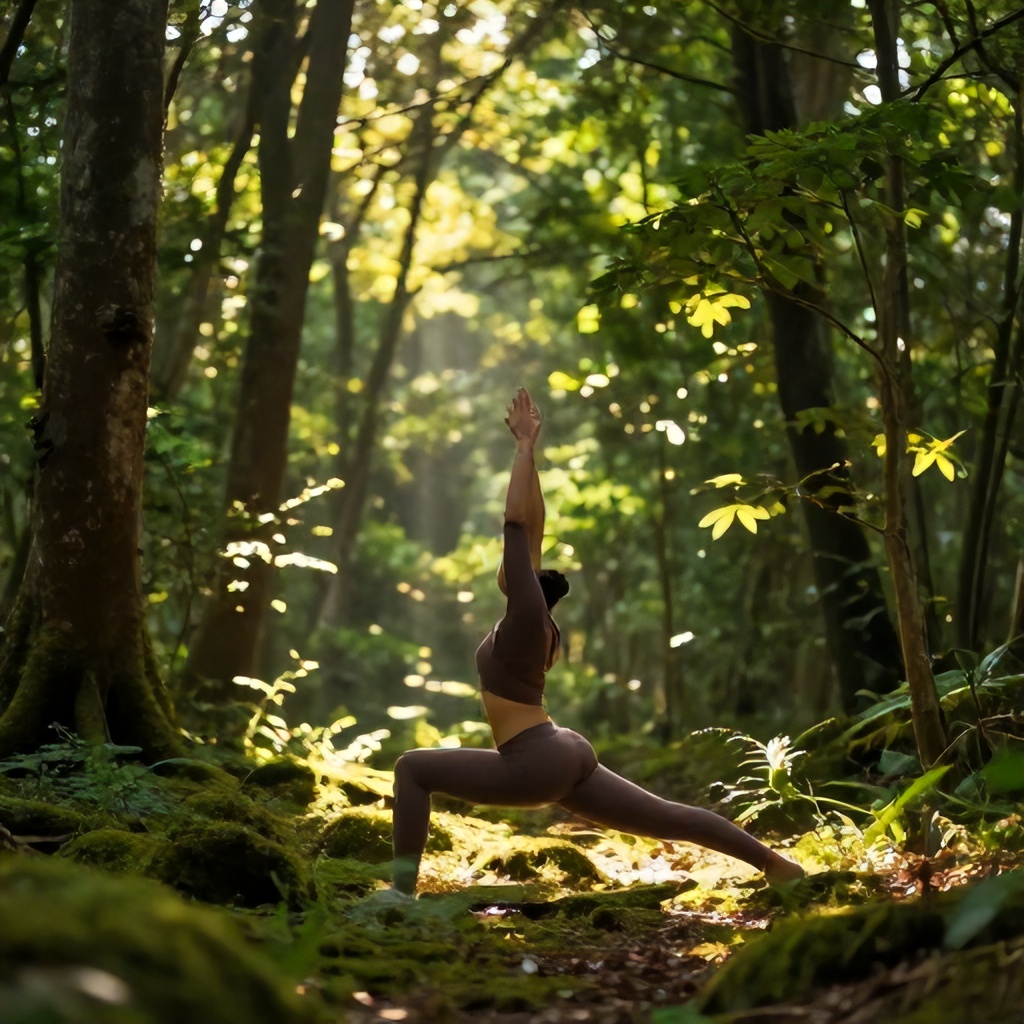
Combining yoga and a fitness routine in a forest setting offers a uniquely invigorating and calming way to boost both physical and mental well-being, transforming your usual workout into a deeply restorative experience.

Embracing the Verdant Forest for Your Workout
There’s something undeniably special about taking your exercise out of the gym and into the fresh air. When you choose a forest setting, you’re not just changing your location; you’re immersing yourself in an environment designed to soothe the soul while challenging the body. This isn’t just about getting fit; it’s about reconnecting with nature, breathing deeply, and finding a profound sense of peace amidst the rustling leaves and dappled sunlight.
The benefits extend beyond the physical. Studies consistently show that spending time in green spaces can reduce stress hormones, improve mood, and even enhance cognitive function. Imagine performing your favorite yoga poses with the gentle chirping of birds as your soundtrack, or pushing through a fitness routine with the scent of pine needles filling the air. It’s a multisensory experience that traditional indoor workouts simply can’t replicate. This natural setting becomes your personal sanctuary for a truly holistic wellness regimen.
Finding Your Perfect Outdoor Studio
Selecting the right spot for your outdoor yoga and fitness routine is key to a successful and enjoyable session. Look for an area that offers a relatively flat, stable surface. A clearing in the woods, a wide trail, or even a sturdy wooden deck nestled among the trees can provide the ideal foundation for your practice. Safety is paramount, so scout the area beforehand for any uneven terrain, roots, or rocks that could pose a tripping hazard. You want a serene environment, free from excessive noise or distractions, allowing you to fully engage in mindful movement.
Consider the time of day. Early mornings or late afternoons often offer the most pleasant temperatures and the softest light filtering through the canopy, creating a truly tranquil backdrop. Be mindful of privacy; while the forest offers solitude, choose a spot where you feel comfortable and undisturbed. The goal is to create a personal haven for your workout session, a place where you can fully express your physical activity without interruption.
Essential Gear for Your Woodland Exercise
Preparing for an outdoor exercise routine requires a few thoughtful considerations to ensure comfort and safety. Your gear choices can significantly impact your experience in the natural setting.
- Athletic Attire: Opt for moisture-wicking layers that allow for a full range of motion. Depending on the weather, you might need a light jacket or long sleeves to protect against cool breezes or sun exposure. Earthy tones often feel most harmonious with the natural backdrop.
- Yoga Mat: A thicker, more durable yoga mat is often preferable for outdoor use. It provides better cushioning on potentially harder surfaces and can withstand minor abrasions from twigs or small stones. If you’re on a wooden deck, a standard mat is fine, but for direct ground contact, durability matters.
- Hydration: Always bring a water bottle. Staying hydrated is crucial, especially when exercising outdoors where you might be more exposed to sun and wind.
- Sun Protection: Even under tree cover, UV rays can reach you. Sunscreen, a hat, and sunglasses are wise additions to your kit.
- Insect Repellent: Depending on the season and location, insect repellent can be a lifesaver, allowing you to focus on your yoga practice rather than swatting away bugs.
- Small Towel: Useful for wiping away sweat or cleaning off your mat before rolling it up.
Having the right equipment ensures that your focus remains on your physical activity and the surrounding green scenery, rather than on discomforts.
Crafting Your Outdoor Yoga Practice
Outdoor yoga takes on a whole new dimension when practiced amidst the trees. The fresh air and natural sounds deepen your connection to each pose, making it a truly immersive experience. Start with a gentle warm-up to prepare your muscles and joints.
Warm-Up and Grounding
Begin with slow, circular movements for your neck, shoulders, hips, and ankles. Cat-Cow stretches are excellent for warming up the spine. Spend a few moments simply standing, feeling your feet firmly rooted to the earth, connecting with the energy of the verdant forest around you. This grounding helps establish a stable foundation for your entire yoga practice.
Yoga Poses for Stability and Serenity
When selecting yoga poses for an outdoor setting, prioritize stability, especially if your surface isn’t perfectly even. Balancing poses, while challenging, can feel incredibly empowering when practiced with the support of nature’s stillness. Incorporate poses that allow you to connect with the elements.
- Mountain Pose (Tadasana): Stand tall, feet hip-width apart, feeling the earth beneath you. This foundational pose helps you find your center and connect with the natural backdrop.
- Tree Pose (Vrksasana): A classic for a reason. Balancing on one leg, with the other foot pressed to your inner thigh or calf, you embody the strength and rootedness of a tree. The surrounding trees can be an inspiring visual cue.
- Warrior II (Virabhadrasana II): Strong and expansive, this pose builds heat and focus. Feel the power in your stance as you gaze out into the forest setting.
- Downward-Facing Dog (Adho Mukha Svanasana): An excellent full-body stretch and inversion. Adjust your hands and feet for stability on your yoga mat, allowing your head to hang heavy and release tension.
- Child’s Pose (Balasana): A restorative pose perfect for moments of rest and reflection. Kneel on your mat, fold forward, and let your forehead rest on the ground, connecting deeply with the earth.
- Sun Salutations: A flowing sequence that honors the sun, perfect for an outdoor setting. Modify as needed for comfort on your chosen surface.
Focus on your breath, letting it be deep and even. The clean air of the forest setting naturally encourages fuller, more conscious breathing, enhancing the benefits of each yoga pose. This mindful movement is at the heart of an outdoor yoga practice.
Integrating a Dynamic Fitness Routine
Beyond yoga, the forest offers an incredible playground for a comprehensive fitness routine. Bodyweight exercises are perfect for outdoor exercise, requiring no equipment beyond your own strength and the natural environment. This can be a fantastic way to build strength, endurance, and agility.
Bodyweight Strength and Conditioning
Design a circuit that targets major muscle groups. The uneven ground can sometimes add an extra layer of challenge, engaging stabilizer muscles more intensely. If you have access to a sturdy wooden deck, it provides an excellent, stable surface for these exercises.
- Squats: Classic squats, sumo squats, or jump squats all build leg and glute strength. Maintain good form, keeping your chest lifted and core engaged.
- Lunges: Forward, reverse, or lateral lunges work each leg independently, improving balance and strength.
- Push-Ups: Perform on your yoga mat or directly on the ground. If traditional push-ups are too challenging, modify by placing your hands on a raised surface like a sturdy log or bench.
- Planks: A phenomenal core exercise. Hold for 30-60 seconds, keeping your body in a straight line from head to heels. Forearm planks are also a great option.
- Triceps Dips: Use a sturdy bench, log, or the edge of your wooden deck. Keep your back close to the surface and lower your hips towards the ground.
- Burpees: A full-body, high-intensity exercise that gets your heart rate up quickly.
Vary your repetitions and sets based on your fitness level. Aim for 3-4 sets of 10-15 repetitions for strength exercises, and hold planks for time. This type of deck fitness or woodland exercise builds functional strength that translates to everyday life.
Cardio Bursts and Dynamic Movement
Don’t forget to incorporate some cardiovascular elements into your outdoor fitness routine. The forest setting provides natural opportunities for this.
- Trail Jogging/Walking: If the terrain allows, a brisk jog or power walk along a trail can be an excellent way to elevate your heart rate.
- High Knees and Butt Kicks: Perform these in place for short, intense bursts of cardio.
- Jumping Jacks: A classic full-body cardio move.
- Box Jumps (using a safe, stable surface): If you have a very sturdy, low log or a safe step on a wooden deck, carefully incorporate low box jumps for explosive power.
Alternate between strength exercises and cardio bursts for a well-rounded workout session that keeps your heart pumping and muscles engaged. The fresh air makes every breath feel more invigorating during your nature workout.
A Sample Outdoor Workout Session
Here’s how you might structure a complete outdoor fitness and yoga practice, blending both elements into a harmonious wellness regimen.
Phase 1: Warm-Up (10 minutes)
- Gentle neck rolls (5 each direction).
- Shoulder circles (10 forward, 10 backward).
- Arm circles (10 forward, 10 backward).
- Cat-Cow stretches on your yoga mat (10 repetitions).
- Dynamic leg swings (10 forward/backward each leg, 10 side-to-side each leg).
- Light jogging in place or walking around your chosen forest setting.
Phase 2: Yoga Flow for Connection (25 minutes)
Move through these yoga poses with intention, linking breath to movement. Hold each pose for 3-5 breaths, or flow dynamically.
- Mountain Pose (Tadasana) – 1 minute, grounding yourself in the tranquil backdrop.
- Sun Salutation A (3-5 rounds) – flowing from Mountain to Forward Fold, Halfway Lift, Plank, Chaturanga (or knees, chest, chin), Upward-Facing Dog (or Cobra), Downward-Facing Dog.
- Warrior II (Virabhadrasana II) – 3-5 breaths each side.
- Extended Side Angle Pose (Utthita Parsvakonasana) – 3-5 breaths each side.
- Tree Pose (Vrksasana) – 5 breaths each side, focusing on balance in the green scenery.
- Low Lunge (Anjaneyasana) – 3-5 breaths each side, stretching the hip flexors.
- Downward-Facing Dog (Adho Mukha Svanasana) – 1 minute.
- Child’s Pose (Balasana) – 1 minute, resting and reconnecting.
Phase 3: Forest Fitness Circuit (25 minutes)
Perform each exercise for 45 seconds, followed by 15 seconds of rest. Complete 3 rounds of the circuit, resting for 1 minute between rounds.
- Bodyweight Squats
- Push-Ups (on mat or elevated surface)
- Alternating Lunges (forward or reverse)
- Plank Hold
- Burpees (modified as needed)
- Triceps Dips (using a sturdy log or wooden deck edge)
Phase 4: Cool-Down and Meditation (10 minutes)
Slow down your movements and bring your heart rate back to a resting state.
- Gentle stretches: Seated forward fold, hamstring stretch, quad stretch.
- Supine Spinal Twist: Lying on your back, gently twist to each side.
- Savasana (Corpse Pose): Lie flat on your yoga mat, close your eyes, and allow your body to fully relax. Listen to the sounds of the forest, feel the gentle breeze, and absorb the peaceful energy of the natural setting. This is a perfect way to conclude your outdoor fitness experience.
This comprehensive workout session provides both strength and flexibility, all within the inspiring embrace of the forest setting.
Safety and Respect in Nature
When performing outdoor exercise, especially in a natural environment like a forest, it’s vital to prioritize safety and practice good outdoor etiquette. This ensures a positive experience for you and preserves the beauty of the woodland for others.
- Listen to Your Body: Always respect your physical limits. If a pose or exercise feels painful, modify it or skip it. The goal is wellness, not injury.
- Know Your Surroundings: Be aware of any wildlife, poisonous plants, or unstable ground. Stick to marked trails or clearings.
- Check the Weather: Before heading out, check the forecast. Sudden changes in weather can turn a pleasant workout into a dangerous situation.
- Leave No Trace: Pack out everything you pack in. Do not leave any trash, food scraps, or personal items behind. Respect the natural setting and its inhabitants.
- Tell Someone Your Plans: Inform a friend or family member about where you’re going and when you expect to return, especially if you’re exercising alone in a remote area.
By following these simple guidelines, you can ensure your outdoor fitness routine remains safe, enjoyable, and respectful of the environment.
Making it a Regular Wellness Regimen
The true power of outdoor yoga and fitness lies in consistency. Integrating this type of physical activity into your regular wellness regimen can yield profound and lasting benefits. Consider setting a specific day or two each week for your woodland exercise. Varying your forest setting, exploring different parks or trails, can keep things fresh and exciting, preventing monotony.
Don’t be afraid to invite a friend to join your workout session. Exercising with a partner can provide motivation and make the experience even more enjoyable. Embrace the changing seasons; each one offers a unique backdrop and sensory experience for your outdoor fitness. The crisp air of autumn, the vibrant greens of spring, or the quiet stillness of winter can all enhance your yoga practice and fitness routine in distinct ways. Make the forest your gym, and let nature be your guide to a healthier, happier you.