
Spotting Those Little Neck Bumps: A Closer Look at Benign Skin Growths
Most of the time, those little bumps and growths you find on your neck are completely harmless, often referred to as benign skin growths. They’re incredibly common, and understanding what they are can save you a lot of unnecessary worry. This isn’t about scary medical jargon; it’s about a practical, up-close look at what you might be seeing on your skin surface, especially in the neck area.

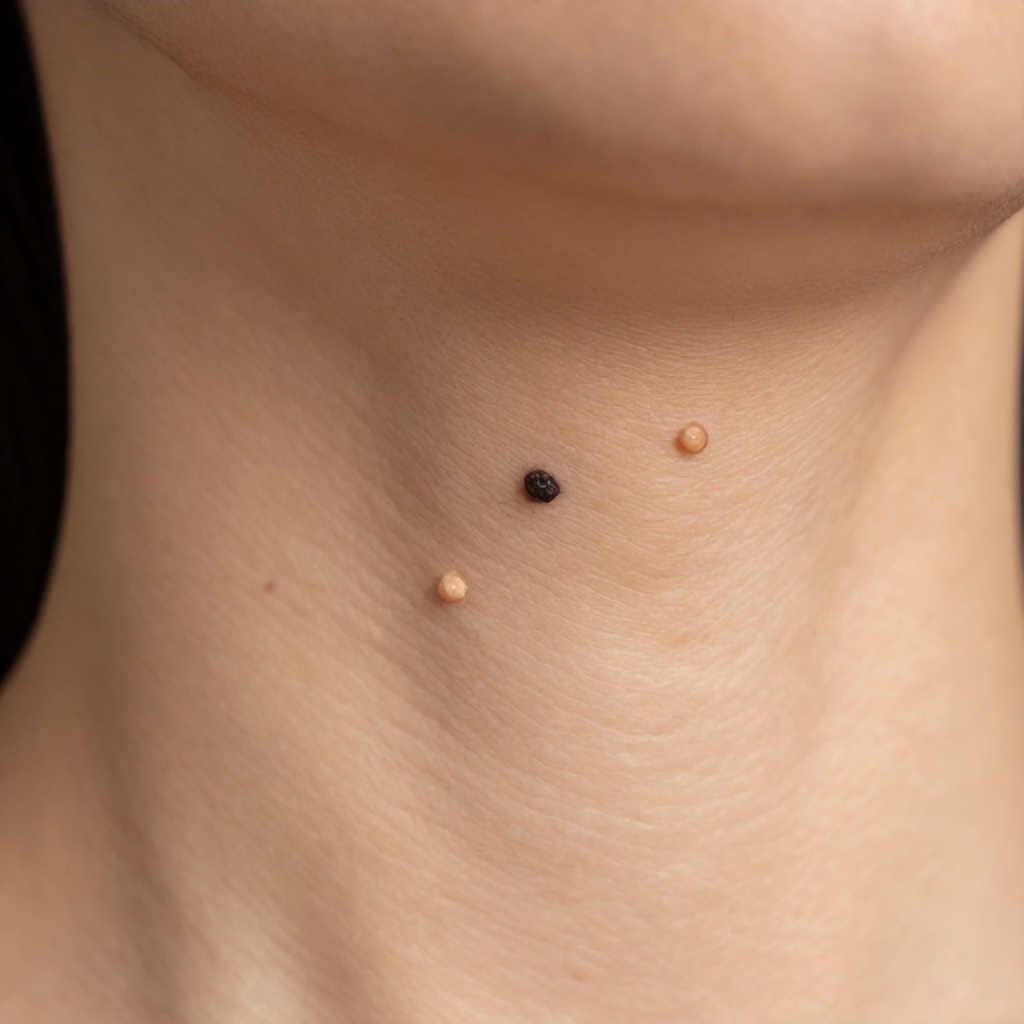
Common Culprits: What Are We Actually Looking At?
When we talk about benign skin growths, we’re really talking about a variety of epidermal abnormalities that don’t pose a threat. Think of them as little variations on the skin’s usual theme. They can appear in all sorts of shapes, sizes, and colors, and it’s not unusual for them to pop up on the neck. This area is particularly prone to certain types of growths due to sun exposure, friction from clothing or jewelry, and natural aging processes.
Seborrheic Keratoses: The Waxy or Scaly Spots
These are probably the most frequent offenders. Seborrheic keratoses often look like they’re stuck onto the skin, rather than being part of it. You might see them as brown, black, or even light tan spots. Their texture can range from slightly waxy to rough and scaly. They tend to appear more frequently as people age, and the neck is a prime location for them to develop. A dermatological close-up often reveals a very distinct, almost pasted-on appearance with a slightly irregular surface.
Sometimes, seborrheic keratoses can become irritated, perhaps from scratching or rubbing against clothing. When this happens, they might become red, inflamed, or even bleed a little. This doesn’t mean they’ve turned cancerous; it’s just a sign of irritation on a pre-existing benign neoplasm.
Skin Tags: The Little Danglers
Skin tags, also known medically as acrochordons, are soft, fleshy growths that hang off the skin. They’re often found in areas where skin rubs against skin or clothing, making the neck a very common spot. They can be small, the size of a grain of rice, or larger, dangling like tiny threads. Their color is usually similar to your surrounding skin tone, though some can be slightly darker.
While they’re totally benign, skin tags can sometimes be a cosmetic concern for people, or they might get caught on jewelry and become uncomfortable. Their clinical presentation is usually very straightforward – a small stalk attaching a soft piece of skin to the body.
Cherry Angiomas: The Little Red Dots
These are small, bright red bumps caused by a cluster of tiny blood vessels. Cherry angiomas are extremely common, especially after the age of 30. They can appear anywhere on the body, but the neck is a frequent site. They’re typically round and slightly raised, and their vibrant red color is their most distinguishing feature. A profile view of a cherry angioma shows a smooth, dome-shaped surface.
Despite their bright color, cherry angiomas are entirely benign skin growths. They don’t typically cause any pain or discomfort unless they are bumped or irritated. Their presence is a normal part of aging for many individuals.
Dermatofibromas: The Firm Little Lumps
Dermatofibromas are small, firm bumps that often feel like they’re embedded deeper into the skin. They can be pink, tan, brown, or reddish-brown. When you pinch the skin on either side of a dermatofibroma, it might dimple inwards – a sign known as the “dimple sign,” which is a key dermatological feature. These are common on the legs and arms but can certainly appear on the neck.
These non-cancerous growths can sometimes be mistaken for other skin lesions, which is why a dermatological assessment is always a good idea if you’re unsure. They are usually asymptomatic but can occasionally be tender or itchy.
Moles (Nevi): The Familiar Friends
Of course, we can’t talk about skin growths without mentioning moles. Most moles are completely benign. They are collections of pigment-producing cells called melanocytes. Moles can vary greatly in color, from tan to dark brown or black, and can be flat or raised. The neck area, being exposed to the sun, can accumulate a number of moles over time.
While the vast majority of moles are harmless, it’s important to be aware of the ABCDEs of melanoma to monitor for any changes. This includes Asymmetry, Border irregularity, Color variation, Diameter larger than 6mm, and Evolving (changing) in size, shape, or color. Any new or changing mole warrants a visit to a dermatologist for a clinical presentation review.
When to Get a Closer Look (From a Professional!)
While most of these skin irregularities are nothing to worry about, there are times when it’s wise to seek professional advice. A dermatologist is the expert when it comes to diagnosing and managing any dermatological condition. Medical imagery can be incredibly helpful in illustrating the differences between various skin lesions, but nothing beats a hands-on examination.
Changes You Should Watch For
The most important thing to remember is to pay attention to your skin. If you notice any of the following on your neck or anywhere else, it’s time to schedule an appointment with your doctor or a dermatologist:
- A new growth that appears suddenly.
- A growth that is changing in size, shape, or color.
- A growth that is itching, bleeding, or causing pain.
- A growth that looks significantly different from your other moles or skin spots.
- Any sore that doesn’t heal.
These are general guidelines, and it’s always better to be safe than sorry. A dermatological assessment can provide peace of mind and ensure that any potential issues are addressed early.
The Role of Medical Photography
In a clinical setting, medical photography plays a vital role. High-resolution images allow dermatologists to document skin conditions, track changes over time, and compare them to known presentations of various dermatological features. For patients, seeing detailed medical imagery can help them understand the nature of their skin condition, whether it’s a superficial growth or something requiring further investigation.
The anatomical detail captured in a good dermatological close-up can highlight subtle characteristics of a lesion that might be missed with the naked eye. This is particularly true when examining skin texture and the precise contours of epidermal abnormalities.
Understanding Your Skin Tone and Growths
It’s worth noting that the appearance of benign skin growths can sometimes be influenced by skin tone. For individuals with a fair skin tone, growths might be more noticeable against their lighter complexion, especially if they are pigmented. Conversely, on darker skin tones, certain types of growths might be less obvious or appear in different shades, such as hyperpigmentation or hypopigmentation.
Regardless of your skin tone, the principles of monitoring for changes remain the same. Regular self-examination is key to identifying any epidermal abnormalities that warrant a professional opinion. The neck area, with its varied sun exposure and potential for friction, is a good place to start.
Personal Care and Management
For most benign skin growths, no specific treatment is necessary. They are simply a part of your skin’s natural landscape. However, if a growth is causing discomfort, is prone to irritation, or is a cosmetic concern, there are options available.
When to Consider Removal
If a skin tag is constantly getting caught on your necklace, or a seborrheic keratosis is irritating your collar, a dermatologist can safely remove it. This is usually a quick and simple procedure. Options include:
- Cryotherapy (freezing the growth).
- Electrocautery (burning the growth off with an electric current).
- Surgical excision (cutting the growth out).
- Shave biopsy (shaving off superficial growths).
The method chosen will depend on the type, size, and location of the growth. It’s important to have these procedures done by a qualified medical professional to minimize the risk of infection or scarring.
Preventing Irritation
While you can’t prevent benign skin growths from forming entirely, you can take steps to minimize irritation. Wearing loose-fitting clothing around the neck can help reduce friction on skin tags. If you have growths that tend to get dry or itchy, keeping the skin moisturized can sometimes help. Sun protection is also always a good idea, as excessive sun exposure can contribute to the development of certain types of skin lesions over time.
Ultimately, understanding the common benign skin growths on your neck means recognizing that these are usually normal variations. A keen eye and regular self-checks, coupled with professional advice when needed, are your best tools for maintaining healthy skin.