
The Gentle Art of Blemish Removal: When Tweezers Might Be Your Friend
Precision tweezers can be a surprisingly effective tool for safely and effectively addressing certain skin blemishes, but it’s crucial to understand when and how to use them to avoid causing more harm than good.

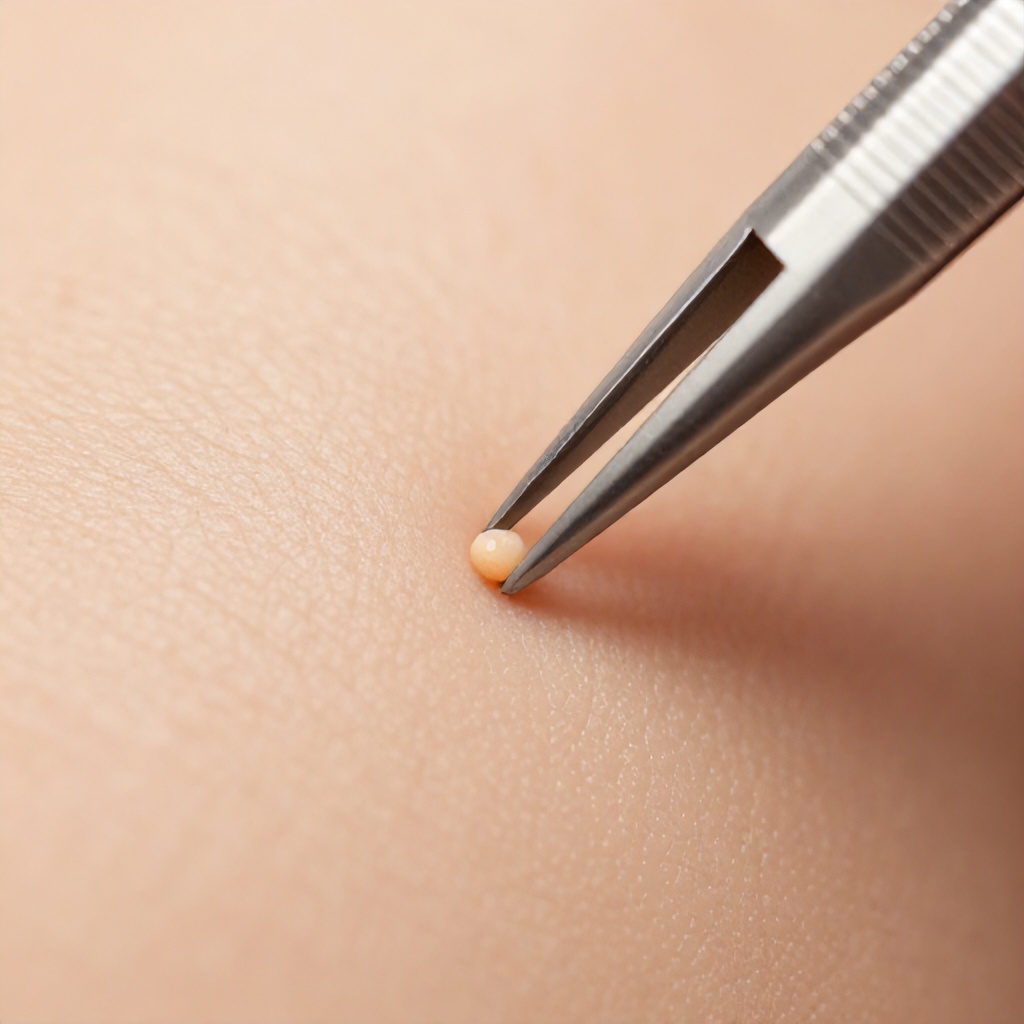
That close-up view of skin blemish being gently held by precision tweezers often sparks a mix of curiosity and perhaps a little apprehension. We’ve all been there, staring at a stubborn pore or a tiny bump on our skin, wondering if a little manual intervention is the answer. While the thought of squeezing or picking might be tempting, especially with those fine-tipped beauty tools, it’s a delicate dance. The key here is precision and gentleness, turning what could be a dermatological concern into a manageable personal grooming task.
Understanding the Blemish
Before we even think about reaching for tweezers, it’s vital to understand what kind of facial imperfection we’re dealing with. Not all skin blemishes are created equal, and attempting to remove the wrong kind can lead to inflammation, infection, or scarring. The epidermis, our skin’s outer layer, is a complex barrier, and we need to treat it with respect.
Common culprits often involve the sebaceous gland and its associated follicle. These glands produce oil (sebum) that lubricates our skin and hair. When this oil, along with dead skin cells and bacteria, gets trapped, it can lead to various types of blemishes. We’re talking about the familiar comedones – the non-inflammatory blockages that appear as blackheads (open comedones) or whiteheads (closed comedones). These are often the most amenable to careful extraction.
Then there are inflammatory lesions like papules (small red bumps) and pustules (red bumps with pus). These are more sensitive and often require a different approach, sometimes leaning towards professional dermatology tools or treatments. A skin lesion can encompass a wide range of changes on the skin, and some require immediate attention from a dermatologist.
Why Precision Tweezers?
When we talk about using tweezers for skin blemishes, we’re not talking about the chunky, blunt ones you might use for eyebrows. The effectiveness lies in the “precision” aspect. These are fine-tipped tools, often made of stainless steel, designed for intricate work. Think of them as miniature surgical instruments for your personal beauty treatment.
Their primary advantage is control. A good pair of precision tweezers allows you to grasp a very small object – like the tip of a blackhead or a tiny ingrown hair – without damaging the surrounding skin. This level of control is essential for minimizing trauma to the skin texture and reducing the risk of further irritation or infection. They offer a micro view, enabling you to see exactly what you’re working with.
For certain types of blemishes, particularly those with a clear, accessible head, precision tweezers can facilitate a cleaner, more targeted extraction than simply trying to squeeze with your fingers, which can spread bacteria and apply uneven pressure.
When Tweezers Are a Good Idea (and When They’re Not)
So, when is it appropriate to consider using precision tweezers for a skin blemish? The golden rule is: only when the blemish is ready for extraction.
Ideal Candidates for Tweezers:
- Blackheads: These are open comedones where the trapped sebum and dead skin cells have oxidized, giving them a dark appearance. If the blackhead has a visible, raised head that feels ready to release, precision tweezers can be used to gently grasp it and ease it out.
- Whiteheads: These are closed comedones. If a whitehead has a very small, visible white or yellowish head at the very surface of the skin, and it feels soft and ready to yield, careful extraction might be possible.
- Ingrown Hairs: Sometimes, a hair can curl back and grow into the skin, causing a small bump. Precision tweezers are excellent for gently lifting the hair out so it can grow properly. This is a common use for beauty tools in personal grooming.
- Splinters or Tiny Debris: While not strictly a “blemish” in the acne sense, tiny splinters or bits of debris embedded in the skin are prime candidates for removal with precision tweezers.
When to Leave the Tweezers Alone:
- Inflamed Pimples (Papules and Pustules): If the blemish is red, swollen, painful, or has a lot of pus, attempting extraction with tweezers can push bacteria deeper into the skin, leading to more inflammation, infection, and potentially a deeper scar. This is a dermatological concern that often requires topical treatments or professional intervention.
- Cysts: These are deeper, more significant lesions that are filled with fluid or semi-solid material. Trying to extract a cyst with tweezers is futile and will likely cause significant damage.
- Moles or Skin Tags: These are not blemishes to be “extracted.” Moles should be monitored for changes, and skin tags should be removed by a dermatologist.
- Any Blemish That Doesn’t Have a Clear Head: If you can’t see a distinct point of exit for the trapped material, don’t force it.
- Areas That Are Already Irritated or Broken: Never try to extract from skin that is already red, raw, or has an open wound.
The Gentle Extraction Process: A Step-by-Step Guide
If you’ve identified a blemish that fits the criteria for careful extraction using precision tweezers, follow these steps meticulously. Remember, gentleness is paramount. This is a beauty treatment, not a battle.
-
Cleanse Your Hands and the Area: This is non-negotiable. Wash your hands thoroughly with soap and water. Then, gently cleanse the skin around the blemish with a mild cleanser and lukewarm water. Pat the area dry with a clean towel.
-
Sterilize Your Tweezers: Before touching your skin, your precision tweezers must be sterile. You can do this by wiping them with rubbing alcohol (isopropyl alcohol) or by holding the tips briefly in a flame (allow them to cool completely!). This is a critical step to prevent introducing bacteria.
-
Prepare the Skin (Optional but Recommended): For blackheads or whiteheads that are a bit stubborn, a warm compress can help soften the skin and open the pores slightly. Apply a clean, warm, damp washcloth to the area for a few minutes. This can make the extraction process easier and less traumatic.
-
Position the Tweezers: Using a mirror and good lighting, position the tips of your precision tweezers on either side of the blemish’s head. You want to grasp the very tip of the comedone or the hair. The goal is to create gentle pressure to encourage the contents to release.
-
Apply Gentle, Steady Pressure: Slowly and gently squeeze the tweezers together. The pressure should be just enough to encourage the blemish to release its contents. Avoid yanking, twisting, or digging. If it doesn’t come out with minimal, gentle pressure, stop. Forcing it will only cause damage.
-
Clean Up: Once the blemish has been extracted, gently wipe away any residue with a clean cotton pad or tissue. You might see a small amount of sebum or dead skin cells. If there was bleeding, apply gentle pressure with a clean tissue.
-
Post-Extraction Care: Apply a small amount of an antiseptic or a soothing toner to the area. Avoid heavy creams or makeup on the treated spot for a few hours. A dab of a spot treatment containing salicylic acid or benzoyl peroxide can also be beneficial to help prevent future breakouts.
-
Clean Your Tools Again: After you’re finished, clean your tweezers again with rubbing alcohol.
Beyond Tweezers: When to Seek Professional Help
While precision tweezers can be useful for specific, minor issues, it’s important to recognize their limitations. Many skin conditions and blemishes are best left to the experts. A dermatologist or a trained esthetician has the knowledge, tools, and sterile environment to address more complex skin concerns.
If you’re dealing with persistent acne, deep cystic lesions, or any skin lesion that looks unusual or is causing you concern, consulting a dermatologist is the wisest course of action. They can diagnose the skin condition accurately and recommend appropriate treatments, which might include prescription medications, professional extractions, or other cosmetic procedures. Sometimes, what appears to be a simple blemish can be a sign of a more significant dermatological concern.
The close-up view of skin blemish being gently held by precision tweezers is a powerful reminder that our skin requires careful attention. By understanding the anatomy of a blemish, choosing the right tools, and acting with precision and gentleness, we can sometimes manage minor imperfections effectively. However, always prioritize the health and integrity of your skin. When in doubt, always seek the advice of a skincare professional.