
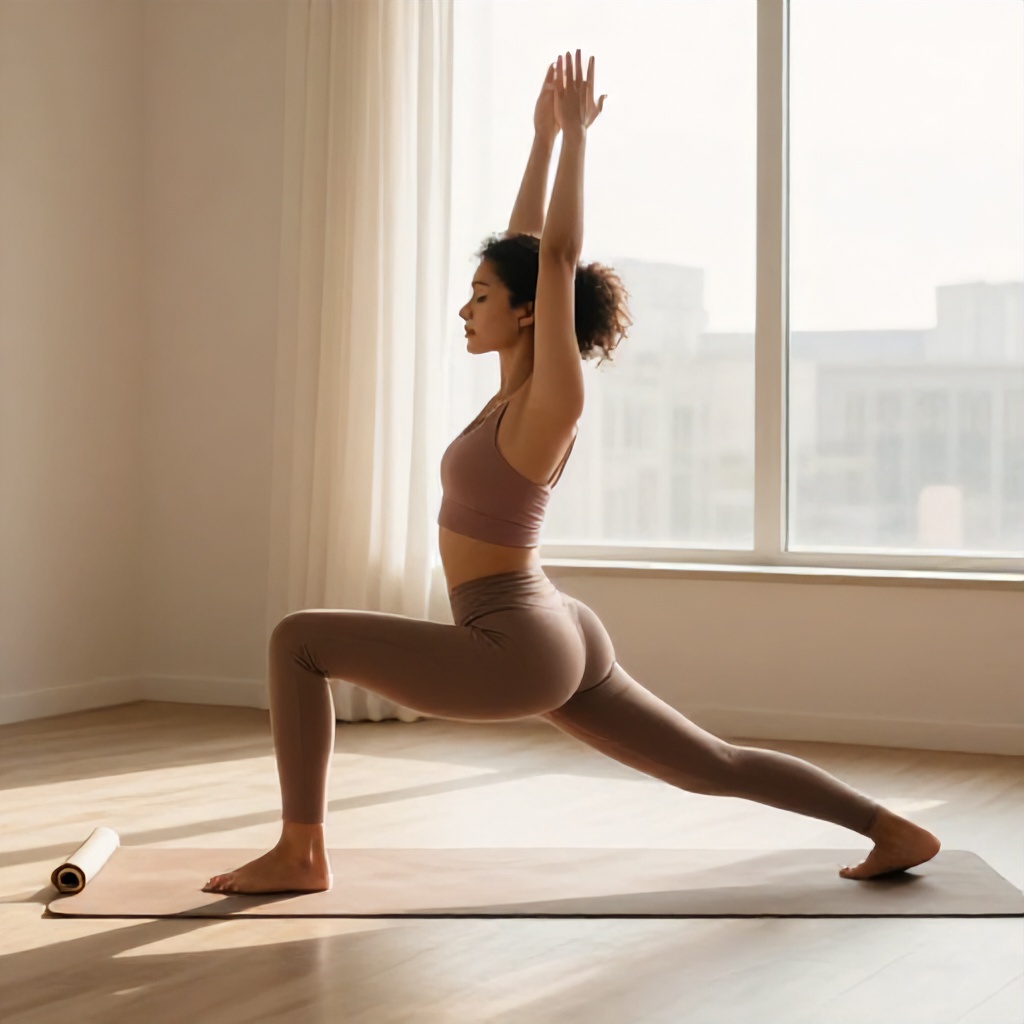
Starting a 30-day morning yoga challenge with a printable guide is an excellent way for beginners to build a consistent practice, bringing a sense of calm and strength to their day right from the moment they wake up.

Why Embrace a Morning Yoga Challenge?
There’s something uniquely powerful about greeting the sun with intention. Morning yoga isn’t just about stretching; it’s about setting a positive tone for the hours ahead. It offers a gentle awakening for your body and mind, helping you transition from sleep to activity with grace.
Many people find their mornings chaotic, rushing from one task to the next. Integrating even a short yoga practice can act as a grounding anchor. It provides a dedicated space for self-care before the demands of the day take over, fostering a sense of control and peace.
For beginners, the idea of starting yoga can feel daunting. A structured challenge removes much of that initial intimidation. It breaks down the journey into manageable daily segments, making it easier to commit and see tangible progress. This consistent, daily engagement helps transform a new activity into a lasting habit, building both physical strength and mental resilience over time.
The benefits extend beyond physical flexibility. Regular morning yoga can boost your energy levels naturally, improve focus and concentration, and even help manage stress more effectively throughout your day. It’s a holistic approach to well-being, nurturing both your physical vessel and your inner landscape.
What Makes This 30-Day Challenge Unique?
This particular 30-day morning yoga challenge stands out because it’s designed with real beginners in mind, focusing on accessibility, clarity, and ease of use. It’s not about complex inversions or advanced balances; it’s about foundational movements that build confidence and body awareness.
The core of this challenge is its printable nature. Forget scrolling through videos or dealing with app notifications. You simply print out the daily guide, hang it where you can see it, and follow along. This physical, tangible resource makes your practice screen-free, allowing for a deeper connection to your body without digital distractions. The illustrations provide clear visual cues for each pose, ensuring you understand the alignment without needing an instructor right there.
Each day introduces a thoughtful sequence of poses, gradually building on what you’ve learned. The progression is gentle, ensuring your body adapts comfortably without feeling overwhelmed. You’ll find a mix of standing poses, seated stretches, and gentle twists, all designed to improve flexibility, strength, and balance. Modifications are often suggested directly on the printable, empowering you to adjust poses to suit your body’s current capabilities.
Another fantastic aspect is the minimal equipment requirement. All you truly need is a comfortable space and perhaps a yoga mat, though even a soft towel or rug can work in a pinch. This removes barriers, making it simple to start right away, whether you’re at home, traveling, or just need a quick reset in a quiet corner.
How Your 30-Day Challenge Will Work
Embarking on this challenge is straightforward. Each day, you’ll dedicate a short period, typically between 10 to 20 minutes, to your yoga practice. The printable acts as your daily guide, illustrating the sequence of poses for that specific day.
The challenge is structured to provide a comprehensive, yet beginner-friendly, experience. You’ll generally begin with a brief warm-up, often involving gentle stretches or mindful breathing, to prepare your body for movement. This helps prevent injury and eases you into the practice.
Following the warm-up, you’ll move through a series of main poses. These poses are carefully selected to target different muscle groups, improve flexibility, and build foundational strength. The illustrations on your printable will show you how to get into each pose, and often include simple cues for alignment or breath. As the days progress, you might notice the sequences subtly evolving, perhaps introducing a new pose or holding a familiar one for a slightly longer duration, encouraging gradual growth.
Every session concludes with a cool-down, typically involving more restorative poses and a period of relaxation, like Savasana (Corpse Pose). This is a vital part of the practice, allowing your body to integrate the benefits of the movement and your mind to settle into a state of calm. It’s a moment to simply be, without effort or expectation.
The most important aspect of this challenge is to listen to your body. Yoga is not about pushing yourself into pain or achieving a perfect shape. It’s about exploring your own range of motion, honoring your limits, and finding comfort within each pose. If a pose feels uncomfortable, always choose a modification or skip it entirely. Consistency and mindful movement are far more valuable than striving for an unsustainable ideal.
Understanding Your Printable: A Visual Guide to Daily Practice
Your 30-day morning yoga challenge printable is designed for ultimate clarity and ease of use. Think of it as your personal, silent instructor, available whenever you are. Each day’s practice will be laid out clearly, typically on its own dedicated page or section.
What you’ll find on your printable includes the date or day number prominently displayed, so you can easily track your progress. Below that, a sequence of beautifully illustrated poses will guide you. Each illustration depicts the pose from a clear angle, making it simple to mimic the shape with your own body. Alongside each drawing, you’ll see the common name of the pose (like “Mountain Pose”) and often its Sanskrit name as well, offering a glimpse into yoga’s rich tradition.
Crucially, brief, actionable cues will accompany each pose. These aren’t lengthy paragraphs, but rather concise instructions like “Ground through your feet,” “Lengthen your spine,” or “Breathe deeply.” These short phrases are designed to remind you of key alignment points or breathing techniques without overwhelming you. Some printables might even include a suggested hold time for each pose, or a number of breaths to take.
To use it effectively, simply print the entire challenge. You might choose to bind it, or perhaps hang each day’s sheet on a wall or mirror where you practice. As you complete each day, you can check it off, creating a visual record of your commitment and progress. This small act of checking off a day can be incredibly motivating and satisfying, reinforcing your habit.
Remember that the illustrations are guides, not rigid rules. Your body is unique, and your expression of a pose might look slightly different from the drawing. Always prioritize how the pose feels over how it looks. If a pose feels too intense, look for suggested modifications on the printable or simply ease out of the pose until you find a comfortable position. The printable is a tool to support your journey, not a strict mandate.
Essential Yoga Poses for Beginners (You’ll Encounter These!)
This challenge focuses on fundamental poses that build a strong foundation. Here are some examples of what you can expect to see and practice:
Mountain Pose (Tadasana)
This seemingly simple standing pose is the foundation for almost all other standing poses. You stand tall with your feet together or hip-width apart, distributing your weight evenly. Engage your thigh muscles, lift your kneecaps, and lengthen your spine. Let your arms hang naturally by your sides, palms facing forward. It teaches you to find stability and alignment, connecting you to the earth while reaching towards the sky.
Child’s Pose (Balasana)
A wonderful resting pose that offers comfort and gentle stretching. Kneel on your mat, bringing your big toes to touch and spreading your knees wide or keeping them together. Fold forward, resting your torso between or on your thighs. Your forehead comes to the mat, and your arms can extend forward or rest alongside your body, palms up. It gently stretches the hips, thighs, and ankles, while calming the brain and helping relieve stress and fatigue.
Cat-Cow (Marjaryasana-Bitilasana)
This flowing sequence warms up the spine and promotes flexibility. Start on all fours, wrists under shoulders and knees under hips. As you inhale, drop your belly, lift your chest and tailbone, gazing slightly up (Cow Pose). As you exhale, round your spine towards the ceiling, tucking your chin to your chest (Cat Pose). Moving between these two poses synchronizes breath with movement, releasing tension in the back and neck.
Downward-Facing Dog (Adho Mukha Svanasana)
One of yoga’s most iconic poses, Downward-Facing Dog stretches the entire body while building strength. From all fours, tuck your toes and lift your hips high, forming an inverted V-shape. Press firmly through your hands and feet, lengthening your spine. Keep a slight bend in your knees if your hamstrings feel tight, prioritizing a long spine over straight legs. It strengthens the arms and legs, stretches the shoulders, hamstrings, and calves, and calms the brain.
Cobra Pose (Bhujangasana)
A gentle backbend that strengthens the spine and stretches the chest and abdomen. Lie on your stomach, hands under your shoulders, elbows tucked in. Press the tops of your feet and thighs into the mat. As you inhale, gently lift your head and chest off the floor, keeping a slight bend in your elbows. Avoid pushing up too high; use your back muscles, not just your arms. It improves spinal flexibility and invigorates the body.
Tree Pose (Vrksasana)
This balancing pose cultivates focus and stability. Stand in Mountain Pose. Shift your weight to your left foot. Place the sole of your right foot on your inner left ankle, calf, or inner thigh (avoiding the knee). Bring your hands to prayer at your heart or extend them overhead. Find a steady gaze point (drishti) to help with balance. It strengthens the ankles and thighs, stretches the groin, and improves concentration.
Seated Forward Fold (Paschimottanasana)
A calming pose that stretches the entire back of the body. Sit on your mat with your legs extended straight in front of you, feet flexed. Inhale to lengthen your spine, then exhale as you hinge from your hips, folding forward over your legs. Reach for your shins, ankles, or feet. Keep your spine long, even if it means not folding as deeply. This pose calms the brain, helps relieve stress, and stretches the hamstrings, spine, and shoulders.
Corpse Pose (Savasana)
Often considered the most important pose, Savasana concludes your practice. Lie flat on your back, arms slightly away from your body with palms up, and legs extended with feet falling open naturally. Close your eyes and allow your body to completely relax, releasing any tension. This pose allows your body and mind to integrate the benefits of your practice, promoting deep relaxation and a sense of peace.
Tips for a Successful 30-Day Yoga Journey
Committing to a challenge is a fantastic first step, but a few practical tips can make your journey even more rewarding and sustainable.
First, prioritize consistency over perfection. It’s far better to do 10 minutes of yoga every day than to aim for an hour twice a week and then miss sessions. Even on days when you feel tired or unmotivated, try to do a few poses. The act of showing up is often the biggest hurdle, and once you’re on the mat, you’ll usually feel better for it.
Always listen to your body. This isn’t a competition. If a pose feels painful, back off. If you’re tired, choose a gentler variation or take Child’s Pose. Yoga is about self-awareness and self-care, not pushing through discomfort. Your body will thank you for being mindful of its signals.
Don’t compare yourself to others, whether it’s an image on the printable or someone you see online. Everyone’s body is different, with varying levels of flexibility and strength. Focus on your own progress, however small it may seem. The journey is personal.
Pay attention to your breath. It’s the core of yoga. Conscious, deep breathing (Ujjayi breath, if you learn it, or simply deep diaphragmatic breathing) enhances every pose, calms your nervous system, and helps you stay present. Let your breath guide your movements.
Create a dedicated, inviting space for your practice. It doesn’t need to be large or elaborate, just a clean, quiet corner where you can unroll your mat. This ritual of preparing your space signals to your mind and body that it’s time for yoga.
Consider keeping a simple journal. After each session, jot down a few words about how you felt, what you noticed, or any challenges you encountered. This can be a powerful tool for tracking your physical and mental progress, and it provides a record of your journey.
Remember that modifications are your friends. Using props like blocks, blankets, or even a sturdy chair can make poses more accessible or comfortable. Don’t view them as a sign of weakness; they are tools that help you find the correct alignment and experience the benefits of a pose safely.
Beyond the 30 Days: What Comes Next?
Completing a 30-day morning yoga challenge is a significant accomplishment and a fantastic springboard for a continued practice. You’ve built consistency, learned foundational poses, and hopefully, experienced the many benefits of a regular yoga routine.
Once your 30 days are complete, you have several options for how to continue your journey. You might simply repeat the challenge, perhaps focusing on deepening your understanding of each pose or holding them for longer. Repetition can be incredibly beneficial for solidifying your practice and noticing subtle improvements in flexibility and strength.
You could also explore slightly longer flows or introduce new poses. Many online resources offer free yoga videos for beginners or gentle flows that build on the basics. Look for classes or videos that focus on specific areas you want to improve, such as hip flexibility or core strength.
If you’ve enjoyed the self-guided aspect, you might seek out other printable challenges or sequences. Or, if you’re ready for more interaction, consider finding a local yoga studio. Practicing with an in-person instructor can provide personalized feedback, corrections, and a sense of community that enhances your learning.
Ultimately, the goal is to maintain the habit you’ve so diligently built. Yoga is a lifelong practice, offering endless opportunities for growth, self-discovery, and well-being. Keep listening to your body, keep breathing deeply, and keep showing up for yourself.