Gentle Lying Down Yoga Flow for Improved Flexibility and Relaxation

Gentle Lying Down Yoga Flow for Improved Flexibility and Relaxation

This gentle lying down yoga flow is designed to boost your flexibility and melt away tension, all from the comfort of your yoga mat. You don’t need to be a seasoned yogi to enjoy these simple yet effective poses. We’ll focus on mindful movement and deep breaths, creating a peaceful sanctuary for your body and mind.

Why Choose a Lying Down Yoga Practice?

Sometimes, the idea of a full yoga practice can feel a bit daunting, especially if you’re feeling tired or stiff. That’s where a lying down yoga flow shines. It’s incredibly accessible, requiring minimal effort and offering maximum benefits. This type of practice, often referred to as supine yoga or floor yoga, is perfect for beginners, those recovering from injury, or anyone seeking a deeply relaxing stretching routine.

The beauty of lying down yoga is its inherent gentleness. Gravity assists you in many of the poses, allowing for a deeper stretch without strain. It’s a fantastic way to cultivate body awareness, gently coaxing tight muscles to release their grip. This mindful movement can also significantly improve your physical well-being and serve as a powerful tool for relaxation techniques.

Preparing Your Space

Before you begin your yoga practice, take a moment to set the scene. Find a quiet space where you won’t be disturbed. Lay out your yoga mat, ensuring it’s comfortable and provides adequate cushioning. Dim the lights if you like, or light a candle to create a calming ambiance. You might even want to put on some soft, instrumental music.

Having a bolster or firm pillow nearby can be helpful for some poses, offering extra support and deepening the sense of relaxation. If you don’t have a bolster, a rolled-up blanket or a few firm pillows will do the trick. Wear comfortable clothing that allows for free movement. The goal is to feel completely at ease.

Your Gentle Lying Down Yoga Sequence

This yoga sequence focuses on poses that can be done entirely lying down, making it ideal for a restorative yoga session. Each pose is held for several breaths, allowing you to sink into the stretch and connect with your body. Remember to breathe deeply and evenly throughout the practice. Inhale through your nose, expanding your belly and chest, and exhale slowly through your nose or mouth, releasing any tension.

1. Reclining Butterfly Pose (Supta Baddha Konasana)

Start by lying on your back. Bring the soles of your feet together, letting your knees fall open to the sides. This is a wonderful hip opener and a great way to begin releasing tension in the lower body. If your knees feel strained, place blocks or rolled-up towels under your outer thighs for support.

Allow your arms to rest by your sides, palms facing up, or place one hand on your heart and the other on your belly to feel your breath. Close your eyes and focus on the gentle opening in your hips and groin. Hold for 5-10 deep breaths, allowing your body to relax into the pose.

2. Supine Spinal Twist (Supta Matsyendrasana)

From Reclining Butterfly, gently draw your knees back together. Extend your arms out to the sides in a T-shape, palms down. Inhale, and as you exhale, slowly let both knees fall to one side. Keep both shoulders grounded on the mat as much as possible.

Turn your head to look in the opposite direction of your knees, if comfortable for your neck. This pose is excellent for releasing tension in the spine and can aid digestion. If your knees don’t reach the floor, place a block or pillow underneath them. Hold for 5-8 breaths on each side, breathing into the gentle twist.

3. Knees-to-Chest Pose (Apanasana)

Return to lying flat on your back. On an exhale, draw both knees into your chest. Wrap your arms around your shins or clasp your hands behind your thighs. Gently rock from side to side, massaging your lower back against the mat. This pose is incredibly soothing for the back and helps to release tension in the hips and hamstrings.

Focus on deep, even breaths. Imagine each exhale releasing a little more tightness from your body. Hold for 5-10 breaths. This is a simple yet effective part of any floor yoga practice.

4. Reclining Pigeon Pose (Supta Kapotasana)

From Knees-to-Chest, lower your feet to the mat, knees bent. Cross your right ankle over your left thigh, just above the knee. Flex your right foot to protect your knee. You should feel a stretch in your right hip and glute.

For a deeper stretch, lift your left foot off the floor and interlace your fingers behind your left thigh, drawing both legs closer towards your chest. Keep your head and shoulders relaxed on the mat. Hold for 5-8 breaths, then switch sides. This variation of pigeon pose is much gentler on the joints than the traditional seated version, making it a great flexibility exercise.

5. Bridge Pose (Setu Bandhasana) – Gentle Variation

Lie on your back with your knees bent and feet flat on the floor, hip-width apart. Your arms should be by your sides, palms down. Inhale and gently lift your hips off the floor, just a few inches. Keep your neck long and avoid pushing your chin towards your chest.

This gentle lift helps to open the chest and strengthen the back muscles. You can interlace your fingers underneath your back and gently roll your shoulders under to deepen the chest opening, or keep your arms by your sides. Hold for 3-5 breaths, then exhale and slowly lower your hips back down. Repeat 3-5 times. This pose can also be supported by placing a block under your sacrum for a more restorative experience.

6. Legs-Up-the-Wall Pose (Viparita Karani) – Modified

This is a wonderfully restorative pose that can be done with a wall or without. If you have a wall available, scoot your hips close to it and extend your legs straight up the wall. Your arms can rest by your sides, palms up, or you can place them on your belly. If you don’t have a wall, simply lie on your back and extend your legs straight up towards the ceiling.

This pose is excellent for improving circulation, calming the nervous system, and relieving tired legs and feet. It’s a cornerstone of many restorative yoga sequences. Sink into the pose and breathe deeply. Stay here for 5-10 minutes, allowing yourself to completely relax.

7. Corpse Pose (Savasana)

The most important pose in any yoga practice! Lie flat on your back, letting your legs extend long and fall open. Allow your arms to rest by your sides, a little away from your body, with your palms facing up. Let your shoulders relax away from your ears.

Close your eyes and consciously release any tension you are holding in your body, starting from your toes and moving all the way up to the crown of your head. Allow your breath to become natural and effortless. Simply be present in this moment of stillness and deep relaxation. Stay here for at least 5-10 minutes, or as long as you feel comfortable. This is where the true healing and integration of your yoga practice happens.

Tips for Enhancing Your Practice

Consistency is key when it comes to improving flexibility and relaxation. Aim to practice this lying down yoga flow a few times a week. Even a short 15-20 minute session can make a significant difference.

Listen to your body. This is not about pushing yourself to your limits. If a pose feels uncomfortable or causes pain, ease out of it or modify it. The goal is gentle movement and mindful awareness, not strain.

Incorporate breathwork. Deep, conscious breathing is a powerful relaxation technique. Focus on your inhales and exhales, letting them guide you deeper into the poses and into a state of calm.

Consider using props. Bolsters, blankets, and blocks can make poses more accessible and comfortable, allowing you to relax more fully and experience the full benefits of this gentle yoga practice. They are essential tools for therapeutic yoga.

Mindfulness is paramount. Pay attention to the sensations in your body. Notice where you feel tightness, where you feel release. This heightened body awareness is a core benefit of any yoga practice, including this supine yoga sequence.

Beyond the Mat

The benefits of this gentle lying down yoga flow extend beyond your mat time. By regularly practicing mindful movement and relaxation techniques, you can cultivate a greater sense of peace and resilience in your daily life. This practice can help reduce stress, improve sleep quality, and foster a more positive outlook on your physical well-being.

Whether you’re looking for a simple stretching routine, a way to unwind after a long day, or a gentle introduction to yoga for beginners, this lying down yoga sequence offers a nurturing and effective approach. Enjoy the journey of discovering greater flexibility and profound relaxation, one breath at a time.
Yoga Poses for Improved Sleep Quality and Restful Evenings

Incorporating a mindful yoga sequence into your evening can significantly improve the quality of your sleep, helping you unwind from the day’s demands and prepare your body and mind for a truly restful evening.

Why Yoga is Your Nighttime Ally for Peaceful Sleep

Stress and tension often build up throughout our day, making it difficult to switch off when bedtime arrives. Our minds race, our bodies feel tight, and the idea of deep sleep seems distant. This is precisely where a gentle yoga practice shines as a powerful sleep aid. It’s not about intense physical exertion; rather, it’s about calming the nervous system, releasing physical tightness, and fostering a serene mood.

The practice of mindful movement combined with conscious breathing helps to lower cortisol levels, the body’s primary stress hormone. As these levels decrease, your body naturally shifts from a “fight or flight” state to a “rest and digest” mode, which is essential for initiating and maintaining peaceful sleep. Regular pre-sleep yoga can retrain your body to recognize the signals for relaxation, making it easier to drift off and enjoy a truly restorative night.

Many people find that a short, consistent evening routine of soothing poses acts as a signal to their brain that it’s time to wind down. This can improve sleep improvement over time, moving you towards more consistent deep sleep without the need for harsh medications or endless tossing and turning. It’s a natural, holistic approach to a better night’s rest.

Creating Your Ideal Wind-Down Yoga Sequence

Before you even begin the physical postures, setting the right atmosphere is key for a truly tranquil yoga experience. Think about dimming the lights, perhaps lighting a candle (safely, of course), or diffusing some calming essential oils like lavender. Wear comfortable clothing that doesn’t restrict movement, and make sure your space is quiet and free from distractions.

The goal of this nighttime routine is gentle unwinding, not a workout. Listen to your body and move slowly, holding each yoga posture for several breaths. Focus on your breath, allowing it to deepen and lengthen, which further signals relaxation to your nervous system. Remember, consistency is more impactful than intensity. Even 10-15 minutes of gentle yoga before bed can make a significant difference to your sleep quality.

Consider using props like blankets, pillows, or a bolster to support your body in these restorative yoga poses. This allows for deeper relaxation without straining, making the practice more accessible and comfortable for everyone. The aim is to release tension, not create more.

9 Calming Yoga Poses for a Restful Evening

These selected yoga poses are designed to gently stretch your muscles, calm your mind, and prepare your entire being for a night of profound rest. Hold each pose for at least 5-10 deep breaths, or longer if it feels good, allowing your body to soften with each exhale.

1. Child’s Pose (Balasana)

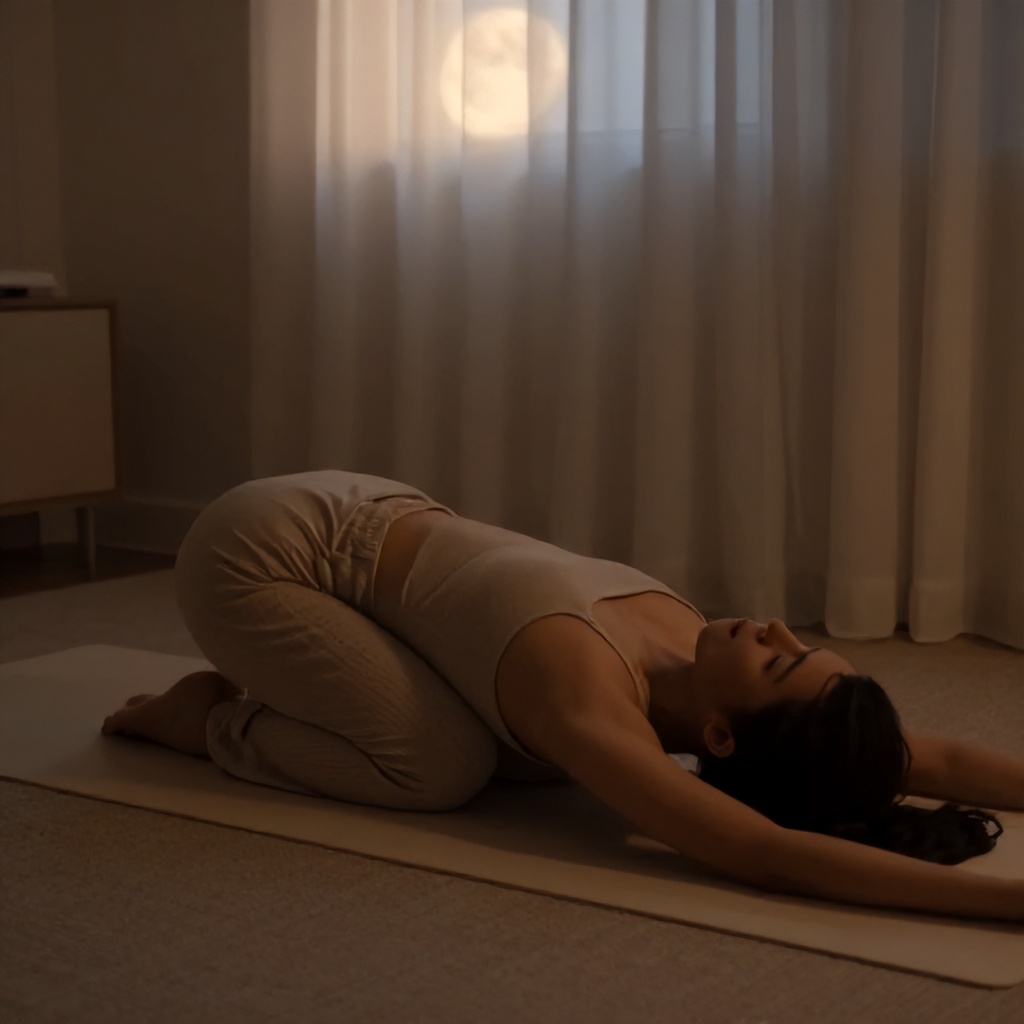
Child’s Pose is a wonderfully soothing posture that helps to quiet the mind and gently stretch the hips, thighs, and ankles. Begin on your hands and knees, spreading your knees wide with big toes touching. Sink your hips back towards your heels, allowing your torso to rest between your thighs. Extend your arms forward or bring them back alongside your body, resting your forehead on the mat. This pose offers a sense of security and surrender, making it an excellent starting point for any pre-sleep yoga sequence. The gentle compression on the abdomen can also aid digestion, further contributing to a comfortable state for sleep. Focus on deep breathing into your back, a powerful relaxation technique for stress relief yoga, fostering a serene mood.

2. Supine Spinal Twist (Supta Matsyendrasana)

Twists are fantastic for releasing tension in the spine and gently massaging internal organs, aiding relaxation. Lie on your back, knees bent, feet flat. Extend arms to a “T” shape. Gently let both knees fall to one side, keeping shoulders grounded. Turn your head opposite your knees for a deeper neck stretch. Use a pillow under your top knee if needed. This gentle twist helps release tightness in the lower back and hips, common areas where stress accumulates, preparing your body for better sleep. Holding this pose on each side for a few minutes allows for a deep, passive stretch, encouraging the release of physical and energetic blockages. It’s a simple yet effective yoga posture for unwinding at the end of a long day.

3. Legs-Up-the-Wall Pose (Viparita Karani)

This restorative yoga pose is a true gem for relaxation and a fantastic sleep aid. Sit with one hip close to a wall, then swing your legs up the wall as you lie back, torso perpendicular. Your sitting bones should be comfortably close to the wall, legs straight but not locked. Place a cushion under your lower back for added comfort. This inversion helps calm the nervous system, reduce swelling in legs and feet, and gently drain stagnant fluid, promoting lightness and ease. It’s an excellent way to transition into a peaceful sleep. The gentle inversion encourages blood flow towards the upper body, which can soothe headaches and alleviate fatigue. Many find this pose incredibly grounding and tranquil, making it an essential part of a wind-down yoga routine. Stay here for 5-15 minutes, allowing full surrender.

4. Reclined Bound Angle Pose (Supta Baddha Konasana)

This pose is a deeply relaxing hip opener that releases stored tension in the groin and inner thighs, areas often tight from prolonged sitting. Lie on your back, bring the soles of your feet together, allowing knees to fall open. Place cushions or rolled blankets under your outer thighs for support, making the stretch gentler. Rest arms by your sides, palms up, or place hands on heart and belly. This yoga posture encourages openness, fostering a serene mood conducive to sleep. As you breathe deeply, imagine worries melting away. It’s a wonderful way to practice mindful movement and prepare your body for deep sleep. The gentle stretch and supported position make it perfect for a bedtime yoga sequence, helping you truly relax and let go.

5. Seated Forward Fold (Paschimottanasana)

A gentle forward fold is incredibly calming for the nervous system and provides a wonderful stretch for the entire back of the body, including hamstrings and spine. Sit on the floor, legs extended straight, feet flexed. Use a folded blanket under sitting bones if hamstrings are tight. Inhale to lengthen, then exhale as you hinge from hips, folding forward over legs. Don’t force it; the goal is a gentle stretch. Allow your head to hang heavy, releasing neck and shoulder tension. Rest hands on shins, ankles, or feet. This pose encourages introspection and quietude, aiding in stress relief yoga. The act of folding inward can be very grounding, helping to quiet an overactive mind. It’s an effective relaxation technique that signals to your body it’s time to slow down, promoting peaceful sleep.

6. Gentle Cat-Cow Flow (Marjaryasana-Bitilasana)

While many poses for sleep are static, a gentle, flowing movement like Cat-Cow effectively releases spinal tension and coordinates breath with movement. Start on hands and knees, wrists under shoulders, knees under hips. Inhale, drop belly, lift chest and tailbone (Cow). Exhale, round spine, tuck chin (Cat). Move slowly and mindfully, letting breath guide each transition. This gentle yoga flow helps warm up the spine, improve flexibility, and release stiffness that might hinder a restful evening. The rhythmic, repetitive motion can be very meditative, helping to clear the mind and bring focus to the present moment. It’s a simple yet powerful way to integrate mindful movement into your evening routine, preparing your body for the stillness of sleep. This particular yoga sequence is excellent for gentle spinal decompression.

7. Figure Four Stretch (Supine Pigeon Prep)

This hip opener is a gentler alternative to full Pigeon Pose, ideal for a pre-sleep yoga routine. Lie on your back, knees bent, feet flat. Cross your right ankle over your left knee, creating a figure-four. If this is enough, stay. For a deeper stretch, lift your left foot, interlace fingers behind your left thigh, drawing it towards your chest. Keep head and shoulders relaxed. You’ll feel a stretch in your outer right hip. This pose helps release deep tension often held in the hips, which can be linked to emotional stress, promoting a greater sense of ease for sleep well. Releasing hip tension profoundly affects overall body relaxation. Hold this stretch on each side, breathing into tightness. It’s a wonderful way to unwind and prepare for a tranquil night, making it a valuable addition to your evening routine.

8. Happy Baby Pose (Ananda Balasana)

Happy Baby Pose is a playful yet deeply relaxing pose that gently stretches the inner groins, hips, and lower back. Lie on your back, draw both knees towards your chest. Grab the outsides of your feet, bringing knees wide towards armpits. Stack ankles over knees, shins perpendicular. Gently rock side to side if it feels good, or remain still. Press tailbone towards the mat for a long spine. This pose helps calm the mind and release tension in the sacrum, contributing to a more restful evening. The gentle pressure on the lower back is very soothing, and the hip opening releases stored energy and emotions. It’s a wonderful way to conclude your physical yoga sequence, leaving you grounded and ready for peaceful sleep. This is a truly restorative yoga posture for winding down.

9. Corpse Pose (Savasana)

No wind-down yoga sequence is complete without Savasana, the ultimate relaxation pose. Lie flat on your back, legs extended long, feet falling open naturally. Arms rest by sides, palms up, slightly away from body. Close your eyes and allow your entire body to become heavy, sinking into the mat. Release any control over your breath and simply observe its natural rhythm. This pose is not just about lying down; it’s about conscious relaxation, allowing your body to integrate the benefits of previous poses and prepare for deep sleep. Stay here for at least 5-10 minutes, or even longer. Savasana is crucial for allowing your nervous system to fully downregulate. It’s where the real magic of sleep improvement happens, as your mind and body fully surrender. This is the final, most important step in your bedtime yoga, ensuring you transition from movement to profound stillness and ultimately, sleep well.

Crafting Your Personalized Bedtime Yoga Flow

While these poses are effective individually, performing them as a short yoga sequence can amplify their benefits for better sleep. Consider starting with Child’s Pose to ground yourself, then move into gentle movements like Cat-Cow to release spinal tension. Follow with hip openers like Figure Four and Reclined Bound Angle to release deeper stored stress. Incorporate a gentle twist, then the calming inversion of Legs-Up-the-Wall. Always finish with Happy Baby and, crucially, Savasana to allow for full integration and deep relaxation. This combination creates a powerful routine for a truly restful evening.

The key is to listen to your body and adjust the duration of each pose based on what feels most beneficial to you on any given night. Some evenings you might need more time in a hip opener, while others you might crave the stillness of Legs-Up-the-Wall. Make this evening routine your own, a personal ritual for peace and sleep improvement.

Remember, consistency is your best friend when it comes to using yoga as a sleep aid. Even a short 10-minute practice every night can profoundly impact your ability to achieve peaceful sleep and wake up feeling refreshed. It’s an investment in your well-being that pays dividends every morning.

Exit mobile version