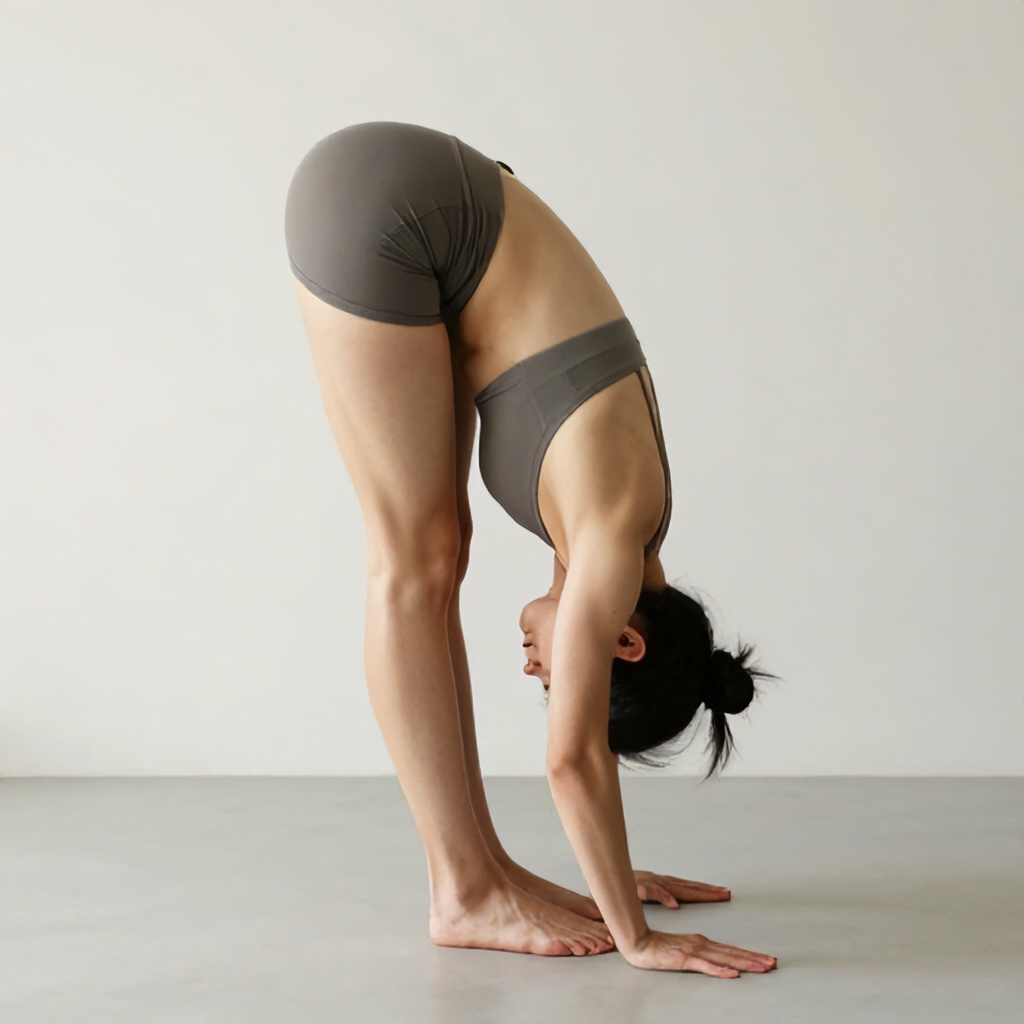
The Forward Fold Pose, a fundamental yoga and stretching exercise, primarily targets and lengthens the entire posterior chain of the body, from the heels up through the spine, promoting significant flexibility in the hamstrings, glutes, and spinal extensors.

Understanding the Forward Fold Pose
The Forward Fold Pose, often called Uttanasana in yoga, involves bending forward from the hips, bringing your torso towards your legs. It’s a classic posture found in many flexibility training routines because of its profound effects on the back of the body. This pose is more than just touching your toes; it’s a deep stretch that encourages spinal flexion and releases tension throughout the posterior muscle groups.
Practicing this forward-folding pose regularly helps improve overall body alignment and can be a powerful tool for stress reduction. It’s a physical exercise that requires both strength and surrender, allowing gravity to assist in lengthening tight areas. Many people find it to be a calming and grounding posture, making it a staple in a balanced yoga practice.
Key Muscle Groups Stretched in Forward Fold
An anatomical illustration of the human body in a forward fold would highlight several key muscle groups undergoing significant lengthening. Understanding which muscles are at work helps you perform the pose more effectively and safely. This visual guide details the primary and secondary muscles stretched.
The Hamstrings: The Stars of the Show
When you bend into a Forward Fold, your hamstrings are arguably the most intensely stretched muscle group. These powerful muscles run along the back of your thigh, from your sitting bones down to just below your knee. They consist of three distinct muscles: the biceps femoris, semitendinosus, and semimembranosus.
The primary function of the hamstrings includes hip extension and knee flexion. In the Forward Fold Pose, your hips are in deep flexion, and if your knees are straight (or only slightly bent), these muscles are stretched significantly. Tight hamstrings are a common issue, often contributing to lower back discomfort and limiting overall flexibility. A consistent hamstring stretch from poses like the forward fold is essential for maintaining healthy movement patterns and relieving tension.
As you hinge at your hips, the hamstrings are elongated. This lengthening is what creates that sensation of stretch in the back of your thighs. It’s important to feel this stretch evenly across all three hamstring muscles, which can be achieved by keeping your weight balanced in your feet and maintaining a gentle engagement of your quadriceps to protect your knees.
Gluteal Muscles: Supporting the Stretch
The gluteal muscles, commonly known as the glutes, are another significant muscle group engaged and stretched in the Forward Fold Pose. Comprising the gluteus maximus, medius, and minimus, these muscles form the bulk of your buttocks. Their main roles include hip extension, abduction, and external rotation.
In a forward fold, as your hips flex deeply, the gluteus maximus, in particular, undergoes a substantial stretch. This muscle is a powerful hip extensor, so when you move into the opposite action (hip flexion), it lengthens considerably. The glutes work in tandem with the hamstrings, and often, tightness in one group can impact the other. Releasing tension in the glutes can contribute to a deeper and more comfortable forward fold.
While the gluteus maximus is the most prominent, the deeper gluteal muscles also experience some lengthening, especially if there’s any slight internal rotation of the thighs. This deep stretch helps improve hip mobility and can alleviate stiffness in the lower back and hips.
Erector Spinae: The Spinal Extensors
The erector spinae muscles are a group of muscles that run vertically along your spine, from your sacrum all the way up to your skull. This group includes the iliocostalis, longissimus, and spinalis muscles. Their main job is to extend the spine, allowing you to stand upright, and to provide stability for your torso.
In the Forward Fold Pose, as you perform spinal flexion, these muscles are lengthened along the entire length of your back. This is a passive stretch for the erector spinae, meaning they are relaxing and elongating rather than actively contracting. A gentle release in these muscles can significantly reduce tension in the upper and lower back, improving overall posture.
For many individuals, chronic back pain is linked to tightness in these spinal muscles. The Forward Fold offers a therapeutic stretch, helping to decompress the spine and create more space between the vertebrae. It’s a fantastic way to counteract the effects of prolonged sitting or standing, which can shorten and stiffen the back muscles.
Calf Muscles: Gastrocnemius and Soleus
While not the primary focus, the calf muscles also receive a beneficial stretch in the Forward Fold, particularly if your heels remain grounded and your knees are relatively straight. The calves consist of two main muscles: the gastrocnemius (the larger, more superficial muscle) and the soleus (a deeper muscle underneath the gastrocnemius).
Both muscles are responsible for plantarflexion (pointing your toes). The gastrocnemius also assists in knee flexion because it crosses the knee joint. In the Forward Fold, especially if you actively press your heels down and lift your toes slightly, you’ll feel a stretch through the back of your lower legs. This stretching technique helps improve ankle flexibility and can alleviate tightness that might travel up into the hamstrings.
This secondary stretch is important for overall lower body flexibility. Tight calves can restrict ankle movement, which in turn can affect knee and hip mechanics. Including the calves in your overall flexibility exercise routine, even passively through a forward fold, contributes to better movement and reduced risk of injury.
Adductors: Inner Thigh Muscles
The adductor muscles are located on the inner thigh and include the adductor magnus, longus, brevis, pectineus, and gracilis. Their main function is to bring the legs towards the midline of the body (adduction). They also play a role in hip flexion and extension, depending on the specific muscle.
In a Forward Fold, especially if your feet are hip-width apart or slightly wider, the adductors receive a stretch as your hips flex and your legs might subtly abduct (move away from the midline) to accommodate the fold. This stretch is often more pronounced if you have particularly tight inner thighs. Releasing tension in the adductors can improve hip mobility and contribute to a more open and balanced lower body.
The adductors are often overlooked but are crucial for hip health and stability. A gentle stretch in these muscles can prevent imbalances that might affect walking, running, and other daily movements. The Forward Fold, while primarily a posterior chain stretch, still offers a valuable release for these inner thigh muscles.
Achieving Proper Body Alignment for a Safe Stretch
To truly benefit from the Forward Fold Pose and ensure a safe, effective deep stretch, proper body alignment is paramount. It’s not about how far down you can go, but how mindfully you move into the pose.
-
Hinge from the Hips: The movement should initiate from your hip joints, not your lower back. Imagine your pelvis tilting forward, leading with your chest. This ensures the stretch primarily targets your hamstrings and glutes, rather than putting strain on your lumbar spine.
-
Micro-Bend Your Knees: Always maintain a slight bend in your knees, especially if your hamstrings are tight. This protects your knee joints from hyperextension and allows for a more accessible and deeper stretch in the hamstrings without overstretching the connective tissue around the knees. As your flexibility improves, you might straighten your legs more, but never lock your knees.
-
Lengthen Your Spine: Initially, focus on lengthening your spine as you fold, keeping your back relatively flat. Only when your torso is parallel to the floor or you feel a significant stretch in your hamstrings should you allow your upper back to round gently. This two-part movement ensures you get the most out of the spinal flexion without compressing your vertebrae.
-
Engage Your Core: Lightly drawing your navel towards your spine helps support your lower back and deepens the stretch. Core engagement provides stability and prevents excessive rounding in the lumbar region, which can be detrimental over time.
-
Relax Your Neck and Shoulders: Once you are in the deepest part of your fold, allow your head to hang heavy, releasing any tension in your neck. Your shoulders should be relaxed, away from your ears. This helps to further release tension throughout the upper back and neck, contributing to the overall calming effect of the pose.
Benefits of Regular Forward Folding
Consistent practice of the Forward Fold Pose offers a wealth of physical and mental benefits, extending far beyond simple muscle lengthening. This flexibility exercise is a holistic tool for well-being.
-
Increased Flexibility: The most obvious benefit is improved flexibility in the hamstrings, glutes, and back muscles. This enhanced range of motion can make everyday movements easier and reduce the risk of injury.
-
Improved Posture: By lengthening the posterior chain, the Forward Fold helps counteract the effects of prolonged sitting, which often leads to tight hamstrings and a rounded upper back. Releasing these muscles can help you stand taller and with better alignment.
-
Stress Reduction and Calming Effect: Inversions, even partial ones like a forward fold where the head is below the heart, can stimulate the parasympathetic nervous system, promoting relaxation. The act of folding inward can be very grounding and meditative.
-
Relief from Back Pain: For many, tightness in the hamstrings and glutes contributes to lower back pain. Stretching these muscles can alleviate pressure on the lumbar spine, offering significant relief. The spinal flexion also helps decompress the vertebrae.
-
Enhanced Body Awareness: Paying attention to the sensations in your body as you stretch helps cultivate greater proprioception, your body’s sense of its position in space. This heightened awareness is valuable both on and off the yoga mat.
-
Improved Digestion: The gentle compression of the abdominal organs in a forward fold can stimulate digestion and relieve constipation. This internal massage is a subtle but beneficial aspect of the pose.
Tips for a Deeper, Safer Forward Fold
To deepen your Forward Fold safely and effectively, consider these practical tips. Remember, progress is gradual, and listening to your body is always the best approach.
-
Warm Up First: Never go into a deep forward fold with cold muscles. A few minutes of gentle movement, like sun salutations, cat-cow stretches, or walking, will prepare your body for the stretch.
-
Use Props: Yoga blocks can be your best friend. If your hands don’t comfortably reach the floor, place them on blocks. This allows you to maintain a long spine and focus on the hamstring stretch without straining your back. A strap can also be used around your feet to gently pull yourself deeper into the pose, again, keeping the spine long.
-
Breathe Deeply: Use your breath as a guide. Inhale to lengthen your spine, and as you exhale, allow yourself to fold a little deeper, releasing tension. Never hold your breath in this pose; shallow breathing can create tension rather than release it.
-
Hold for Time: For a significant flexibility gain, hold the Forward Fold for 30 seconds to a minute or even longer, if comfortable. Static stretching, where you hold a stretch for an extended period, is effective for increasing muscle length.
-
Focus on Sensation, Not Depth: Instead of striving to touch your toes, focus on the sensation of the stretch in your hamstrings and along your spine. If you feel a sharp pain, ease out of the pose immediately. A healthy stretch should feel intense but never painful.
-
Engage Antagonist Muscles: Actively engaging your quadriceps (the muscles on the front of your thighs) can help your hamstrings relax and lengthen more effectively. This reciprocal inhibition is a powerful stretching technique.
Common Mistakes to Avoid in Forward Fold
While the Forward Fold is a beneficial yoga pose, certain common mistakes can hinder your progress or even lead to discomfort. Being aware of these pitfalls helps ensure a safer and more effective stretching experience.
-
Rounding the Lower Back Excessively: This is perhaps the most common mistake. Folding from the lower back instead of hinging at the hips puts undue pressure on the lumbar spine and can lead to injury. Always prioritize a long spine over reaching the floor.
-
Locking the Knees: Hyperextending your knees can strain the ligaments and tendons around the knee joint. Always maintain a soft micro-bend in your knees to protect them and allow for a deeper, safer hamstring stretch.
-
Forcing the Stretch: Pushing too hard, too fast, can lead to muscle strains or tears. Flexibility is built gradually. Listen to your body’s signals and respect its current limits. The goal is release, not aggression.
-
Holding Your Breath: Tension often manifests as held breath. Holding your breath increases tension in the body, making it harder for muscles to relax and lengthen. Continuous, deep breathing is essential for releasing into the pose.
-
Ignoring Discomfort: While a stretch should feel intense, it should never be sharp or painful. Any sharp pain indicates you’ve gone too far or are stretching incorrectly. Back off immediately if you feel this.
-
Not Warming Up: Attempting a deep forward fold with cold muscles significantly increases the risk of injury. Always precede your deep stretches with a proper warm-up to prepare your muscles and connective tissues.
The Forward Fold Pose is a powerful and accessible flexibility exercise that offers profound benefits for your entire body. By understanding the anatomical diagram of muscles stretched and applying proper stretching technique, you can cultivate greater physical ease, improve your posture, and enhance your overall well-being. Incorporating this deep stretch into your regular yoga practice or daily routine, perhaps on a comfortable yoga mat while wearing activewear, will yield lasting positive results for your human anatomy.