Foundations of a Balanced Yoga Sequence
A consistent yoga practice relies on the rhythmic integration of breath and movement, often referred to as a vinyasa flow. By linking specific yoga asanas together, you create a heat-building routine that improves flexibility, muscle tone, and mental clarity. This yoga sequence focuses on the classic Surya Namaskar, or Sun Salutation, followed by foundational standing yoga poses designed to build stability from the ground up. Proper body alignment remains the most important factor in preventing injury and ensuring that each yoga posture serves its intended purpose for your physical health.

Before beginning any yoga session, clear a space that allows for full extension of your limbs. Wear comfortable clothing that does not restrict your range of motion. If you are new to this yoga discipline, keep a pair of yoga blocks nearby to bring the floor closer to your hands during forward folds. Consistency matters more than intensity. Even a fifteen-minute yoga routine performed daily provides more long-term benefits than a single, grueling two-hour session once a week. Focus on the quality of your breath, aiming for deep, steady inhalations and exhalations through the nose throughout the entire yoga flow.
Mastering Surya Namaskar
Surya Namaskar serves as the backbone of many yoga methodologies because it warms the entire body in a short amount of time. This sequence of yoga movement patterns coordinates the breath with a series of forward bends, lunges, and backbends. You should perform these movements slowly at first to ensure your joints are properly lubricated and your muscles are ready for deeper work. Think of this as the engine of your yoga practice, preparing your cardiovascular system and warming your core temperature.
Step-by-Step Sun Salutation A
- Start in Mountain Pose at the top of your mat, feet hip-width apart, palms facing forward.
- Inhale and sweep your arms overhead, lengthening your spine toward the ceiling.
- Exhale as you hinge at your hips, folding forward into a standing forward bend. Keep a slight bend in your knees if your hamstrings feel tight.
- Inhale to a halfway lift, placing your hands on your shins or thighs to create a flat back.
- Exhale and step or jump back into a high plank position, keeping your core engaged to protect your lower back.
- Lower your body halfway down, keeping elbows tucked close to your ribs in a low push-up position.
- Inhale as you transition into Upward Facing Dog, lifting your chest and thighs off the mat while pressing into the tops of your feet.
- Exhale as you lift your hips high and back into Downward Facing Dog, creating an inverted V shape with your body.
- Hold Downward Facing Dog for five full breaths, spreading your fingers wide and pressing your heels toward the floor.
- Exhale, step or jump your feet to your hands, and return to a forward fold before inhaling to rise back to standing.
The beauty of this yoga technique lies in its repetition. As you become more familiar with the rhythm, the movements begin to feel more fluid. Avoid rushing through the transitions. If you feel lightheaded or short of breath, pause in Child’s Pose until your heart rate returns to a resting state. This is not a race; it is a dedicated time for your body to move with intention and awareness.
Essential Standing Yoga Poses
Standing yoga poses are the bedrock of strength-based yoga training. These postures require you to engage your legs, stabilize your pelvis, and maintain a tall spine. When you hold these shapes, you are actively building endurance in the quadriceps, hamstrings, and glutes. Standing postures also help improve your balance and proprioception, which is your body’s ability to sense its position in space. Incorporating these into your yoga session helps ground your energy after the faster-paced Sun Salutations.
Warrior I and II
Warrior I focuses on forward-facing stability. Step one foot back about three to four feet, turning your back heel down at a forty-five-degree angle. Bend your front knee until it is stacked directly over your ankle. Reach your arms toward the sky, keeping your shoulders relaxed away from your ears. This pose stretches the hip flexors and strengthens the legs. If you experience knee pain, shorten your stance slightly to reduce the pressure on the joint.
Warrior II requires a wider stance. Turn your back foot so it is parallel to the short edge of your mat. Extend your arms out to the sides at shoulder height, gazing over your front middle finger. This posture opens the hips and builds significant stamina in the lower body. Ensure your front knee does not collapse inward; keep it tracking toward your second toe to maintain safe body alignment. Hold these poses for five to ten breaths, focusing on keeping your core firm and your breath steady.
Triangle Pose
Triangle Pose is excellent for stretching the hamstrings and the side body. From a wide stance, turn your front foot forward and your back foot slightly inward. Reach your front arm forward as far as possible before hinging at the hip to lower your hand to your shin, a block, or the floor. Extend your top arm toward the ceiling, creating a straight line from your bottom hand to your top hand. Keep your chest open and avoid collapsing your torso toward the floor. If your neck feels strained, look down at your front foot instead of up at your top hand.
Anatomy and Alignment Principles
Understanding the basic yoga anatomy behind these movements helps you practice safely. Your spine should remain neutral in most standing postures, meaning you avoid excessive arching or rounding. Engage your abdominal muscles by drawing your navel slightly toward your spine; this provides internal support for your lower back. When performing forward folds, hinge from the hip joints rather than the waist to prevent strain on the lumbar discs.
Weight distribution is another key aspect of your yoga routine. In standing poses, distribute your weight evenly between the ball of your big toe, the ball of your little toe, and your heel. This tripod foot position creates a stable base that prevents wobbling. If you find yourself gripping the mat with your toes, soften your feet and focus on pressing down through the center of your heel. This simple adjustment often improves balance immediately.
Pay attention to your joints. Never lock your knees or elbows in any yoga posture. A micro-bend in the joints keeps the muscles engaged and protects the ligaments from overstretching. If you feel sharp or shooting pain, exit the pose immediately. Discomfort from a deep stretch is normal, but pain in the joints is a signal to back off. Your yoga practice should be a sustainable physical exercise that supports your long-term health rather than causing wear and tear.
Structuring Your Yoga Session
A well-rounded yoga sequence follows a logical progression. Start with gentle movements to wake up the spine, move into the heat-building Sun Salutations, transition to standing poses for strength, and finish with cooling stretches and relaxation. This structure ensures that your body is adequately prepared for more challenging poses and that you end your practice in a state of calm.
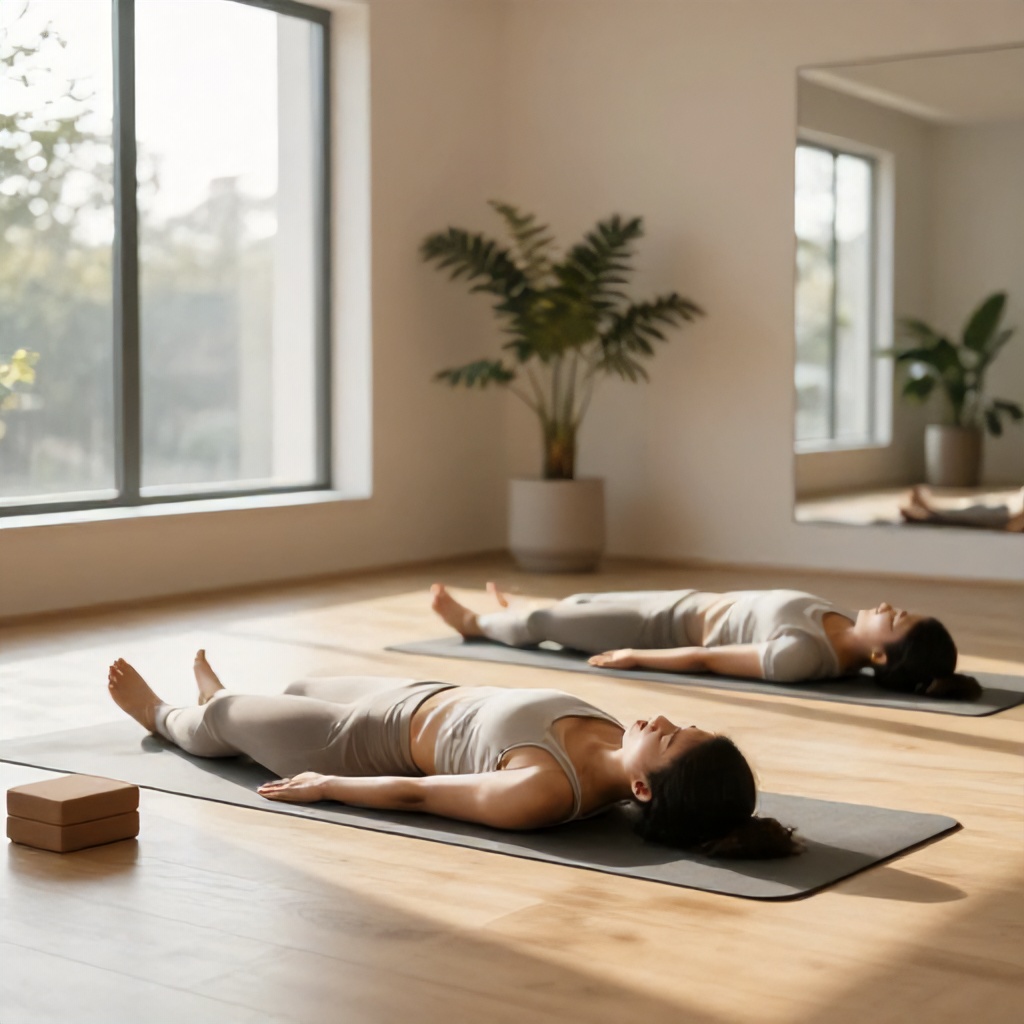
Beginners often benefit from a consistent 30-minute yoga session. Spend the first five minutes on breathing and gentle neck rolls. Dedicate the next ten minutes to three to five rounds of Sun Salutations. Use the following ten minutes for standing poses, holding each for several breaths. Spend the final five minutes in a seated forward fold or a gentle twist, followed by two minutes of lying flat on your back in Savasana. This final resting pose is essential for integrating the work you have done and allowing your nervous system to reset.
If you have limited time, you can condense this yoga flow. Even a ten-minute session consisting of two Sun Salutations and two standing poses can provide a significant boost to your mood and energy levels. The key is to maintain the sequence so your body learns the patterns. Over time, you will find that your strength and flexibility improve, allowing you to hold poses longer and move with greater ease.
Common Mistakes and How to Fix Them
Many practitioners struggle with holding their breath during difficult poses. This is a natural reaction to physical stress, but it limits the oxygen available to your muscles. If you notice yourself holding your breath, consciously slow down your movement and return to a rhythmic inhale and exhale. Your breath acts as a guide; if you cannot breathe smoothly, you are likely pushing too hard.
Another common error involves over-stretching. It is tempting to try and touch your toes or get your chest to your thighs immediately, but flexibility is a slow process. Use props like yoga blocks or straps to maintain proper alignment while you work toward deeper ranges of motion. Forcing a stretch can lead to micro-tears in the muscles, which will set your progress back by weeks. Respect your body’s current limits and focus on the sensation of the stretch rather than the visual appearance of the pose.
Finally, avoid comparing your practice to others. Yoga is a personal discipline. Your body structure, history of activity, and current energy levels are unique. A pose that looks effortless for one person might be challenging for another, and that is perfectly acceptable. Focus on your own internal experience. When you stop worrying about how the pose looks, you gain the freedom to feel how the pose works for your specific anatomy.
Integrating Yoga into Daily Life
You do not need a studio or expensive equipment to maintain a high-quality yoga practice. A simple mat and a quiet corner are sufficient. By making yoga a part of your daily routine, you create a reliable tool for managing stress and maintaining physical health. Start by setting a specific time for your practice, such as early in the morning before the day begins or in the evening to unwind.
Keep a journal of your yoga sessions to track your progress. Note which poses feel easier over time and which ones remain challenging. This helps you stay motivated and provides insight into your body’s changing needs. Remember that some days your body will feel stiff, and other days it will feel open. Both experiences are part of the process. The goal is to show up consistently and listen to what your body needs on any given day.
As you continue your yoga training, consider exploring different variations of the poses mentioned here. Once you master the basics, you can add small movements to increase the intensity or focus on specific areas of the body. Always prioritize safety and alignment above all else. With patience and regular practice, you will build a sustainable yoga routine that supports your physical and mental well-being for years to come.
Final Thoughts on Sustaining Your Practice
The journey of yoga is not about reaching a final destination but about the ongoing process of self-awareness. By focusing on the fundamentals of Sun Salutations and standing postures, you build a strong foundation that supports all other aspects of your physical fitness. Keep your movements intentional, your breath steady, and your mind focused on the present moment. This approach ensures that your yoga practice remains a source of vitality and balance in your life.
Stay curious about your body. Notice how your posture changes throughout the day when you are not on the mat. You may find that the strength you build in Warrior II helps you stand taller while waiting in line, or that the deep breathing you practice in Savasana helps you remain calm during a stressful meeting. Yoga is a practice that extends far beyond the edges of your mat, influencing how you move through the world and how you treat your body every single day.
If you ever feel uninspired, return to the basics. Sometimes, a simple round of Sun Salutations is exactly what you need to reignite your interest. Do not feel pressured to perform complex or advanced poses. The most effective yoga practice is the one you actually do. By keeping it simple, practical, and consistent, you ensure that yoga remains a lifelong companion for your health and happiness.