
Plank variations provide a reliable foundation for building functional movement patterns and long-term core stability. While a standard forearm plank builds basic endurance, adding movement or changing your center of gravity forces your muscles to work harder to maintain postural alignment. This approach shifts your fitness regimen from simple muscle toning to a comprehensive system that improves athletic performance and protects your spine during daily activities.

Understanding the Mechanics of Core Conditioning
Effective core conditioning relies on the ability to resist movement rather than just creating it. When you perform an isometric exercise like a plank, your goal is to keep your torso rigid while your limbs move or while you hold a static position against gravity. This type of training targets the transverse abdominis, the deep corset-like muscle that wraps around your midsection to support your lower back.
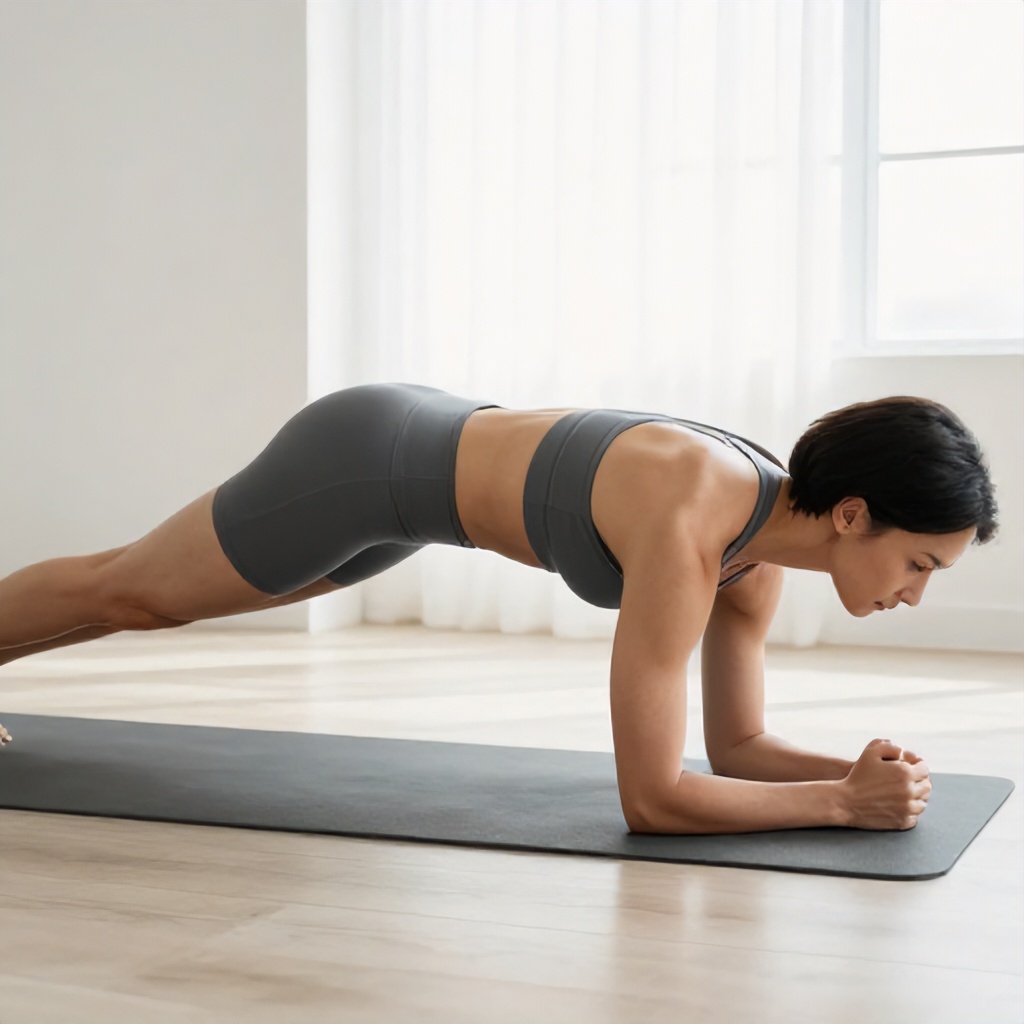
Most beginners struggle because they focus only on the abdominal muscles. A complete plank progression requires full-body engagement. You must squeeze your glutes to protect your lumbar spine and push through your shoulders to keep your upper back from collapsing. Think of your body as a straight line from your heels to the top of your head. If your hips sag or pike toward the ceiling, you lose the tension necessary for effective muscle strengthening.
1. The Classic Forearm Plank
This movement serves as the baseline for all stability training. It teaches you how to brace your midsection and distribute your weight evenly across your forearms and toes. Place your elbows directly under your shoulders and keep your gaze slightly forward to maintain a neutral neck position.
Execution Tips
- Keep your elbows shoulder-width apart.
- Drive your forearms into the floor to activate your lats.
- Squeeze your glutes as hard as possible to prevent hip dipping.
- Hold for 30 to 60 seconds while maintaining steady, rhythmic breathing.
2. Plank with Shoulder Taps
Once you master the static hold, you introduce instability by removing one point of contact. Shoulder taps require you to keep your hips perfectly level while you lift one hand to touch the opposite shoulder. This forces your obliques to fire rapidly to prevent your torso from rotating toward the floor.
If you find your hips rocking side to side, widen your feet. A wider base provides more support, allowing you to focus on keeping your core quiet and stable. As you get stronger, bring your feet closer together to increase the difficulty of the exercise technique.
3. The Side Plank
Side planks shift the focus to the lateral stabilizers of the torso, specifically the quadratus lumborum and the internal and external obliques. This variation is vital for spinal health because it challenges your body to resist side-bending forces. Lie on your side with your elbow tucked under your shoulder and stack your feet, lifting your hips until your body forms a straight diagonal line.
If holding this position feels too intense on your shoulder, drop your bottom knee to the floor. This modified version still provides significant abdominal strengthening without putting excessive strain on your joints. Focus on lifting your ribs away from the floor throughout the entire movement.
4. Plank Jacks
Plank jacks combine core stability with a cardiovascular challenge. Start in a standard high plank position with your hands planted firmly under your shoulders. Jump both feet out to the sides simultaneously, then jump them back to the center in one fluid motion.
The danger here is letting your lower back arch when your feet move outward. To prevent this, keep your belly button pulled toward your spine. If jumping creates too much impact, step your feet out one at a time. This variation is excellent for building muscle endurance and improving your heart rate during a bodyweight training session.
5. The Spiderman Plank
Spiderman planks add a dynamic element that targets the lower abdominals and hip flexors. From a high plank position, bring your right knee toward your right elbow on the outside of your body. Return to the starting position and switch sides.
This motion requires significant core activation because you are shifting your weight forward and sideways. Avoid the temptation to rush through the repetitions. Slow, controlled movements yield better results for your posterior chain and overall stability. Ensure your hands stay planted directly beneath your chest to maintain balance.
6. Plank to Downward Dog
This variation incorporates mobility into your static hold. Start in a high plank, then push your hips back and up toward the ceiling, forming an inverted V shape with your body. Return to the plank position with control, ensuring your shoulders don’t shrug toward your ears.
This movement is a fantastic way to stretch the hamstrings and calves while keeping the core engaged. It transitions your workout from pure strength to functional movement, helping you develop better body awareness. Perform this slowly to maximize the time under tension for your core muscles.
Integrating Variations into Your Workout Routine
You do not need to perform all six variations in a single session. Instead, pick three to include in your regular fitness regimen. For example, you might start with a static forearm plank to warm up, move into shoulder taps for stability, and finish with Spiderman planks for a dynamic burn.
Safe Practice Guidelines
- Avoid holding your breath. Exhaling during the hardest part of the movement helps maintain internal pressure.
- Stop immediately if you feel sharp pain in your lower back. This usually indicates that your core muscles have fatigued and your spine is taking the load.
- Perform your planks on a yoga mat or a non-slip surface to protect your elbows and wrists.
- Aim for quality over quantity. Five perfect repetitions are better than twenty sloppy ones.
Consistency matters more than duration. Spending five minutes on focused core work three times a week will produce better results than one long, exhausting session that leaves you too sore to move. As you gain strength, increase the intensity by adding more repetitions or reducing the rest time between sets rather than just holding the position for longer periods.
Pay attention to your postural alignment throughout the day. The strength you build during these exercises should translate into better posture while sitting at a desk or standing in line. If you notice yourself slouching, use that as a reminder to engage your core and reset your shoulders. These small adjustments reinforce the work you do on the mat.
Track your progress by noting how many repetitions or seconds you can perform with perfect form. When an exercise feels easy, it is time to move to a more challenging variation or increase the speed of your movement. This progressive approach ensures that your muscles are constantly adapting, which is the key to long-term physical training success.
Remember that your core is the center of every movement you make. By dedicating time to these six variations, you build a resilient body capable of handling the demands of life. Keep your movements intentional, listen to your body, and enjoy the process of getting stronger one plank at a time.