10-Piece Exercise Workout Poster Set for Home Gym Fitness Routines

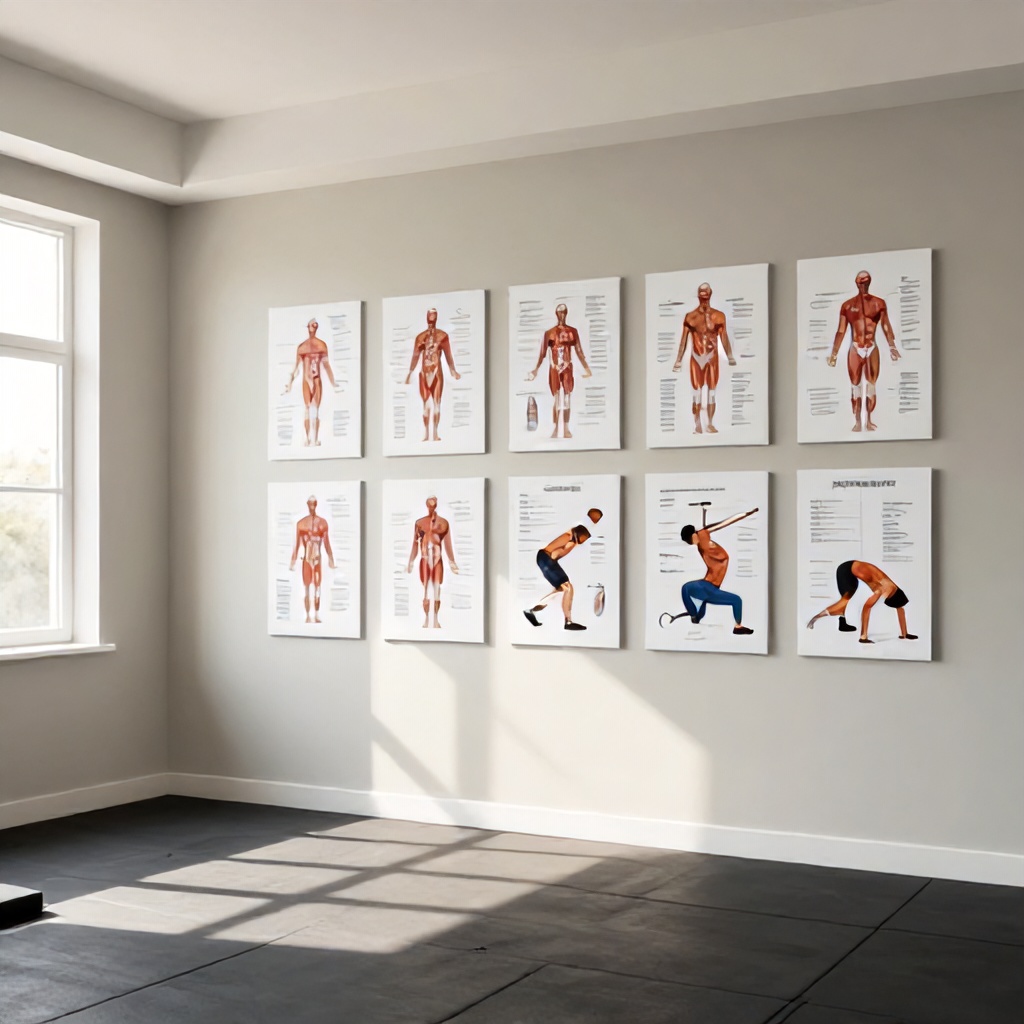
A 10-piece exercise workout poster set provides a clear, visual roadmap for your home gym that keeps your fitness routine consistent without the need for a personal trainer. When you are staring at a blank wall in your garage or spare room, it is easy to lose motivation or forget your form. These posters turn an empty space into a functional studio where every movement is mapped out right in front of your eyes.

Why Wall Charts Beat Fitness Apps

Screens are distracting. When you use a phone or tablet to follow a workout, you spend half your time tapping the glass, dealing with buffering videos, or squinting at a tiny display while you are trying to hold a plank. Physical posters offer an instant, high-contrast visual reference that stays put. You do not have to worry about battery life, Wi-Fi connectivity, or annoying pop-up notifications interrupting your flow. You simply look up, see the movement, and execute.

Focusing on Proper Form

The primary reason people get injured at home is poor technique. Without a mirror or an instructor, your squat depth might shallow out or your back might round during a deadlift. High-quality posters use anatomical illustrations to highlight exactly which muscles you should be engaging. By keeping these diagrams at eye level, you create a constant feedback loop that corrects your posture in real time. It is like having a silent coach watching your every move.

Building a Routine That Sticks

Consistency relies on lowering the barrier to entry. If you have to spend ten minutes searching for a specific video on YouTube, you are more likely to skip the workout. A 10-piece set covers a wide range of movements, from yoga poses and stretching routines to heavy-duty dumbbell lifts. Having a dedicated set on the wall means you can walk into the room, pick a poster, and start moving immediately. It removes the decision fatigue that often kills a workout before it even begins.

What to Look for in a 10-Piece Set

Not all fitness posters are created equal. You want a set that balances durability with clarity. Paper posters will crinkle, tear, and yellow within a few months of exposure to sweat and humidity. Look for laminated or waterproof finishes that can be wiped down with a damp cloth. If you are working out in a garage or basement, temperature fluctuations can be brutal, so a high-quality, tear-resistant material is a necessity.

  • Laminated surfaces for easy cleaning and sweat resistance
  • Large, bold fonts that remain readable from six feet away
  • Clear, anatomical illustrations showing primary and secondary muscle groups
  • Color-coded sections that group exercises by body part
  • High-quality graphics that show the start and end positions of each movement

Organizing Your Home Gym Layout

Placement matters. If you tuck your posters into a dark corner, you will never look at them. You need to create a dedicated zone where your eyes naturally land during your sets. Think about the flow of your movement. If you are doing a circuit, arrange the posters in the order of your workout. This creates a physical path for you to follow, turning your gym into a circuit training station.

The Power of Vertical Space

Most home gyms are limited by floor space. You have your weights, your bench, and your mat, but the walls are often ignored. Utilizing vertical space allows you to keep your floor clear for movement. Mount your posters at eye level when you are standing or sitting, depending on the exercise. If you are doing a lot of floor work, place a few posters lower down so you do not have to crane your neck to see them while you are on the mat.

Creating a Professional Atmosphere

A gym should feel like a place where work happens. When you hang professional-grade posters, the room shifts from a storage area to a training facility. This psychological switch is vital for your mindset. When you see a wall full of exercises, your brain prepares for physical exertion. It is a simple visual cue that signals the end of your workday and the start of your training time.

Essential Exercises for Your Poster Set

A comprehensive 10-piece set should cover the full spectrum of human movement. You need variety to prevent muscle plateaus and keep your interest high. A balanced set usually includes a mix of strength, flexibility, and recovery movements.

  1. Bodyweight basics like pushups, squats, and lunges for foundational strength
  2. Dumbbell or kettlebell variations for progressive overload
  3. Yoga and stretching sequences to improve mobility and aid recovery
  4. Core-specific movements to build stability
  5. High-intensity interval training charts for cardiovascular health

Mixing Strength and Mobility

Many people make the mistake of focusing only on lifting. Your poster set should remind you that recovery is part of the process. Include a poster dedicated to foam rolling or deep stretching. When you see the chart on the wall, you are more likely to spend those final ten minutes of your session lengthening your muscles, which is the best way to prevent the stiffness that keeps you from working out the next day.

Maintaining Your Equipment

Once you have your posters mounted, keep them clean. A quick wipe-down once a week prevents dust and sweat buildup. If you used adhesive strips to hang them, check the corners periodically to ensure they are not curling. If you want a more permanent look, consider using inexpensive poster frames. Frames protect the edges from fraying and give your home gym a polished, finished aesthetic that looks great even when you are not using the room.

Customizing Your Wall

You do not have to use all ten posters at once. If your space is small, start with the three that address your current goals. Maybe you want to focus on upper body strength this month. Hang those three posters in the center of your wall. As you progress or change your goals, swap them out for the flexibility or core charts. This keeps your environment fresh and ensures you are always focusing on the movements that matter most to your current fitness phase.

Investing in a visual aid is one of the most cost-effective ways to improve your home gym. It bridges the gap between wanting to work out and actually doing it. By removing the guesswork and providing a constant visual nudge, these posters help you stay accountable to your goals. You do not need a fancy gym membership or expensive digital subscriptions to get results. You just need a plan, a little bit of space, and the right information displayed where you can see it.

5-Week Structured Running Interval Training Program for Beginners

Building cardiovascular endurance requires a systematic approach that balances physical stress with adequate recovery time. This five-week structured workout schedule uses interval training to improve aerobic capacity without overwhelming your joints or muscles. By alternating between short bursts of jogging and periods of walking, you teach your body to process oxygen more efficiently while gradually increasing your total time on your feet.

The Framework of Interval Training

Interval training routines function on a simple principle: you push your heart rate into a higher zone for a set duration, then drop back to a recovery pace. This method is superior for beginners because it prevents the premature exhaustion that often comes from trying to run at a steady, moderate pace for too long. When you incorporate high-intensity interval training, or HIIT, into your routine, you are essentially training your heart to recover faster after exertion.

Stamina building is not about how fast you can sprint on day one. It is about the consistency of your training progression. Your muscles, tendons, and ligaments need time to adapt to the repetitive impact of running. A structured workout provides this safety net. If you skip the recovery intervals, you risk burnout or injury, which will derail your exercise goals before you reach the end of the month.

Understanding Heart Rate Training

Monitoring your effort level is the most effective way to ensure you are working in the right zone. You do not need a fancy chest strap to track this. Use the talk test: during your jogging intervals, you should be able to speak in short sentences but not hold a full conversation. During your walking intervals, your breathing should return to normal within sixty seconds. If you find yourself gasping for air during the walk, your jogging pace is too fast.

Aerobic conditioning happens when you stay within a sustainable effort range. When you push too hard, you switch to anaerobic metabolism, which creates lactic acid buildup and forces you to stop. By keeping your intensity controlled, you build a foundation of cardiovascular health that allows you to run longer distances over time. This is the core of any successful beginner running plan.

Week 1: Establishing the Baseline

The first week is about habit formation. You are not trying to set records. You are simply teaching your brain and body that exercise is a non-negotiable part of your weekly routine. Focus on your running technique: keep your posture upright, look straight ahead, and land with your feet underneath your hips rather than reaching out in front of you.

  • Day 1: 1 minute jog, 2 minutes walk. Repeat 8 times.
  • Day 2: Rest or light stretching.
  • Day 3: 1 minute jog, 2 minutes walk. Repeat 8 times.
  • Day 4: Rest.
  • Day 5: 1 minute jog, 2 minutes walk. Repeat 10 times.
  • Day 6: 30-minute brisk walk.
  • Day 7: Rest.

During this week, pay attention to your running cadence. Aim for short, quick steps rather than long, bounding strides. Long strides increase the impact force on your knees and shins. By taking smaller steps, you reduce the risk of common beginner injuries like shin splints. Keep your movements light and quiet.

Week 2: Increasing Time Under Tension

Now that your body has adjusted to the initial shock of physical exercise, we increase the duration of the jogging intervals. This phase of the fitness program targets your aerobic capacity. You will notice that your heart rate recovers slightly faster than it did last week. This is a sign that your cardiovascular system is becoming more efficient at delivering oxygen to your working muscles.

  1. Day 1: 2 minutes jog, 2 minutes walk. Repeat 6 times.
  2. Day 2: Rest.
  3. Day 3: 2 minutes jog, 2 minutes walk. Repeat 7 times.
  4. Day 4: Rest.
  5. Day 5: 3 minutes jog, 2 minutes walk. Repeat 5 times.
  6. Day 6: 40-minute brisk walk.
  7. Day 7: Rest.

Hydration plays a significant role in your athletic training during this week. Drink water throughout the day, not just before or after your workout. Dehydration thickens your blood, making it harder for your heart to pump it to your muscles. If you feel sluggish, check your water intake from the previous 24 hours. Small adjustments to your daily habits often yield the biggest improvements in your running performance.

Week 3: The Mid-Program Plateau

Week three is often when motivation dips. The novelty has worn off, and the physical demands are increasing. This is where you must rely on your schedule rather than your mood. A structured workout plan is designed to carry you through these moments of doubt. Remind yourself that every interval completed is a deposit into your long-term health account.

  • Day 1: 4 minutes jog, 2 minutes walk. Repeat 4 times.
  • Day 2: Rest or light yoga.
  • Day 3: 5 minutes jog, 2 minutes walk. Repeat 4 times.
  • Day 4: Rest.
  • Day 5: 6 minutes jog, 2 minutes walk. Repeat 3 times.
  • Day 6: 45-minute brisk walk.
  • Day 7: Rest.

Focus on your breathing patterns during the longer jogging segments. Try to inhale for two steps and exhale for two steps. This rhythmic breathing helps prevent side stitches and keeps your oxygen intake steady. If you feel your form breaking down—shoulders hunching or feet dragging—slow your pace. It is better to run slowly with good form than to run fast with poor form.

Week 4: Building Endurance Capacity

You are now moving into the phase where you will spend more time jogging than walking. This is a major milestone in your beginner-friendly fitness journey. Your muscles are becoming more resilient, and your cardiovascular health is noticeably improved. You might find that you can walk up stairs without getting winded or that your energy levels throughout the day are more stable.

  1. Day 1: 8 minutes jog, 2 minutes walk. Repeat 3 times.
  2. Day 2: Rest.
  3. Day 3: 10 minutes jog, 3 minutes walk. Repeat 2 times.
  4. Day 4: Rest.
  5. Day 5: 12 minutes jog, 3 minutes walk. Repeat 2 times.
  6. Day 6: 50-minute brisk walk.
  7. Day 7: Rest.

Pay attention to your footwear. If you are experiencing pain in your arches or heels, it might be time to visit a local running shop for a gait analysis. Proper shoes are the most important piece of equipment for any runner. They provide the cushioning and support necessary to protect your joints from the repetitive stress of the pavement. Do not wait until you are injured to address shoe issues.

Week 5: Consolidating Gains

The final week of this program is about testing your limits and preparing for your next phase of training. You have built a solid foundation of stamina. The goal now is to complete longer, continuous segments of running. This will prepare you for longer distances or more intense interval training routines in the future.

  • Day 1: 15 minutes jog, 3 minutes walk, 10 minutes jog.
  • Day 2: Rest.
  • Day 3: 20 minutes jog, 2 minutes walk, 5 minutes jog.
  • Day 4: Rest.
  • Day 5: 25 minutes continuous jog.
  • Day 6: 60-minute brisk walk.
  • Day 7: Celebration and recovery.

By the end of this week, you have successfully completed a structured athletic routine. You have improved your aerobic conditioning and established a habit that will serve your health for years to come. Reflect on how your body feels compared to week one. You are likely stronger, more energetic, and more confident in your physical capabilities.

Nutrition and Recovery Strategies

Exercise is only one half of the equation. Your body repairs itself during rest, not during the workout. If you do not prioritize sleep, your muscles will not recover, and your performance will plateau. Aim for seven to nine hours of quality sleep each night. Sleep is when your body releases growth hormones that repair the micro-tears in your muscle fibers caused by running.

Nutrition also plays a vital role. Focus on complex carbohydrates for energy, such as oats, brown rice, and sweet potatoes. Protein is essential for muscle repair; include lean sources like chicken, fish, beans, or lentils in your meals. Avoid heavy, processed foods immediately before a run, as they can cause digestive distress. A small, simple snack like a banana or a handful of almonds thirty minutes before a run can provide the necessary fuel to get through your intervals.

The Importance of Active Recovery

Rest days do not mean sitting on the couch for 24 hours. Active recovery, such as a gentle walk, light cycling, or swimming, helps increase blood flow to your muscles. This blood flow carries oxygen and nutrients to the tissues, which speeds up the recovery process. If you feel particularly sore, use a foam roller to massage your calves, quads, and hamstrings. This helps release tension in the fascia, the connective tissue that surrounds your muscles.

Listen to your body. There is a difference between the discomfort of a challenging workout and the sharp pain of an injury. If you feel pain in your joints, tendons, or bones that does not go away after a day of rest, stop immediately. Consult a professional if the pain persists. Pushing through an injury is the fastest way to set your progress back by months.

Maintaining Your Momentum

Once you finish this five-week program, you might wonder what comes next. The key to long-term success is to keep your exercise goals realistic and sustainable. You do not need to increase your intensity every single week. You can maintain your current level of fitness by keeping a consistent schedule of three to four runs per week. If you want to improve further, follow the ten percent rule: do not increase your total weekly mileage by more than ten percent at a time.

Keep a simple log of your workouts. Write down how long you ran, how you felt, and any notes on your energy levels. This record serves as a powerful motivator when you look back at where you started. Seeing your progress in black and white reinforces the habit and helps you identify patterns in your performance. For example, you might notice that you run better in the mornings or that you feel stronger after eating a specific meal.

Find a community or a running partner if you struggle with motivation. Having someone to meet for a run makes it much harder to skip a session. If you prefer to run alone, use the time to practice mindfulness. Focus on the rhythm of your breathing and the sensation of your feet hitting the ground. This turns your workout into a form of meditation, which can help reduce stress and improve your mental well-being alongside your physical health.

Remember that fitness is a lifelong pursuit, not a sprint to a finish line. There will be weeks when you miss a workout or feel unmotivated. This is normal. The most successful people are not the ones who never miss a day, but the ones who get back on track immediately after a setback. Be kind to yourself, stay consistent with your intervals, and enjoy the process of becoming a stronger, more capable version of yourself.

Common Pitfalls to Avoid

Many beginners make the mistake of running too fast during their jogging intervals. They treat every run like a race. This leads to rapid fatigue and increases the risk of injury. Remember that the goal of this program is to build your aerobic base. You should be able to maintain your jogging pace for the entire duration of the interval without feeling like you are about to collapse. If you are gasping for air, slow down. You will get faster naturally as your cardiovascular system improves.

Another common mistake is neglecting the warm-up and cool-down. Never start your run at full speed. Spend at least five minutes walking briskly to get your blood flowing and your muscles warm. Similarly, do not stop abruptly after your final interval. Walk for five to ten minutes to allow your heart rate to return to its resting state gradually. This prevents blood from pooling in your legs and helps reduce post-workout stiffness.

Finally, do not get discouraged by the scale. Running is great for your heart and lungs, but it might not result in immediate weight loss. Your body composition may change as you build muscle and lose fat, which might not show up as a lower number on the scale. Focus on how your clothes fit, how much energy you have, and how much easier your daily activities feel. These are much better indicators of your health and fitness progress than a number on a scale.

Stay focused on the process. The five weeks will pass regardless of whether you follow the plan or not. By sticking to this structure, you are investing in your future self. You are building a habit that will pay dividends in energy, mood, and physical health for years to come. Keep your eyes on the goal, stay consistent with your intervals, and celebrate the small wins along the way.

Exit mobile version