The Simple Power of Black and White Yoga Line Drawings
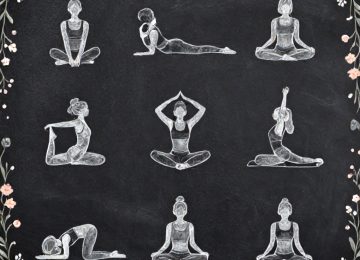
Black and white line drawings offer a remarkably clear and effective way to understand yoga poses.
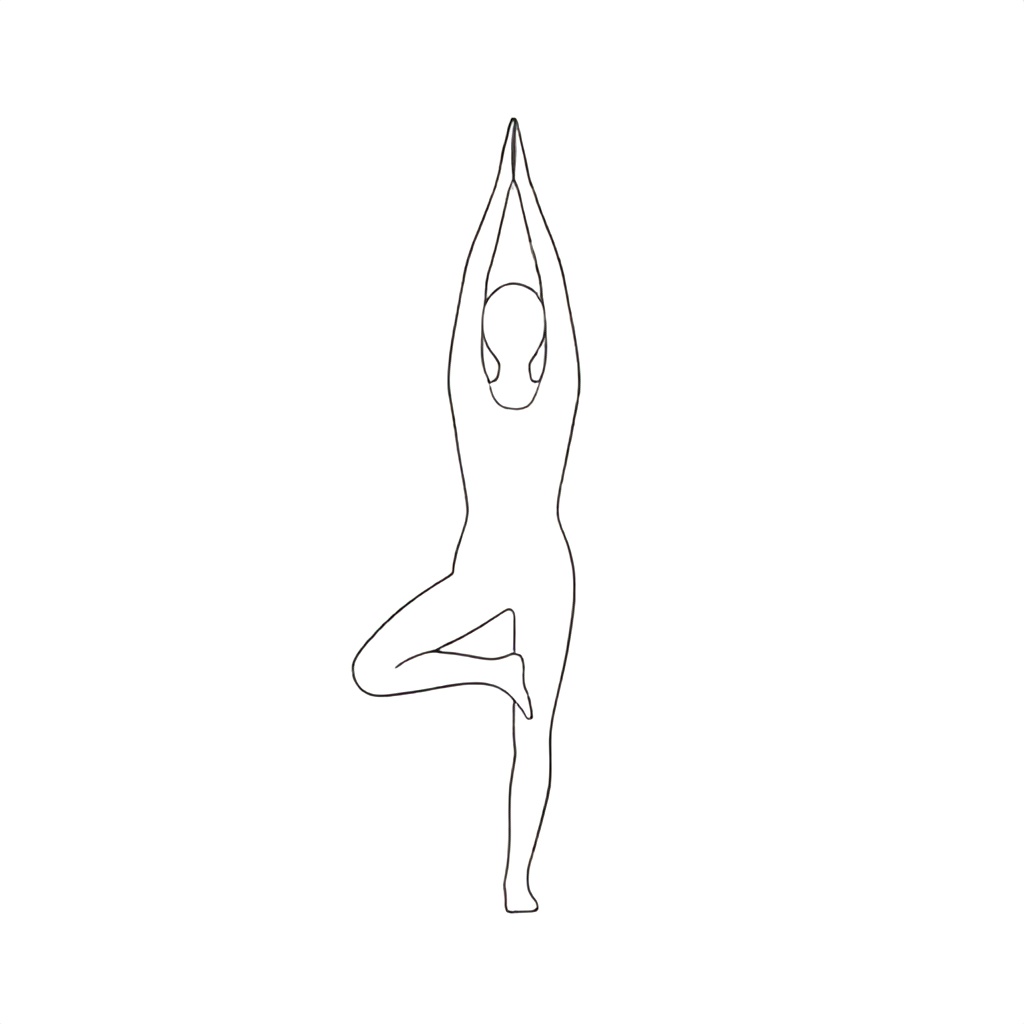
These minimalist visuals strip away the distractions of color and complex shading, focusing solely on the essential lines that define a posture. For anyone practicing yoga, from absolute beginners to seasoned yogis, these simple forms serve as powerful educational imagery. They distill the essence of each asana, making them easier to grasp and replicate. Think of them as the blueprints for your body on the mat.
The beauty of line art in this context lies in its directness. Without the visual noise of a photograph or a detailed painting, your eye is immediately drawn to the critical alignment points. You can see the curve of the spine, the angle of the limbs, and the overall balance of the pose with striking clarity. This makes them an invaluable tool for learning new yoga postures or refining existing ones.
These drawings often feature abstract figures, emphasizing the shape and flow of the body rather than individual details. This abstract quality can be incredibly freeing, allowing you to interpret the pose through your own physical experience rather than trying to perfectly mimic a specific person’s form. The plain background further enhances this focus, ensuring that nothing detracts from the central subject: the yoga posture itself.
Understanding Anatomy Through Simple Forms
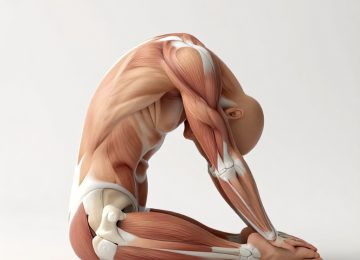
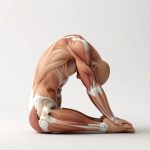
While they may appear simple, black and white line drawings can provide surprisingly insightful anatomical representation. They often highlight the skeletal structure and the basic body mechanics involved in each pose. This isn’t about showing every muscle fiber, but rather the fundamental framework that supports the movement and stability of the asana.
Consider a drawing of Warrior II. You’ll see the strong, grounded stance, the extended arms creating a straight line, and the torso aligned over the hips. The line art emphasizes the engagement of the legs, the open chest, and the steady gaze. It’s a visual cue for proper alignment that you can easily recall when you’re in the pose yourself. This graphic representation is far more accessible than complex anatomical charts for many people.
These illustrations can also subtly convey the energy flow within a posture. The lines might suggest dynamism or stillness, extension or grounding. It’s a form of artistic depiction that speaks directly to kinesthetic learners, those who understand best through movement and physical sensation. The monochrome palette, often just pure black lines on white, amplifies this focus on form and structure. It’s a visual guide that cuts through the clutter.
The artistic rendering in these drawings prioritizes clarity. You might see subtle variations in line weight to suggest depth or emphasis, but the overall impression is one of clean, uncluttered information. This makes them perfect for quick reference, whether you’re studying a new sequence or just need a reminder of how to set up a particular pose.
Versatility of Line Art in Yoga
The appeal of black and white yoga line drawings extends beyond pure instruction. They are also a beautiful form of yoga art in their own right. The elegance of a well-executed line illustration can be captivating, transforming a functional visual aid into something aesthetically pleasing.
These drawings can be found in various styles, from very precise and almost anatomical representations to more fluid and gestural interpretations. Some might lean towards a minimalist silhouette, capturing the outer form with minimal strokes. Others might incorporate subtle hints of the skeletal structure, providing a deeper understanding of how the body is positioned.
This adaptability means that line art can cater to different learning styles and aesthetic preferences. Whether you prefer a highly detailed posture illustration or a more abstract depiction, there’s likely a line drawing that resonates with you. They are a visual guide that can be as simple or as detailed as needed.
The use of plain backgrounds is a deliberate choice that enhances the impact of the line illustration. It ensures that the focus remains squarely on the yoga pose. There are no distracting elements, no busy patterns, just the pure form of the body in asana. This simplicity is key to their effectiveness as a learning tool.
These drawings are excellent for creating educational materials. Imagine a yoga studio wall adorned with a series of these line art pieces, each depicting a fundamental pose. They offer a constant, unobtrusive reminder of proper form and alignment. They are also fantastic for personal practice journals or digital study guides.
Key Poses Illustrated Through Line Art
Let’s look at a few common yoga poses and how line drawings effectively represent them.
Mountain Pose (Tadasana)
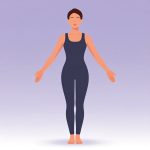
In a black and white line drawing, Tadasana appears deceptively simple. The illustration will show a standing figure with feet together or hip-width apart. The key elements highlighted are the straight spine, the shoulders relaxed down and back, the arms hanging naturally by the sides with palms facing forward or inward, and the head held high. The lines emphasize the grounding through the feet and the upward lift through the crown of the head. It’s a posture of presence and stability, and the line art captures this through its upright, balanced form.
Downward-Facing Dog (Adho Mukha Svanasana)
This iconic yoga posture is a perfect candidate for line illustration. The drawing will typically depict an inverted V-shape. The hands are planted firmly on the ground, shoulder-width apart, with fingers spread. The feet are hip-width apart, and the hips are lifted high. The drawing emphasizes the extension of the spine, creating a long line from the hands to the hips, and then a further line from the hips down to the heels. You can often see subtle lines indicating the engagement of the legs and the slight bend in the knees if that’s a common modification. The simplicity of the lines conveys the stretch through the hamstrings and calves, and the opening in the shoulders.
Warrior II (Virabhadrasana II)
Warrior II is all about power and stability. A line drawing will show one leg forward, bent at the knee, with the thigh parallel to the floor. The back leg is straight and strong, with the foot turned out. The torso is upright, stacked over the hips, and the arms are extended horizontally to the sides, parallel to the floor, with the gaze directed over the front fingertips. The lines here are crucial for showing the alignment: the front knee over the ankle, the hips open to the side, and the straight, powerful lines of the arms creating a sense of expansiveness. It’s a fantastic example of how line art can illustrate body mechanics.
Triangle Pose (Trikonasana)
Triangle Pose is a beautiful standing pose that involves a long, triangular shape. The line drawing will show the feet wide apart, one leg straight and the other bent slightly at the knee (depending on the variation). The torso hinges at the hip, reaching down towards the front leg, while the opposite arm reaches up towards the sky. The drawing emphasizes the straight line of the spine, the extension of the arms creating two opposing lines, and the open chest. You can see the tilt of the torso and the grounding through the feet. It’s a clear visual guide to achieving the elongated, expansive feeling of the pose.
Child’s Pose (Balasana)
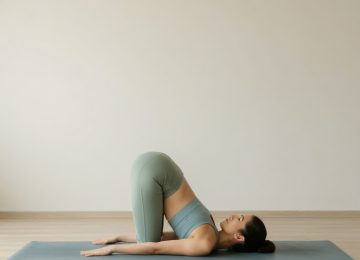
Even a resting pose like Child’s Pose benefits from line illustration. The drawing would show a figure kneeling, with the torso folded forward over the thighs. The arms might be extended forward or resting alongside the body. The lines here convey a sense of surrender and release. The rounded back, the forehead resting gently on the mat, and the relaxed limbs are all communicated through simple, flowing lines. It’s a peaceful silhouette that instantly suggests comfort and restoration.
Why Choose Line Art for Your Yoga Practice?
The effectiveness of black and white line drawings in yoga stems from their ability to simplify complex information. They bypass the visual clutter that can sometimes accompany photographs or detailed illustrations, allowing the practitioner to focus on the fundamental aspects of each pose.
These drawings are incredibly versatile. They can be used as a quick reference during a practice session, a study tool for understanding alignment, or simply as beautiful artistic depictions of the yoga journey. The monochrome aesthetic lends itself to a sense of calm and focus, which is perfectly aligned with the spirit of yoga.
The abstract figures often employed in line art allow for personal interpretation. Instead of feeling pressured to match a specific body type or flexibility level shown in a photograph, you can use the lines as a guide to find your own optimal expression of the pose. This makes them more inclusive and encouraging for practitioners of all levels.
Furthermore, the clarity of the lines can help in understanding the subtle nuances of body mechanics. You can observe how the weight is distributed, how the joints are stacked, and how the muscles are engaged, all through the elegant simplicity of line illustration. This makes them a valuable resource for anyone looking to deepen their understanding of yoga anatomy and posture.
Ultimately, black and white line drawings offer a pure, unadulterated way to connect with yoga postures. They are a testament to the power of simplicity, proving that sometimes, the most effective way to communicate is through the most basic of forms. They are a visual language that speaks directly to the body and mind, making the practice of yoga more accessible, understandable, and beautiful.