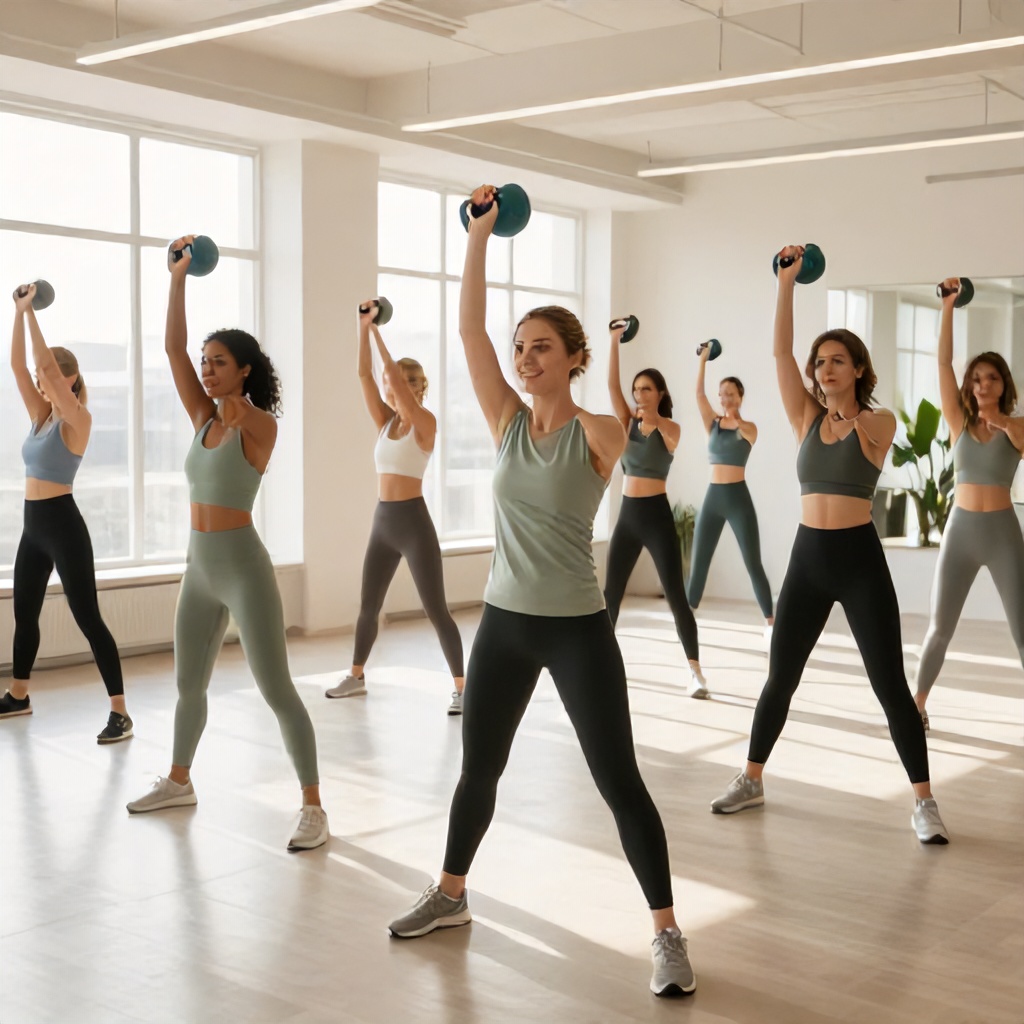
Working out with a group of women significantly increases the likelihood that you will stick to your fitness goals compared to training in isolation. Social accountability acts as a powerful anchor for consistency, turning a solo chore into a shared experience that builds both physical strength and mental resilience.
The Science of Group Dynamics
Human beings are wired for connection, and this biological drive extends directly into the gym. When you participate in a fitness session with others, your brain releases endorphins not just from the movement itself, but from the social interaction. This phenomenon, often called social facilitation, suggests that people perform better on tasks when others are present. In a group setting, the collective energy creates an environment where pushing through the final set feels manageable rather than daunting.
Supportive community dynamics provide a safety net for your wellness journey. If you feel like skipping a morning session, knowing that your training partners are waiting for you changes the internal calculus. You are no longer just letting yourself down; you are showing up for a team. This shift in perspective is a cornerstone of long-term health and wellness.
Building Consistency Through Camaraderie
Consistency relies on habit formation, and habits are easier to maintain when they are tied to social rituals. An exercise group creates a rhythm in your week that feels predictable and rewarding. You start to associate your athletic tank tops and sneakers with the positive anticipation of seeing your friends, rather than the dread of a strenuous workout.
Team synergy plays a vital role in how hard you work during a session. Research indicates that when people exercise in groups, they often sustain higher intensity levels for longer periods. You might find yourself mirroring the pace of the woman next to you, which naturally encourages you to challenge your own limits without feeling pressured.
Preparing for a Group Fitness Session
Preparation begins long before you step into the studio or onto the track. A successful workout starts with being physically and mentally ready to move. This means choosing the right gear and setting a clear intention for what you want to achieve during your time together.
Practical Steps for Your Next Workout
- Select athletic apparel that allows for a full range of motion. Tight, restrictive clothing can distract you from your form and limit your breathing.
- Hydrate consistently throughout the day. Drinking water an hour before your fitness session ensures your muscles are primed for movement.
- Arrive ten minutes early to settle in. This buffer time allows you to catch up with your training partners, which builds the rapport necessary for a collaborative workout.
- Set a specific, small goal for the session. Whether it is improving your squat depth or simply completing every interval, having a target keeps you focused.
Choosing the Right Fitness Culture
Not every group will be a perfect match for your personal needs. A healthy fitness culture is one that prioritizes progress over perfection and inclusivity over competition. Look for environments where women celebrate each other’s wins, regardless of their current fitness level. A positive mindset starts with the people you surround yourself with during your physical training.
What to Look For
- Encouraging language: Members should cheer each other on rather than focusing on aesthetic comparisons.
- Adaptability: The group should welcome modifications to exercises to accommodate different physical needs or injuries.
- Shared goals: While individual paths differ, the group should share a commitment to an active lifestyle.
- Communication: A group that discusses their energy levels and needs before starting a workout is usually more safe and effective.
The Role of Sports Attire in Confidence
While clothing does not define your athletic ability, wearing functional sports attire can influence your psychological state. When you feel comfortable in your clothes, you spend less time adjusting straps or pulling up leggings and more time focusing on your form. High-quality athletic tank tops and supportive footwear provide the physical foundation needed to execute movements correctly. Feeling confident in your gear allows you to move freely, which is essential for preventing injury and maximizing the benefits of your fitness session.
Navigating Challenges Together
Even the most dedicated exercise group will face hurdles. Schedules conflict, energy levels dip, and life outside the gym can become overwhelming. The strength of a supportive community lies in how it handles these moments. Instead of viewing a missed session as a failure, a healthy group views it as a temporary pause.
Communication is the most effective tool for maintaining team building. If someone is struggling, the group should offer empathy rather than judgment. This collective support system makes the fitness journey feel less like a solitary climb and more like a shared adventure. By checking in on one another, you reinforce the bond that keeps the group together through busy seasons.
Safety and Evidence-Based Training
Prioritizing safety ensures that you can continue your active lifestyle for years to come. Always listen to your body, especially during high-intensity sessions. If an exercise feels sharp or painful, stop immediately. A good training partner will support your decision to scale back or modify a movement to protect your joints and muscles.
Do and Don’t Guidelines
Do prioritize a proper warm-up. Five to ten minutes of dynamic movement, such as leg swings or arm circles, prepares your nervous system for the work ahead.
Do focus on your own form. It is easy to get caught up in the pace of the group, but maintaining correct posture is essential for long-term health.
Don’t ignore signs of overtraining. If you feel dizzy, excessively fatigued, or notice persistent soreness that does not fade after a rest day, take a break.
Don’t compare your day one to someone else’s year ten. Every woman in the group is at a different stage of her wellness journey, and that diversity is a strength, not a weakness.
Sustaining Your Motivation
Motivation is not a constant state; it is a resource that needs to be replenished. The energetic atmosphere of a group session acts as a natural fuel source when your internal drive is low. By showing up, you contribute to the collective effort, and in return, you receive the energy of the group.
Focus on the immediate benefits of movement, such as the clarity you feel after a session or the release of tension in your shoulders. These tangible rewards are more sustainable than long-term goals alone. When you view your fitness session as a time to reconnect with yourself and your friends, the activity becomes a highlight of your week rather than another item on your to-do list.
Remember that the goal of a collaborative workout is not to reach a finish line, but to enjoy the process of becoming stronger together. When you view your health as a lifelong practice, the pressure to be perfect vanishes. You are free to move, to challenge yourself, and to rely on the women standing beside you.
Creating Your Own Community
If you have not found a group that fits your needs, consider starting your own. You do not need a professional studio or expensive equipment to create a supportive community. A local park, a community center, or even a backyard can serve as the perfect space for physical training.
Start by inviting two or three friends who share similar health-conscious values. Keep the initial sessions simple and focus on activities that everyone enjoys, such as walking, bodyweight circuits, or yoga. The key is to establish a regular time that works for everyone. Once the habit is set, the community will naturally grow as you invite others who are looking for the same kind of encouragement.
By taking the lead, you are not just helping yourself; you are creating a space for other women to improve their health in a safe, judgment-free environment. This is the essence of building a sustainable fitness culture. Every small step you take, whether it is showing up to a session or inviting a new friend to join, ripples outward to create a stronger, healthier community for everyone involved.