A meditative posture, while appearing outwardly still and serene, relies on a sophisticated and continuous engagement of numerous muscles throughout the human body. This seemingly effortless position is, in fact, a dynamic balance, upheld by the intricate interplay of the musculoskeletal system, where deep stabilizing muscles work in concert with larger superficial groups to maintain alignment, support the spine, and facilitate steady breathing.
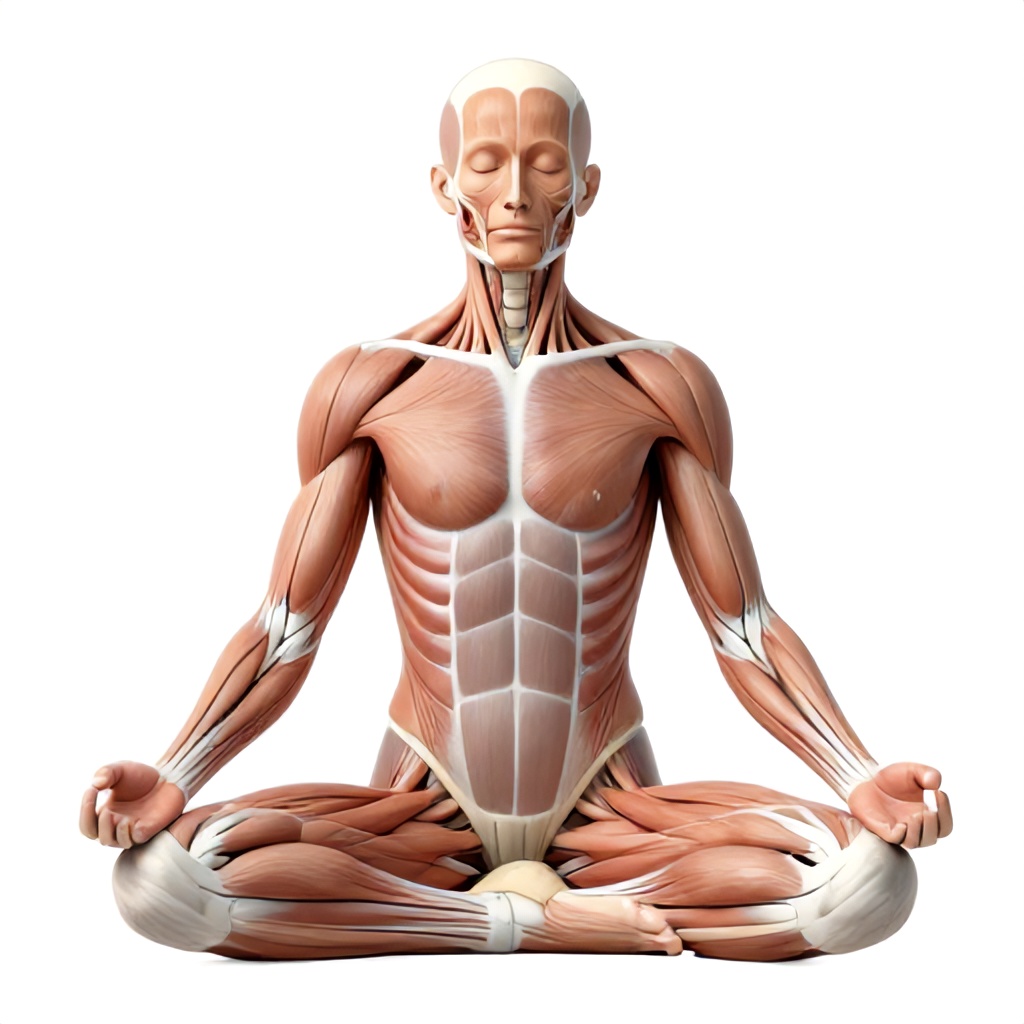
The Core and Pelvis: Foundation of Stability
The core muscles form the very bedrock of any stable seated posture, including those adopted for meditation. These are not just the “six-pack” muscles, but a deep, interconnected cylinder of support that wraps around the spine and pelvis. Understanding this muscular system is key to appreciating the stability of the human body structure in a seated position.
Deep Abdominal and Pelvic Floor Muscles
- Transversus Abdominis: This is the deepest abdominal muscle, running horizontally like a corset. When engaged, it compresses the abdominal contents, providing crucial support to the lumbar spine and pelvis. In a meditative posture, its gentle, sustained activation helps to stabilize the trunk without creating rigidity.
- Multifidus: A series of small, deep muscles running along the length of the spine. The multifidus muscles are essential for segmental spinal stability, making tiny adjustments to individual vertebrae. They are constantly active in a seated posture, ensuring the spine maintains its natural curves and doesn’t collapse.
- Pelvic Floor Muscles: This hammock-like group of muscles stretches across the bottom of the pelvis, supporting the pelvic organs and contributing significantly to core stability. In meditative postures, particularly those involving cross-legged positions, these muscles help to ground the practitioner and provide a sense of rootedness. Their gentle engagement also supports the diaphragm’s function during deep breathing.
Hip Flexors and Extensors
The muscles around the hips are paramount for establishing and sustaining a comfortable and stable seated position. The way the legs are folded or crossed directly impacts the engagement and flexibility of these groups, forming a critical part of the anatomical human figure in meditation.
- Iliopsoas (Iliacus and Psoas Major): These are the primary hip flexors, connecting the lumbar spine and pelvis to the femur. While they shorten to bring the knees towards the chest, in a cross-legged meditative posture, they are often in a lengthened state, requiring flexibility. Tightness here can pull the lower back into an excessive arch or make it difficult to sit upright comfortably.
- Gluteal Muscles (Gluteus Maximus, Medius, Minimus): The gluteus maximus, the largest of the gluteal muscles, acts as a powerful hip extensor and external rotator. In a seated posture, especially when sitting on the sit bones, the glutes help to stabilize the pelvis and prevent it from tilting backward. The medius and minimus, located on the sides of the hips, are important for hip abduction and stabilization, helping to keep the knees wide and the hips open in postures like Sukhasana (easy pose) or Padmasana (lotus pose).
Spinal Erectors and Postural Muscles: Upholding the Spine
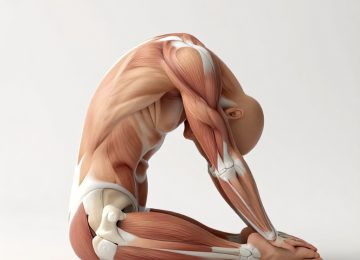
Maintaining an elongated, upright spine without rigidity is a hallmark of a good meditative posture. This task falls largely to the erector spinae group and other deep back muscles, which continuously work against gravity. This detailed anatomy illustrates the constant work of the musculoskeletal system.
The Erector Spinae Group
This powerful group of muscles runs vertically along the length of the spine, from the sacrum to the skull. They are responsible for extending the spine and maintaining its upright position. In meditative postures, they are engaged in a sustained, low-level contraction.
- Iliocostalis: The most lateral column, connecting ribs to the pelvis. It helps extend and laterally flex the spine.
- Longissimus: The middle column, extending from the sacrum to the skull. It’s a major extensor of the vertebral column.
- Spinalis: The most medial column, running closest to the spinous processes. It primarily extends the vertebral column.
These three columns work synergistically. Their continuous, subtle activation ensures that the spine remains tall and aligned, resisting the tendency to slump forward. This layered representation of muscle structure highlights their coordinated effort.
Quadratus Lumborum
Located in the lower back, this muscle connects the last rib, lumbar vertebrae, and the iliac crest. It plays a role in lateral flexion of the spine and also helps to stabilize the pelvis and lumbar spine. In a meditative posture, it contributes to maintaining stability in the lower back, preventing excessive swaying or tilting.
Shoulders and Neck: Releasing Tension, Maintaining Poise
While the goal in meditation is often to relax the upper body, specific muscles are still subtly engaged to hold the head upright and keep the shoulders in a balanced, open position. This section of the human muscle anatomy is critical for comfort and breath.
Muscles of the Upper Back and Shoulders
- Trapezius: This large, kite-shaped muscle covers much of the upper back and neck.
- Upper Fibers: Elevate the shoulders and extend the neck. In meditation, these should be relaxed, allowing the shoulders to drop away from the ears.
- Middle Fibers: Retract the scapulae (pull shoulder blades together). A gentle engagement here helps to broaden the chest and prevent slouching.
- Lower Fibers: Depress the scapulae. These are subtly active to keep the shoulders down and back.
- Rhomboids (Major and Minor): Located beneath the trapezius, these muscles retract and rotate the scapulae. Their gentle activation helps to keep the shoulder blades stable against the rib cage, contributing to an open chest and good posture.
- Levator Scapulae: This muscle elevates the scapula and helps to rotate the neck. Often a site of tension, in a relaxed meditative posture, it should be relatively quiescent, allowing the shoulders to remain low.
Neck Muscles for Head Balance
The head, being relatively heavy, requires constant muscular effort to remain balanced atop the cervical spine. In a meditative posture, the aim is for the head to float effortlessly, with minimal strain.
- Sternocleidomastoid (SCM): These prominent muscles on the front and sides of the neck flex and rotate the head. While they can be accessory breathing muscles, in a relaxed meditative state, their primary role is to subtly balance the head, preventing it from falling forward or to the side.
- Scalenes: Located deep in the neck, these muscles assist with neck flexion and lateral flexion, and also serve as accessory muscles of respiration. In a meditative posture, their engagement should be minimal, contributing to a sense of ease in the neck.
Legs and Hips: The Grounding Connection
The position of the legs in a meditative posture, whether cross-legged, kneeling, or seated on a chair, profoundly influences the stability of the pelvis and spine. The muscles of the thighs and calves are crucial for establishing this grounding connection and maintaining the seated posture.
Thigh Muscles
- Adductors (Inner Thigh Muscles): These muscles (adductor longus, brevis, magnus, pectineus, gracilis) pull the legs towards the midline. In cross-legged postures, they are often in a stretched position, contributing to hip opening. Flexibility in these muscles is essential for comfortable seating.
- Abductors (Outer Thigh Muscles): Primarily the gluteus medius and minimus, along with the tensor fasciae latae. These muscles move the leg away from the midline. They help to stabilize the hips and pelvis, especially when the legs are spread wide in a cross-legged position.
- Hamstrings (Biceps Femoris, Semitendinosus, Semimembranosus): Located at the back of the thigh, these muscles flex the knee and extend the hip. In a seated posture, especially with legs extended or slightly bent, they help stabilize the pelvis. Tight hamstrings can pull on the pelvis, making it difficult to maintain an upright lumbar curve.
- Quadriceps Femoris (Rectus Femoris, Vastus Lateralis, Vastus Medialis, Vastus Intermedius): The large muscle group at the front of the thigh, primarily responsible for extending the knee. While less actively engaged in a relaxed seated posture, their flexibility is important for comfortable knee flexion and hip positioning.
Calf Muscles
Even the lower legs play a role, particularly in postures where the feet are tucked or crossed.
- Gastrocnemius and Soleus: These are the primary calf muscles, responsible for plantarflexion of the foot (pointing the toes). In cross-legged postures, they help to position the feet and ankles comfortably, providing a stable base for the lower legs.
The Breath Connection: Diaphragm and Intercostals
Breathing is central to meditative practice, and the muscles of respiration are therefore intimately involved. The human muscular system is designed to facilitate both quiet and forced breathing, with the diaphragm being the star.
Primary Muscles of Respiration
- Diaphragm: This dome-shaped muscle separates the thoracic and abdominal cavities and is the primary muscle of quiet inspiration. During inhalation, it contracts and flattens, increasing the volume of the chest cavity and drawing air into the lungs. In meditative breathing, the focus is often on deep, diaphragmatic breaths, which promote relaxation and engage the core subtly.
- External Intercostals: Located between the ribs, these muscles contract during inhalation, pulling the ribs upward and outward, further expanding the chest cavity.
Accessory Muscles of Respiration
While the goal in meditative breathing is often to rely primarily on the diaphragm, other muscles can assist, especially during deeper or more forceful breaths, or if there is tension.
- Internal Intercostals: Primarily active during forced exhalation, pulling the ribs downward and inward.
- Scalenes and Sternocleidomastoid: As mentioned earlier, these neck muscles can elevate the rib cage during deep or labored inhalation. In a relaxed meditative state, their involvement should be minimal, indicating ease of breath.
Body Interconnectedness and Proprioception
The true marvel of the human form in a meditative posture lies not just in individual muscle actions, but in their seamless, integrated function. Every muscle described, from the deep core stabilizers to the subtle neck balancers, works in harmony. This body interconnectedness is crucial for sustaining the posture.
Proprioception, the body’s sense of its position in space, is constantly at play. Tiny sensory receptors within the muscle tissue, tendons, and joints send continuous feedback to the brain. This allows for constant, micro-adjustments in muscle tension to maintain balance and alignment without conscious effort. It’s a continuous anatomical study in real-time.
When one muscle group tightens or weakens, it impacts the entire chain, influencing spinal alignment, hip comfort, and even the ease of breath. This is the essence of body mechanics in a seated posture – a dynamic equilibrium rather than a static hold.
Visualizing the Muscular System: An Aid to Practice
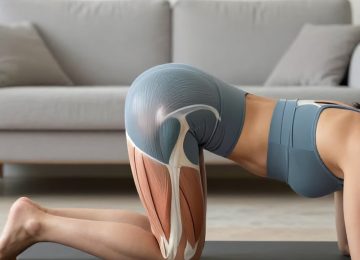
Understanding this intricate human muscle anatomy can significantly deepen one’s meditative practice. Visualizing the exposed muscle tissue, perhaps through detailed anatomy diagrams or anatomical human figures, helps to cultivate greater body awareness and proprioception. Educational content presented through clinical illustration, digital illustration, 3D modeling, or anatomical rendering provides invaluable insight into the layered representation of the musculoskeletal system.
When you sit for meditation, imagine the transversus abdominis gently bracing, the multifidus subtly supporting each vertebra, the glutes grounding you, and the erector spinae lengthening your spine effortlessly. This mental picture, informed by a detailed understanding of muscle structure, can guide you towards a more stable, comfortable, and ultimately more profound meditative experience. The insights gained from medical illustration and digital rendering can truly enhance this internal perception.