
Gentle Morning Yoga Flow to Wake Up Your Body and Mind
A morning yoga flow is less about pushing hard and more about mindful movement. The aim is to gradually awaken the body, lubricate your joints, energize your spine, and bring a sense of mental clarity before the day’s demands begin. This sequence moves from quiet stillness into gentle spinal movement, then progresses to strength, balance, and grounding postures.

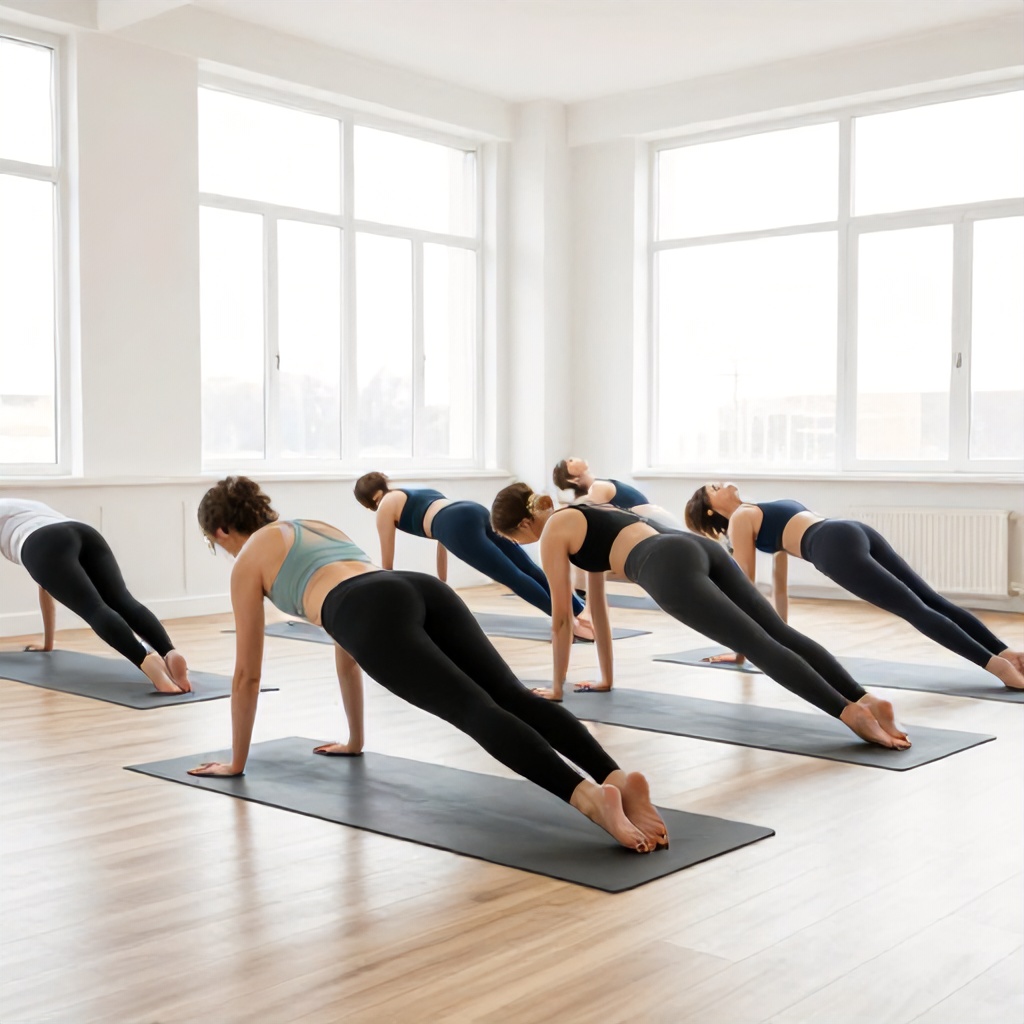
Practicing this flow regularly can significantly improve your mobility, posture, circulation, and mental focus. The key is to move slowly, breathe deeply through your nose, and allow each posture to naturally prepare you for the next one. This approach helps build awareness and prepares your body and mind for a more centered day.
1. Seated Meditation: Setting Your Foundation
Your practice begins with stillness. Seated meditation is a powerful way to shift your nervous system from a state of reactivity to one of calm awareness. It’s the perfect way to ground yourself before you start moving.
Alignment Tips for Seated Meditation
Sit comfortably in a cross-legged position or on a cushion, ensuring your spine is tall and your shoulders are relaxed. Rest your hands gently on your knees or in your lap. Lengthen through the crown of your head without creating any stiffness in your body. Keep your chin slightly tucked, which helps to keep the back of your neck long and open.
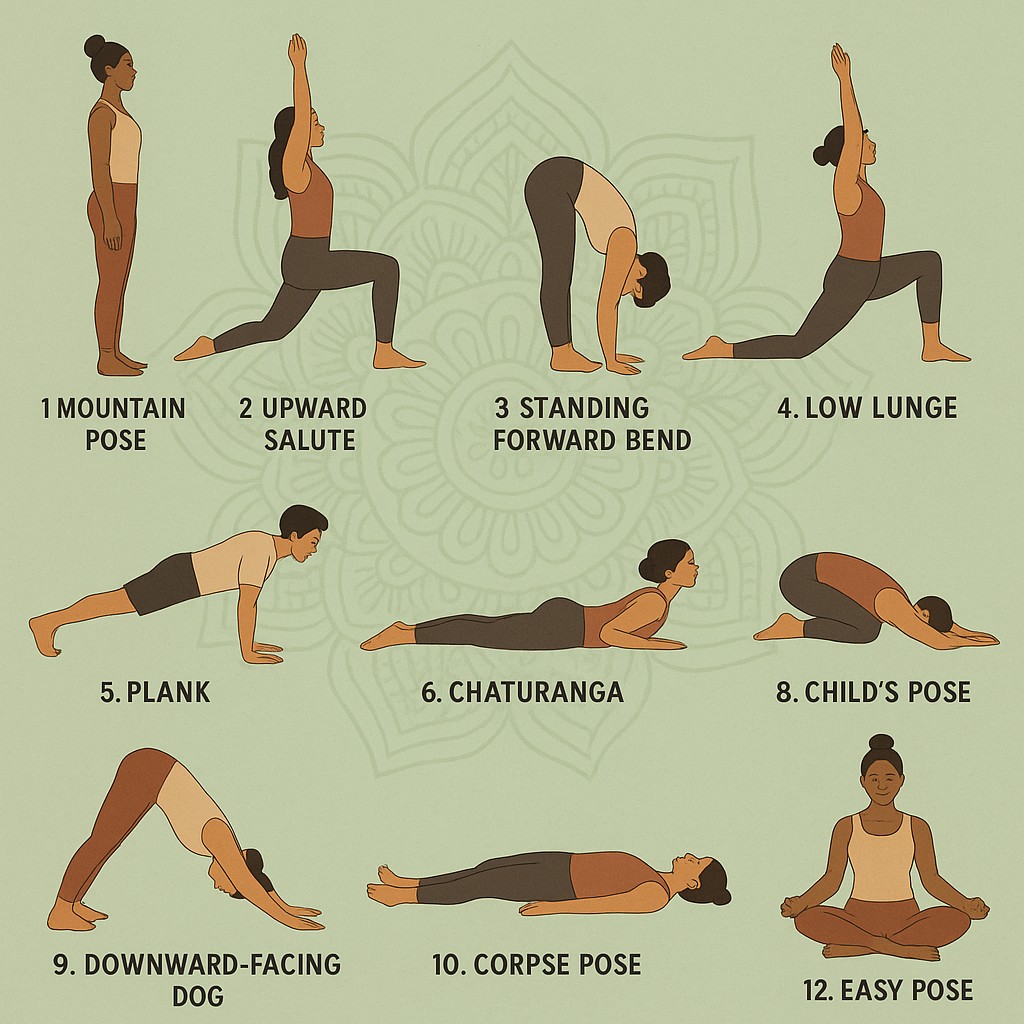
Stay in this position for a few minutes, simply observing your breath. This is also a great time to set an intention for your practice, or for the day ahead. What do you hope to cultivate? Peace? Energy? Patience?
2. Pigeon Pose: Releasing Hip Tension
Pigeon Pose is excellent for opening the hips and releasing stored tension, which is particularly beneficial if you spend a lot of time sitting. It’s a deep hip opener that can feel incredibly releasing.
Alignment Tips for Pigeon Pose
Focus on keeping your hips grounded and level. If your front hip is lifted, place a cushion or block underneath it for support. Lengthen your spine upwards before gently leaning forward over your front leg, or reaching your back leg towards your glute without forcing the knee. Keep your chest open, ribs gently drawn in, and shoulders relaxed away from your ears. Lightly engage your core to support your lower back. Keep your neck long, with your gaze soft and steady.
Hold this pose for several slow, deep breaths, then carefully switch sides to give your other hip the same attention.
3. Cobra Pose: Gentle Spinal Strength
Cobra Pose gently strengthens your spine and opens your chest, helping to counteract the effects of slouching and stiffness that can build up throughout the day. It’s a subtle yet effective posture.
Alignment Tips for Cobra Pose
Lie on your belly with your hands placed directly under your shoulders. Press lightly into your palms, and use the strength of your back muscles to lift your chest off the floor. Avoid relying solely on your arms. Keep your elbows bent and tucked in close to your ribs. Focus on lengthening through the front of your body without compressing your lower back. Feel a gentle lift and expansion.
4. Cat and Cow Flow: Energizing the Spine
Flowing between Cat and Cow poses is a fantastic way to warm up the spine and improve its overall mobility. This dynamic movement lubricates the spinal joints and encourages deep, conscious breathing.
Begin on your hands and knees, ensuring your wrists are under your shoulders and your knees are under your hips.
Cow Pose
Inhale as you drop your belly towards the mat, lift your chest and your tailbone towards the sky. Draw your shoulders away from your ears, creating space. Keep your neck long, with your gaze slightly forward or upward without straining.
Cat Pose
Exhale as you press the floor away with your hands, rounding your spine towards the ceiling. Draw your chin gently towards your chest and engage your core. Move slowly and deliberately, coordinating each part of the spinal rounding with your breath.
Continue to flow between these two poses for several rounds. This movement is excellent for releasing tension and creating spinal space.
5. Downward Facing Dog: Full Body Stretch
Downward-Facing Dog is a foundational pose that energizes the entire body while providing a deep stretch for your back, hamstrings, and shoulders. It’s a great posture for building strength and flexibility.
Alignment Tips for Downward Facing Dog
Lift your hips up and back, aiming to create a long, straight line from your hands to your hips. It’s perfectly okay to bend your knees slightly, especially if you have tight hamstrings, as this helps to maintain length in your spine. Press evenly through your palms and allow your head to relax between your arms. Focus on finding stability and length rather than trying to push your heels to the floor.
6. Three-Legged Dog Variation: Building Strength and Balance
This variation of Downward Dog builds strength, particularly in the arms and core, and significantly improves your balance. It adds an extra challenge and promotes greater body awareness.
Alignment Tips for Three-Legged Dog
From Downward-Facing Dog, inhale and lift one leg straight up behind you, keeping your hips as level as possible. Keep your standing leg strong and grounded. Engage your core to maintain stability. You can keep your toes pointed or flex your foot. Hold for a few breaths, then gently lower the leg and repeat on the other side.
7. Warrior II: Cultivating Strength and Focus
Warrior II is a powerful standing posture that builds strength in the legs and opens the hips and chest. It also cultivates mental focus and a sense of unwavering presence.
Alignment Tips for Warrior II
Step your feet wide apart. Turn your front foot out 90 degrees and your back foot in slightly. Align your front heel with the arch of your back foot. Bend your front knee directly over your ankle, ensuring it doesn’t go past your toes. Keep your torso stacked over your hips. Extend your arms out to the sides, parallel to the floor, with your gaze over your front fingertips. Feel strong and grounded.
8. Triangle Pose: Expanding and Lengthening
Triangle Pose is a wonderful counterpoint to the bent-knee strength of Warrior II. It lengthens the spine, stretches the hamstrings and hips, and opens the chest, helping to counteract slouching.
Alignment Tips for Triangle Pose
From Warrior II, straighten your front leg. Hinge at your front hip and reach your front hand forward, then lower it down to your shin, ankle, or a block. Extend your top arm straight up towards the ceiling. Keep both legs strong and engaged. Imagine creating a straight line between your hands. Gently draw your shoulder blades down and away from your ears, opening your chest towards the sky. Your gaze can be upwards, forwards, or down, depending on your neck comfort.
9. Child’s Pose: Resting and Releasing
After the standing poses, Child’s Pose offers a moment of deep rest and release. It’s a grounding posture that gently stretches the back and hips and calms the nervous system.
Alignment Tips for Child’s Pose
Kneel on the floor. Bring your big toes to touch and widen your knees to hip-width apart or wider. Sink your hips back towards your heels. Rest your forehead on the mat. You can extend your arms forward or bring them back alongside your body. Allow your entire body to relax and surrender into the pose. Focus on deep, even breaths.
10. Seated Forward Fold: Calming the Mind
This gentle forward fold is a calming posture that can help release tension in the back and hamstrings. It encourages introspection and helps to quiet the mind.
Alignment Tips for Seated Forward Fold
Sit with your legs extended straight out in front of you. You can place a cushion under your hips if this helps you sit more upright. Inhale to lengthen your spine. As you exhale, hinge at your hips and fold forward over your legs. Keep your back relatively long; it’s more important to fold from the hips than to force your head to your toes. You can rest your hands on your shins, ankles, or feet. Allow your shoulders to relax.
11. Seated Spinal Twist: Releasing Tension
A gentle spinal twist is a fantastic way to release tension held in the back and torso. It aids digestion and helps to create spinal space.
Alignment Tips for Seated Spinal Twist
Sit with your legs extended. Bend your right knee and place your right foot on the outside of your left thigh. Inhale to lengthen your spine. As you exhale, twist your torso to the right, bringing your left elbow to the outside of your right thigh, or hugging your knee. Keep your spine tall and twist from your core. Gaze over your right shoulder. Hold for a few breaths, then repeat on the other side.
12. Savasana (Corpse Pose): Integration and Rest
The practice concludes with Savasana, a vital pose for integration and deep rest. It allows your body and mind to absorb the benefits of your practice.
Alignment Tips for Savasana
Lie flat on your back with your legs extended and arms resting by your sides, palms facing up. Allow your feet to fall open naturally. Close your eyes and consciously release any tension from your body, starting from your toes and moving all the way up to your head. Simply allow yourself to be still and breathe naturally. Stay here for at least 5-10 minutes.
Bringing Your Morning Flow to Life
This morning yoga flow is designed to be a gentle yet effective way to awaken your body and sharpen your mental focus. Remember, the intention is key. Move with awareness, listen to your body, and adjust the poses as needed. Regular practice will enhance your mobility, improve your posture, boost circulation, and cultivate a greater sense of calm and clarity throughout your day.