
Stability balls provide an unstable surface that forces your muscles to work harder during every movement, making them an efficient tool for burning calories and building core strength at home. This simple piece of home gym gear, often called a Swiss ball or yoga ball, transforms standard bodyweight training into a total-body challenge. Because the ball moves, your body must constantly engage smaller stabilizing muscles that often go unused during floor mat workouts. This increased muscle recruitment leads to higher energy expenditure, which is a primary driver for weight loss. Beginners can start with basic balance training and gradually move toward high-intensity routines that burn fat while improving posture improvement and flexibility training.

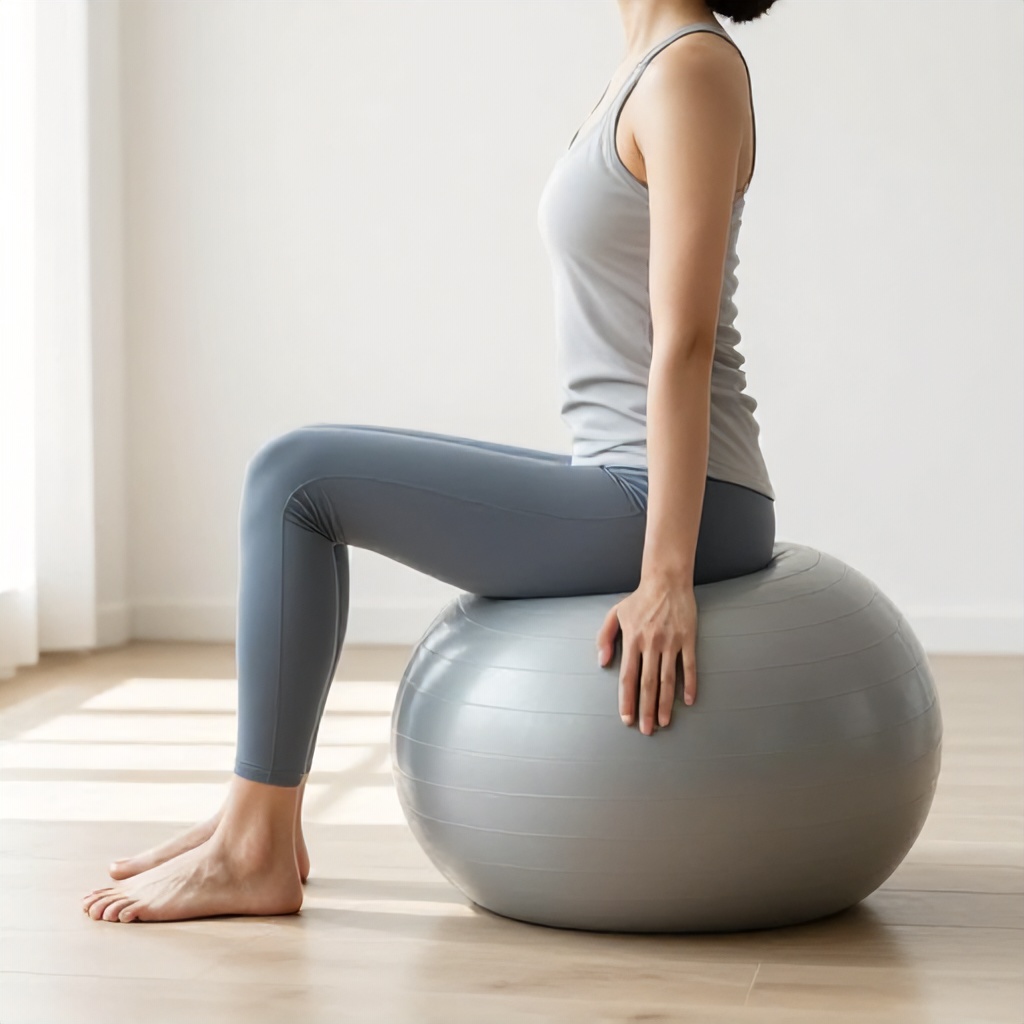
Choosing the Right Stability Ball for Your Height
Selecting the correct size is the first step toward a safe and effective workout. If the ball is too small, your knees will be higher than your hips, which puts unnecessary strain on your lower back. If it is too large, you will struggle to maintain balance and may find it difficult to perform abdominal exercises with the correct form. Most manufacturers categorize balls by diameter in centimeters. Use your height as the primary guide for purchasing your equipment.
- Under 5’2″: 45 cm ball
- 5’3″ to 5’8″: 55 cm ball
- 5’9″ to 6’2″: 65 cm ball
- Over 6’3″: 75 cm ball
When you sit on the ball, your feet should be flat on the floor. Your knees and hips should form a 90-degree angle. This alignment ensures that your weight is distributed evenly. It protects your joints. It also makes the exercises more comfortable for long-term use. If you are using the ball for the first time, consider slightly under-inflating it. A softer ball is more stable. As your core stability improves, add more air to make the surface firmer and the workout more challenging.
Essential Safety Tips for Beginners
Safety is the priority when working with unstable equipment. Start your workout on a non-slip surface like a yoga mat or a carpeted floor. Avoid slick hardwood or tile, as the ball can slide out from under you unexpectedly. Wear athletic wear that allows for a full range of motion. Shoes with good grip are better than socks, which can cause you to slip during leg exercises.
Clear a wide space around you. Remove any sharp furniture or objects that could puncture the physical therapy ball. If you feel dizzy or lose your balance, simply roll off the ball onto your feet. Keep your movements slow and controlled. Speed is not the goal for a beginner. Quality of movement matters more than the number of repetitions. Focus on your breathing. Exhale during the hardest part of the exercise. Inhale as you return to the starting position.
Beginner Core Strength and Balance Routine
Building a foundation starts with core stability. These exercises focus on the deep muscles of the abdomen and back. They help you get used to the feeling of the ball moving beneath you.
The Basic Seated Bounce
Sit tall on the center of the ball. Place your feet shoulder-width apart. Keep your spine straight and your shoulders relaxed. Gently bounce up and down without letting your feet leave the floor. This small movement engages the pelvic floor and the deep stabilizers in your trunk. It looks easy. It is actually waking up your nervous system. Do this for two minutes to warm up.
Stability Ball Pelvic Tilts
Sit on the ball with your hands on your hips. Slowly tuck your tailbone under, rounding your lower back slightly. Then, arch your back gently, pushing your tailbone out behind you. This movement should be small and controlled. It increases flexibility in the lumbar spine. It also helps you find a neutral pelvic position. Repeat this for ten to fifteen repetitions.
Ball Marches
While sitting on the ball, engage your core. Lift your right foot an inch off the ground. Place it back down. Lift your left foot. The goal is to keep the ball perfectly still while you move your legs. If you feel wobbly, place your hands on the sides of the ball for support. As you get stronger, move your hands to your hips. This exercise builds the coordination needed for more complex home fitness routines.
Effective Weight Loss Exercises with a Gym Ball
To lose weight, you need to engage large muscle groups and keep your heart rate elevated. Using a gym ball for resistance training creates a higher metabolic demand. These exercises target the legs, glutes, and upper body while forcing the core to work as a secondary stabilizer.
Stability Ball Wall Squats
Place the ball between your lower back and a sturdy wall. Walk your feet out about two feet in front of you. Lower your hips toward the floor as if sitting in a chair. Stop when your thighs are parallel to the ground. The ball will roll up your back as you descend. Press through your heels to stand back up. This variation of the squat is excellent for beginners because the ball supports the spine. It allows you to focus on leg strength without straining your back. Perform three sets of fifteen reps.
Stability Ball Bridges
Lie on your back on a floor mat. Place your heels on top of the ball. Keep your arms at your sides for balance. Squeeze your glutes and lift your hips toward the ceiling. Your body should form a straight line from your shoulders to your knees. Hold for two seconds. Lower back down slowly. This targets the hamstrings and glutes. These are large muscles that burn a lot of calories when activated. If this feels too hard, move the ball closer to your thighs to reduce the leverage.
Incline Ball Push-Ups
Place your hands on the ball, slightly wider than shoulder-width apart. Walk your feet back until your body is in a plank position. Lower your chest toward the ball. Push back up. Because the ball is elevated, this is easier on the shoulders than a standard floor push-up. However, the instability of the ball makes your chest and triceps work harder to stay steady. If you find this too difficult, perform the push-up with your knees on the ground. Aim for ten repetitions.
Abdominal Exercises for Toning and Stability
A strong core is the centerpiece of home fitness. The Swiss ball allows for a greater range of motion during abdominal exercises than the floor does. This means you can stretch the muscles further before contracting them, leading to better results.
The Dead Bug with Ball
Lie on your back. Hold the ball between your knees and your hands. Your arms should be straight, and your knees should be bent at 90 degrees. Slowly lower your right arm and your left leg toward the floor while keeping the ball pressed between your left hand and right knee. Bring them back to the center. Switch sides. This exercise teaches you how to keep your back flat against the floor while moving your limbs. It is a staple in physical therapy for back health.
Stability Ball Crunches
Sit on the ball and walk your feet forward until your lower back is supported by the curve of the ball. Place your hands behind your head or across your chest. Lean back until you feel a stretch in your abs. Use your stomach muscles to lift your torso upward. Do not pull on your neck. The ball provides a much larger range of motion than a floor crunch. This leads to better muscle engagement. Perform twelve to fifteen slow repetitions.
Low-Impact Training for Flexibility and Recovery
Weight loss routines should always include a recovery phase. Flexibility training prevents injury and keeps your joints moving through their full range of motion. The ball acts as a supportive prop for deep stretches that might be difficult to achieve on the floor alone.
Child’s Pose with Ball
Kneel on the floor. Place the ball in front of you. Put your hands on top of the ball and roll it forward as you lower your chest toward the ground. Sit back on your heels. This stretch opens up the shoulders and the latissimus dorsi muscles in the back. Hold for thirty seconds while taking deep breaths. It is a relaxing way to end a high-intensity session.
Side Lateral Stretch
Kneel next to the ball. Lean your side over the ball, draping your arm over the top. Let the ball support your weight. Reach your top arm over your head to feel a deep stretch along your ribs and obliques. This improves breathing capacity and spinal mobility. Switch sides after thirty seconds. This type of stretching is perfect for active recovery days.
Structured Beginner Workout Plan
Consistency is the most important factor in weight loss. Follow this simple circuit three times a week. Perform each exercise back-to-back with minimal rest. After completing one full round, rest for two minutes. Repeat the circuit three times.
- Seated Bounce (Warm-up) – 2 minutes
- Wall Squats – 15 reps
- Incline Push-ups – 10 reps
- Ball Bridges – 12 reps
- Ball Marches – 20 reps (total)
- Stability Ball Crunches – 15 reps
- Dead Bug – 10 reps (total)
- Child’s Pose Stretch – 1 minute
As you get stronger, increase the number of repetitions. You can also slow down the tempo of each movement. For example, take three seconds to lower yourself into a squat and one second to stand up. This increases “time under tension,” which helps with muscle toning and fat burning.
Dos and Don’ts for Stability Ball Training
Following these simple guidelines will help you avoid common mistakes and get the most out of your home gym gear.
- Do keep your core engaged at all times. Imagine pulling your belly button toward your spine.
- Do check the air pressure in your ball regularly. A flat ball is less effective and can be dangerous.
- Do focus on your posture improvement. Keep your chest up and shoulders back.
- Don’t hold your breath. This can cause your blood pressure to spike.
- Don’t use the ball if you see any deep scratches or bulges in the material.
- Don’t try advanced moves like standing on the ball. These are high-risk and unnecessary for weight loss.
Actionable Next Steps for Success
Start by clearing a dedicated space in your home for your workouts. Buy a high-quality, anti-burst stability ball that matches your height. Begin with the basic seated movements to build your confidence. Set a schedule. Aim for three sessions per week. Track your progress in a notebook. Write down how many reps you did and how you felt. Over time, you will notice that the ball feels less wobbly and your clothes fit better. Combine these exercises with a balanced diet and plenty of water. Weight loss is a gradual process. Small, consistent efforts lead to significant changes in your health and body composition.