Illustrated Guide to Yoga Poses and Their Anatomical Benefits

Yoga poses function as a physical language that communicates directly with your nervous system. When you look at high-quality yoga illustrations, you notice how specific shapes create stability or release tension. These yoga postures are not just about flexibility; they are about understanding your own anatomy through intentional movement. Whether you are practicing on a mat in a room with muted purple walls or following a digital guide set against a peachy-pink background, the goal remains the same: finding alignment.

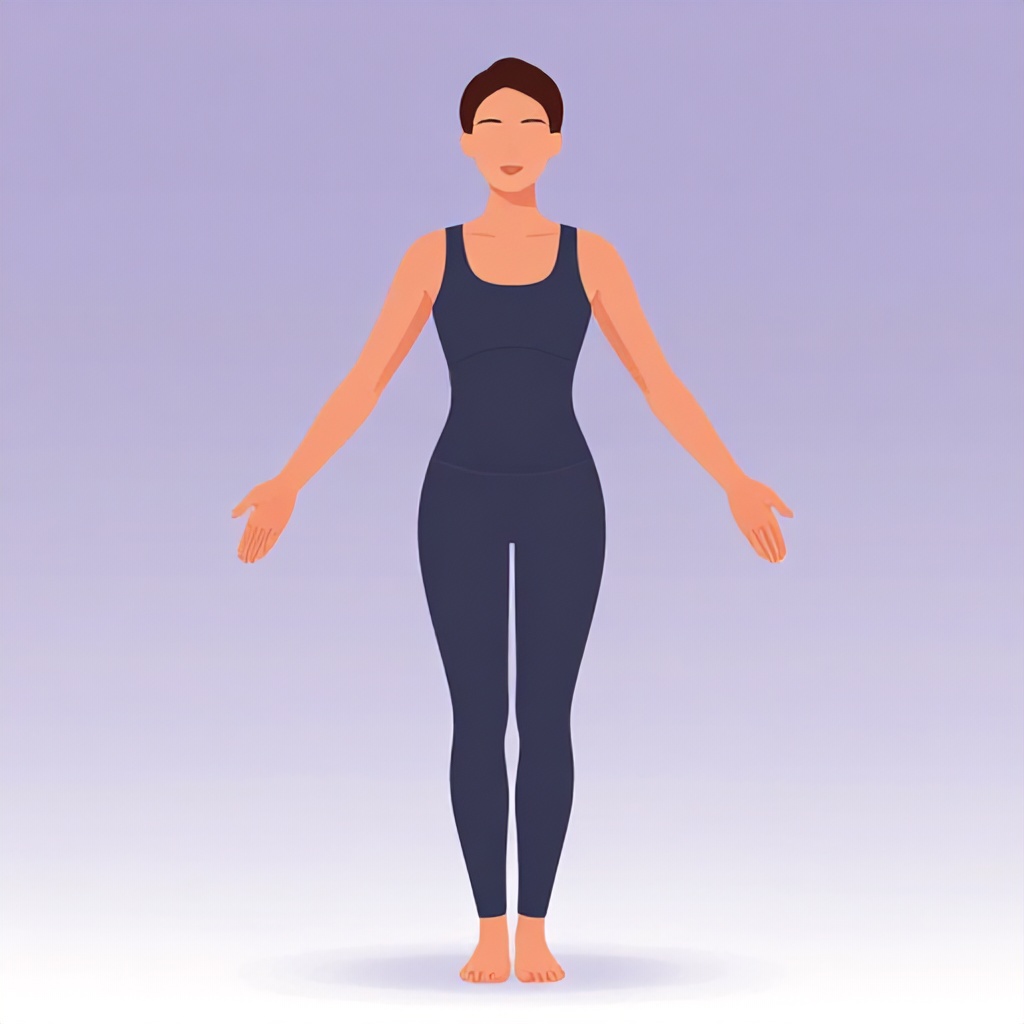
Foundational Standing Poses

Standing asanas provide the bedrock for your entire yoga practice. They build heat, improve balance, and ground your energy. When you look at a profile view of a standing pose, you can clearly see the line of energy traveling from the crown of the head down to the heels. This is where yoga alignment becomes visible.

Mountain Pose (Tadasana)

Mountain pose looks deceptively simple. You stand with your feet hip-width apart, rooting down through all four corners of your feet. Imagine a string pulling the top of your head toward the ceiling. Your shoulders should be relaxed, away from your ears, and your palms face forward. This posture teaches you how to stand with intention. It is the starting point for almost all yoga sequences. Focus on keeping your spine neutral and your breath steady. Avoid locking your knees; keep a micro-bend to maintain active engagement in your quadriceps.

Warrior II (Virabhadrasana II)

Warrior II is a powerful shape that builds strength in the legs and opens the hips. Step your feet wide apart, turning your front foot forward and your back foot slightly inward. Bend your front knee until it aligns directly over your ankle. Extend your arms out to the sides, parallel to the floor, with a clean sans-serif font style of focus—sharp, clear, and direct. Keep your torso centered between your legs. Many people lean forward, but your goal is to keep your shoulders stacked directly over your hips. This pose is a staple in most yoga diagrams because it effectively demonstrates the balance between effort and ease.

Seated and Floor-Based Shapes

Floor-based yoga positions allow you to slow down and focus on deep stretching. These movements are often used at the end of a session to calm the mind. When you study yoga art, you will notice that seated poses often involve concentric circles of energy, representing the way breath moves through the torso.

Child’s Pose (Balasana)

Child’s pose is a resting position that provides a gentle stretch for the hips, thighs, and ankles. Kneel on the floor, touch your big toes together, and sit on your heels. Separate your knees about as wide as your hips. Exhale and lay your torso down between your thighs. Rest your forehead on the mat. You can extend your arms forward or bring them back alongside your body. This is a restorative shape that helps you reconnect with your breath. If your hips feel tight, place a folded blanket under your seat for extra support.

Seated Forward Fold (Paschimottanasana)

This pose targets the hamstrings and the lower back. Sit on the floor with your legs extended straight in front of you. Flex your feet, pointing your toes toward the ceiling. Inhale to lengthen your spine, and exhale to fold forward from your hips, not your waist. Reach for your shins, ankles, or feet. Keep your chest open rather than rounding your back. The visual representation of this pose often emphasizes the long, straight line of the spine. If you cannot reach your feet, use a strap around the soles to maintain proper alignment without straining your shoulders.

Balancing and Inversion Basics

Balancing poses require intense concentration and core stability. They are the most challenging yoga movements for many beginners, but they offer the greatest rewards in terms of focus. Yoga visuals often highlight the gaze point, or drishti, which is essential for maintaining balance.

Tree Pose (Vrksasana)

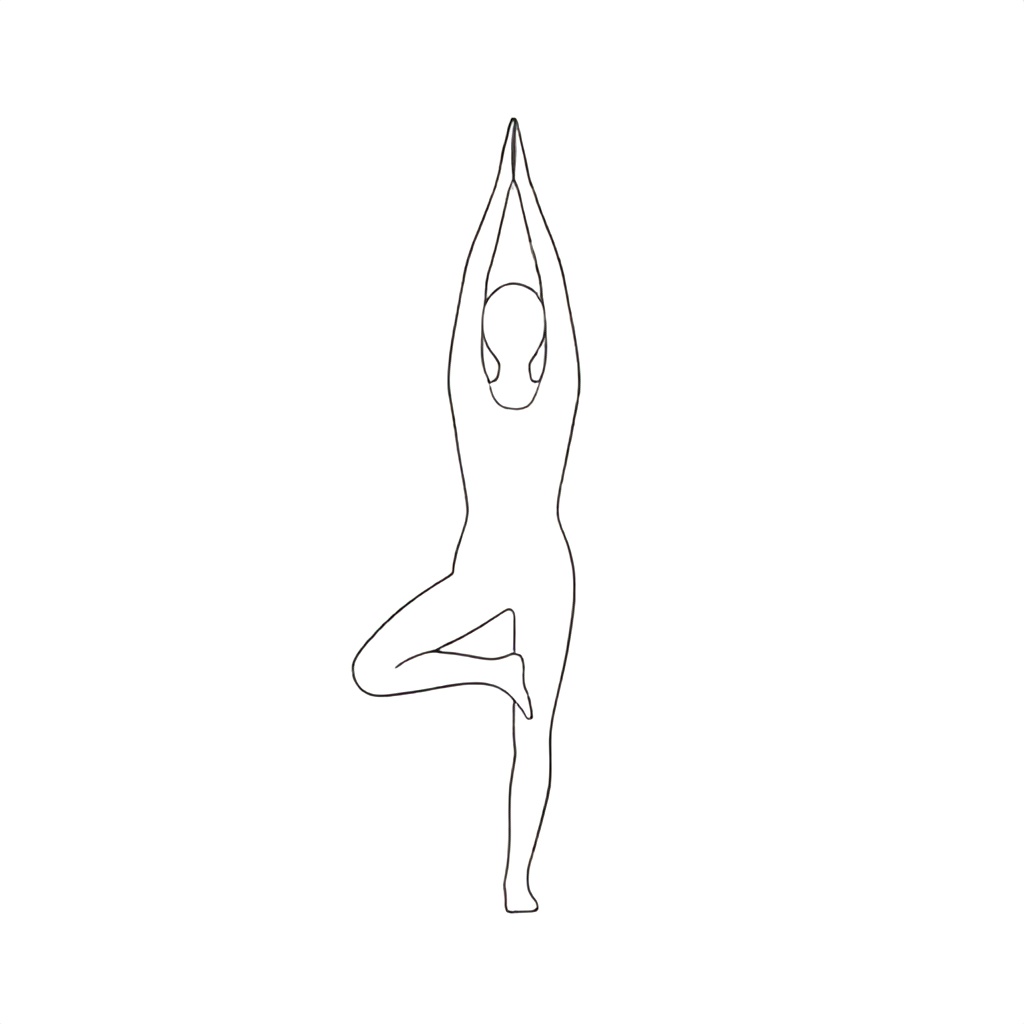
Tree pose helps improve balance and concentration. Stand in Mountain pose, then shift your weight onto your left foot. Bend your right knee and place the sole of your right foot on your inner left thigh or calf. Avoid placing the foot directly on the knee joint to prevent injury. Bring your hands to your heart in prayer position or extend them overhead like branches. Find a fixed point in front of you to gaze at. This helps keep your body steady. If you wobble, simply reset and try again. The beauty of this pose lies in the minor adjustments your body makes to stay upright.

Downward-Facing Dog (Adho Mukha Svanasana)

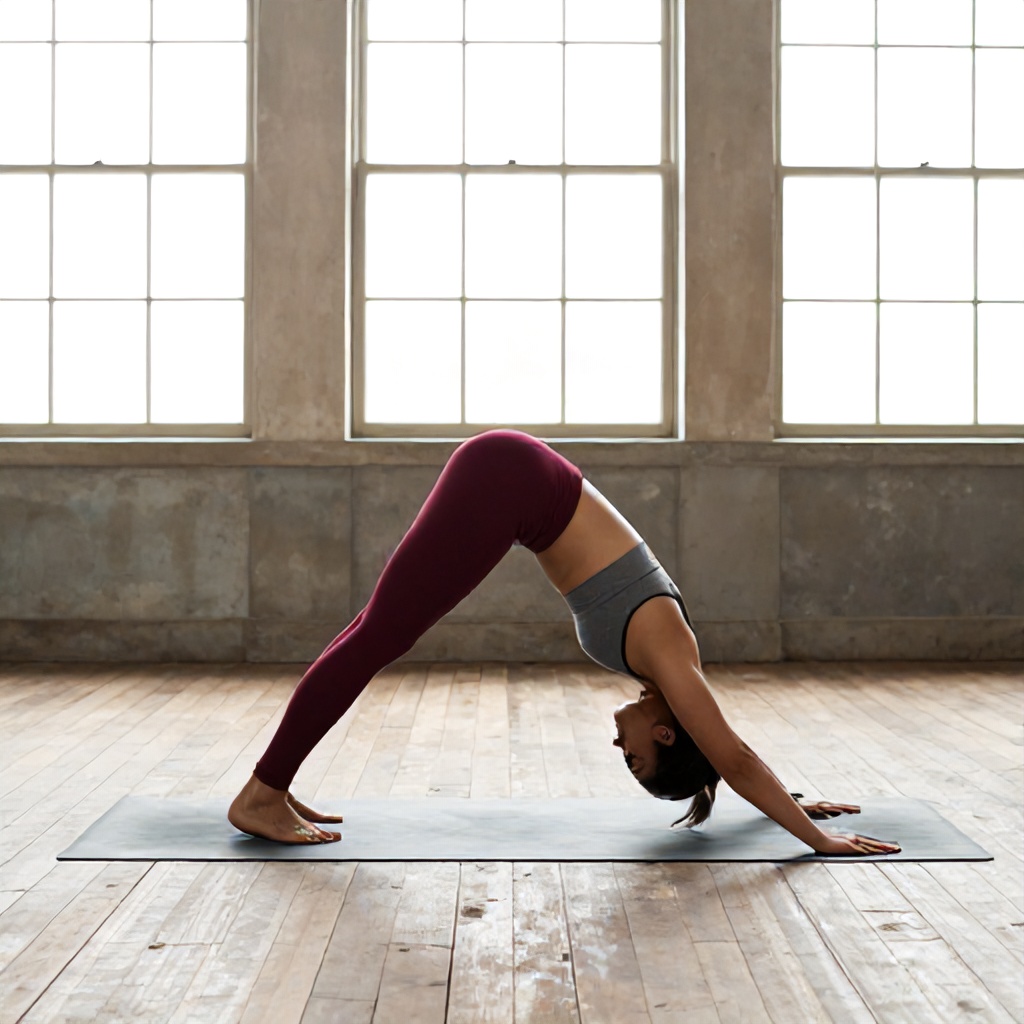
This is perhaps the most iconic of all yoga postures. Start on your hands and knees, then lift your hips toward the ceiling, forming an inverted V-shape. Spread your fingers wide and press firmly into the mat. Your head should hang freely between your upper arms. Focus on lengthening your spine rather than getting your heels to the floor. If your hamstrings are tight, keep your knees bent. This pose is a full-body stretch that engages the arms, back, and legs simultaneously. It is frequently used as a transition in yoga sequences to reset the body.

Refining Your Yoga Alignment

Alignment is the secret to a sustainable practice. When your joints are stacked correctly, you can hold poses longer and with less risk of injury. Think of your body as a series of levers and pulleys. When you move into a pose, check your foundation first. Are your feet grounded? Is your core engaged? Is your breath flowing?

Many people struggle with yoga anatomy because they try to force their bodies into shapes they see in magazines. Instead, focus on how the pose feels. If you are practicing in a space with muted purple decor, let that calm environment influence your pace. Move slowly. Use props like blocks, straps, and bolsters to bring the floor closer to you. There is no shame in using equipment; it is a sign of a smart practitioner who values longevity over ego.

When you look at yoga illustrations, pay attention to the angles. A slight tilt of the pelvis can change the entire sensation of a pose. For example, in a lunge, tucking your tailbone slightly can protect your lower back and deepen the stretch in your hip flexors. These small, subtle shifts are what separate a casual stretch from a true yoga practice.

Integrating Yoga into Your Daily Routine

You do not need an hour to reap the benefits of yoga. Even ten minutes of intentional movement can shift your mood and energy levels. Create a small corner in your home that feels inviting. A peachy-pink background or a simple mat in a neutral color can make your practice space feel like a sanctuary. Consistency matters more than intensity.

Start by picking three poses you enjoy. Maybe you love the grounding nature of Mountain pose, the stretch of Downward-Facing Dog, and the restfulness of Child’s pose. Create a simple flow that moves you from one to the other. Use your breath as the bridge between these shapes. Inhale as you expand, and exhale as you fold or twist. This rhythmic breathing is what turns a series of yoga positions into a moving meditation.

Keep a journal of your progress. Note which poses feel tight and which feel fluid. Over time, you will see how your body changes. You might notice that your shoulders feel less tense after a long day at the desk, or that your balance has improved during everyday activities. These are the real markers of progress, not how deep you can fold or how high you can lift your leg.

Common Mistakes to Avoid

One of the most common errors is holding the breath. When a pose becomes difficult, the natural tendency is to clench the jaw or hold the breath. This signals to your nervous system that you are in danger, which creates tension. Instead, consciously soften your face and deepen your breath. If you find yourself gasping, back out of the pose slightly.

Another mistake is over-stretching. Flexibility is a byproduct of yoga, not the primary goal. Never push into a sharp or shooting pain. If you feel a dull, aching sensation, that is usually a sign that you are pushing too hard. Listen to your body. It will tell you exactly what it needs if you are willing to pay attention. Remember that every day is different; some days you will feel open and flexible, while other days you will feel stiff and tired. Both are perfectly normal.

Finally, avoid comparing yourself to others. Yoga is an individual practice. The person next to you might have a different skeletal structure, a different history of injuries, or a different level of experience. Focus on your own mat. Your yoga practice is a conversation between you and your body, not a performance for anyone else.

The Role of Props and Modifications

Props are not just for beginners. They are tools that help you achieve better alignment. A block under your hand in a triangle pose can prevent you from collapsing your chest. A strap can help you maintain a straight spine in a seated fold. A bolster under your knees in Savasana can release tension in your lower back. Using these items allows you to experience the full benefit of the pose without compromising your form.

Think of your yoga practice as a lifelong project. You are building a relationship with your physical self. As you age, your needs will change, and your practice should evolve with you. What works for you today might look different in five years, and that is perfectly fine. The key is to remain curious and open to the process.

When you are looking for inspiration, seek out high-quality yoga diagrams that explain the mechanics of the pose. Understanding the anatomy—which muscles are lengthening and which are contracting—can help you perform the movements with more precision. This knowledge empowers you to practice safely at home, even without a teacher present.

Creating Your Own Sequences

Once you are comfortable with individual poses, you can start to link them together. A good sequence usually follows a logical progression: starting with gentle warm-ups, moving into more active standing poses, and finishing with cooling floor-based stretches. This structure helps prepare the body for deeper work and ensures a safe transition back to a resting state.

For a morning sequence, focus on poses that wake up the spine and increase circulation. Cat-Cow stretches are excellent for this. Start on your hands and knees. Inhale as you drop your belly and look up, and exhale as you round your spine and tuck your chin. Repeat this ten times to lubricate the vertebrae. Follow this with a few rounds of Sun Salutations to build heat.

For an evening sequence, focus on poses that release the day’s stress. Legs-Up-The-Wall is a fantastic restorative pose. Simply lie on your back and rest your legs vertically against a wall. This helps drain fluid from the legs and calms the nervous system. Stay here for five to ten minutes, focusing on slow, deep breaths. It is the perfect way to signal to your body that it is time to wind down.

Final Thoughts on Your Practice

Yoga is a practice of showing up. It is about the commitment to spend time with yourself, moving in ways that feel good and restorative. Whether you are following a complex sequence or just doing a few simple stretches, the value lies in the attention you bring to the moment. Keep your space clean and inviting, use your props wisely, and always prioritize your breath over the depth of your pose.

As you continue your journey, remember that the poses are just shapes. The real yoga happens in the space between the shapes—in the way you handle the challenge of a difficult pose, the way you breathe through discomfort, and the way you treat yourself with kindness when you fall out of balance. This is the essence of a sustainable and rewarding practice. Enjoy the process of learning your body, one pose at a time.

Stay consistent, stay curious, and keep your practice grounded in the reality of your own experience. There is no right or wrong way to feel in a pose, only the way that is right for you in this exact moment. By focusing on alignment, breath, and mindful movement, you create a foundation that will support you for years to come. Your mat is always there for you, waiting for your next session.
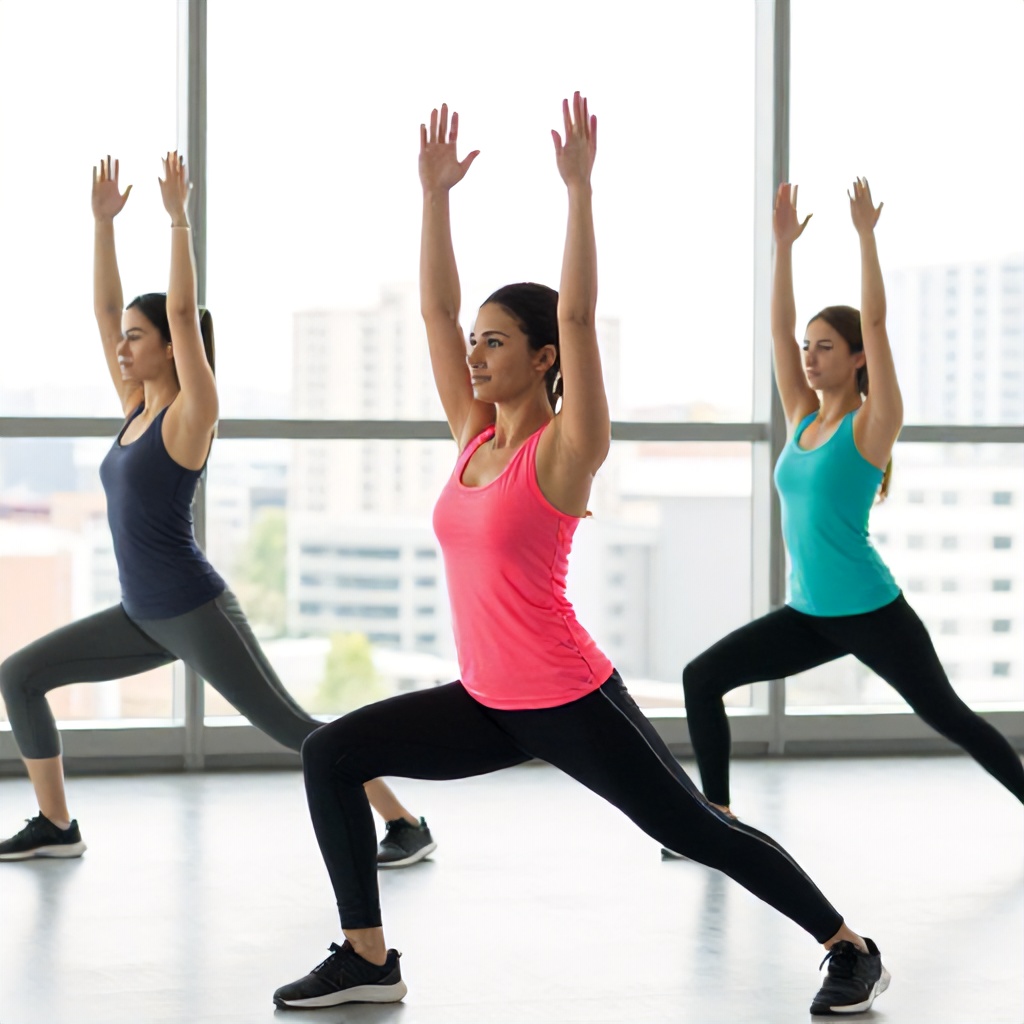
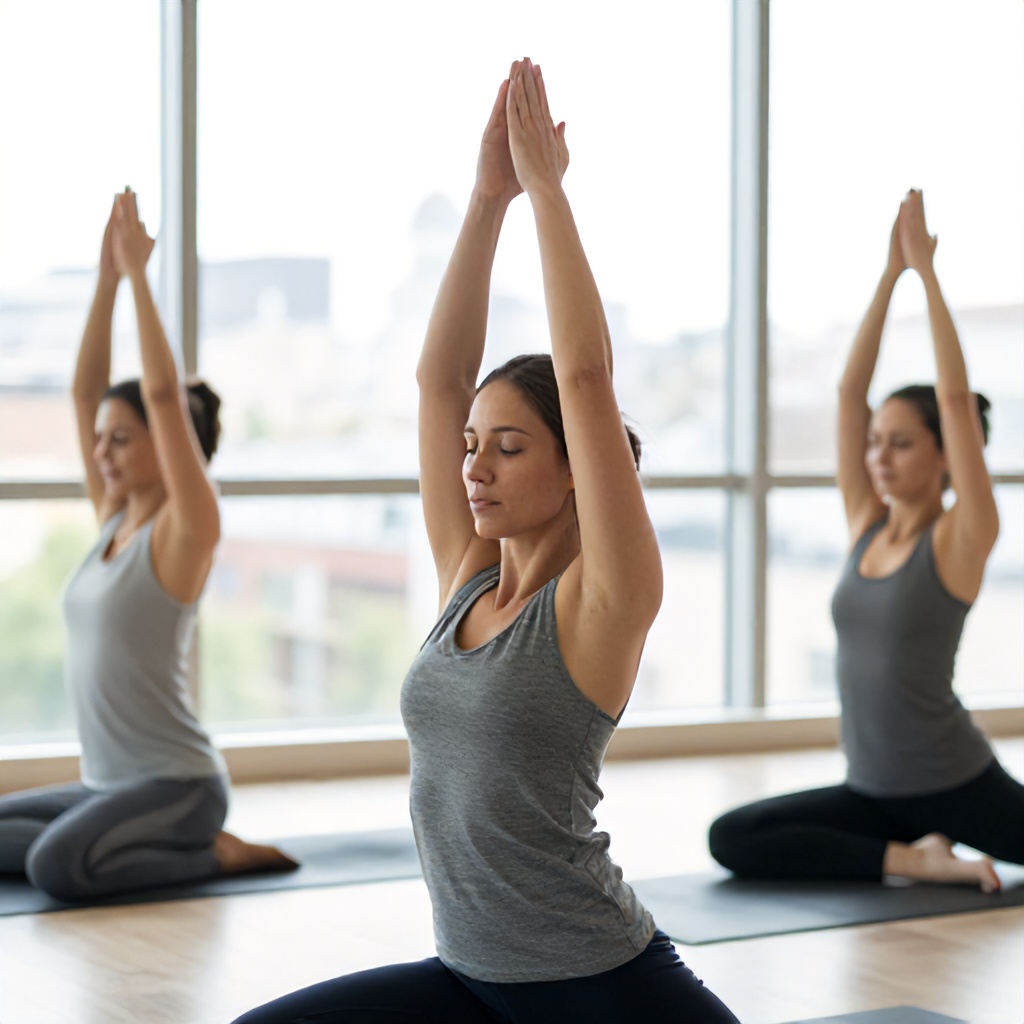
Common Yoga Alignment Mistakes for Newbies and How to Avoid Them

Common Yoga Alignment Mistakes for Newbies and How to Avoid Them

If your New Year’s resolution was to start a yoga routine, you’re probably enjoying your downward dogs and tree poses. But as a yoga newbie, you might be making common alignment mistakes that could actually be working against the benefits of your practice, potentially leading to more postural imbalances and injuries.

The biggest pitfall? Getting competitive in your yoga class and rushing into advanced poses instead of building strength gradually. As expert yoga teacher Kirsty Gallagher notes, “We all do it. But it’s far better to master a beginner’s pose than to push yourself and feel awful in the hardest variation.”

She emphasizes that in her yoga classes, the focus is on feeling and intention, not just how advanced you look. “If you’re just clinging on for dear life in a handstand, you’ve lost the essence of yoga in that pose.”

So, how can you refine your yoga technique to get the most out of your yoga classes? Let’s tackle these common beginner’s mistakes in popular poses. Remember, perfection isn’t the goal, as Kirsty wisely advises: “It’s okay not to have perfected every yoga move, as long as by the end of your practice your body feels better. You’re winning all around.”

1. Mastering Downward Dog

Downward dog is frequently done incorrectly, according to Kirsty. The main culprits are postural misalignment and tight muscles. As you progress in yoga, down dog becomes more comfortable as your body opens up and tightness lessens. However, before you reach that stage, tight shoulders and hamstrings can be significant obstacles.

The common issue arises when people with tight muscles try to straighten their legs too soon. This often leads to a rounded upper back. Instead, it’s better to bend the knees slightly to help lift the back of the hipbones. Another frequent mistake is putting too much weight into the hands and arms because the shoulders can’t externally rotate enough, resulting in a rounded back sensation when the goal is a straight and aligned spine.

How to Fix Downward Dog Alignment

Kirsty suggests always encouraging students to keep their knees bent. Don’t force your heels to the floor, as this can encourage the rounding sensation in your back. Focus on lengthening your spine and sending your hips up and back.

2. Perfecting Chaturanga

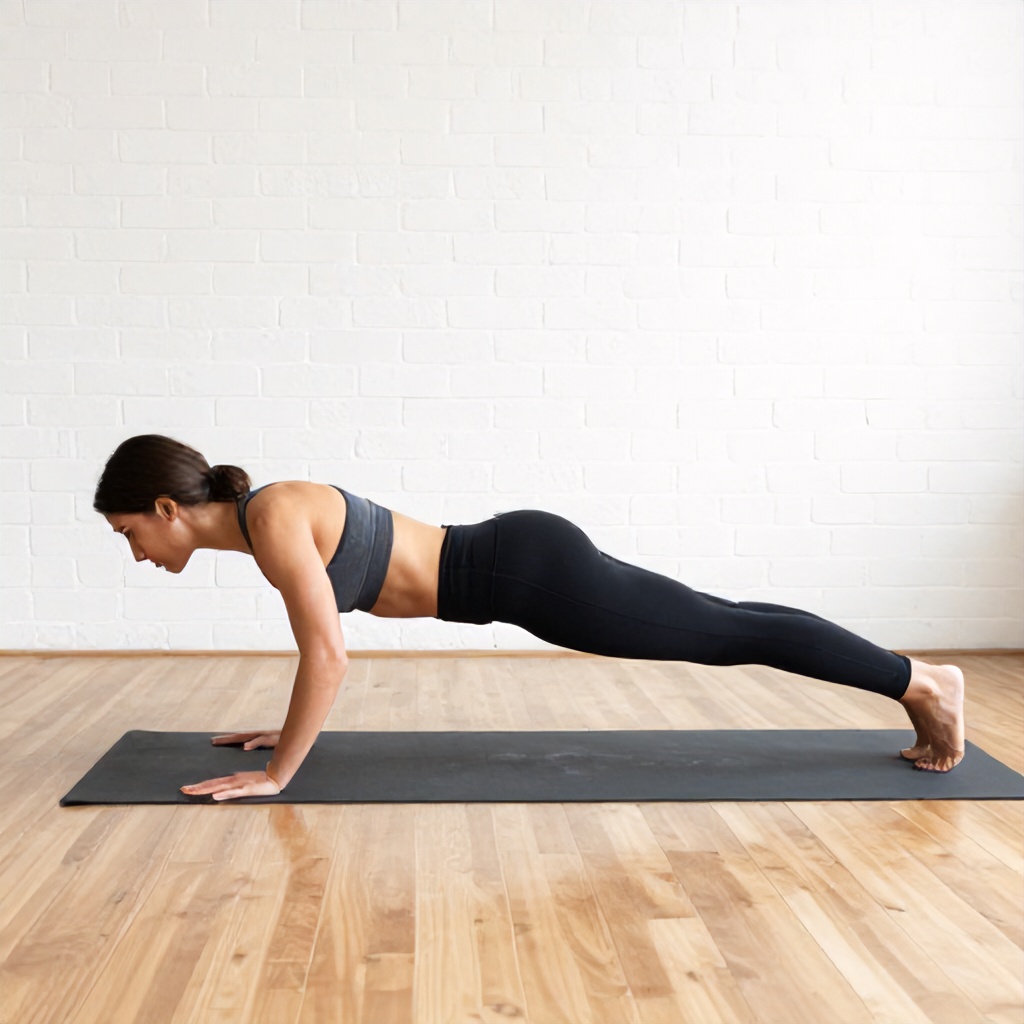
A primary challenge with Chaturanga for beginners is a lack of the necessary strength to perform the pose correctly. Kirsty observes that many people drop their shoulders and lift their hips too high. This compresses the front of the shoulder, putting excessive strain on that area rather than distributing the effort to the triceps and core.

Some instruction methods involve a “knees chest chin” movement, which doesn’t always build the specific strength needed in the triceps and core for a proper Chaturanga. This can lead to improper form and potential injury.

How to Build Chaturanga Strength

From a plank position, drop your knees directly to the floor. Keep your shoulders lifted away from your ears. Focus on engaging your core and triceps. As you build strength, you can gradually work towards lowering your body with control, keeping your elbows tucked in towards your ribs. If Chaturanga feels too challenging, modify by keeping your knees down throughout the movement.

3. Understanding Warrior II

Warrior II is a foundational pose, but subtle alignment errors can cause problems. A common mistake is not properly aligning the front heel with the arch of the back foot. This can lead to instability and strain on the front knee.

Another frequent issue is allowing the front knee to collapse inward, rather than tracking over the ankle. This puts undue pressure on the knee joint and can contribute to postural imbalances. Over-extending the arms or letting the shoulders creep up towards the ears also detracts from the pose’s benefits.

Aligning Your Warrior II

Ensure your front heel is in line with the arch of your back foot. Keep your front knee tracking directly over your ankle, forming roughly a 90-degree angle. Actively press down through the outer edge of your back foot. Draw your shoulder blades down your back and extend your arms strongly out to the sides, keeping your neck long.

4. Finding Stability in Tree Pose

Tree pose, or Vrksasana, is a popular balancing pose that tests your stability. A common pitfall for a yoga newbie is relying too heavily on external support, like leaning against a wall, without first understanding the foundational elements of the pose. Another mistake is placing the foot too high on the standing leg, directly on the knee joint, which can cause strain.

Simply lifting the lifted leg without grounding through the standing foot also undermines the pose. The intention is to create a strong, stable base, much like a tree’s roots.

Rooting Down in Tree Pose

Begin by finding a steady gaze point (drishti). Press your standing foot firmly into the mat, engaging your thigh muscles. You can place your lifted foot on your ankle or calf, avoiding the knee. If you’re ready for more, you can bring your foot to your inner thigh. Focus on drawing your hipbones forward and engaging your core to maintain balance. It’s okay to start with your hands at heart center or even lightly touching a wall for support as you build strength and proprioception.

5. The Nuances of Triangle Pose

Triangle pose (Trikonasana) is excellent for stretching the hamstrings and opening the chest, but beginners often make alignment errors that limit its effectiveness and can even be harmful. A frequent mistake is not creating enough space between the feet, which makes it difficult to achieve the correct angles.

Another common issue is allowing the front knee to bend excessively, turning it into more of a lunge. This compromises the hamstring stretch and the integrity of the pose. Some people also tend to reach too far down with their top hand, causing their torso to collapse and their chest to round, rather than staying open and lifted.

Perfecting Triangle Pose

Ensure your feet are about three to four feet apart, with your front foot turned slightly inward and your back foot parallel to the top of the mat. Keep your front leg straight but avoid locking the knee. Hinge from your hips, reaching your front hand down your shin or ankle, or even to a block. Extend your top arm straight up towards the ceiling, stacking your shoulders. Keep your chest open and your gaze lifted if comfortable for your neck.

6. Cobra Pose and Backbends

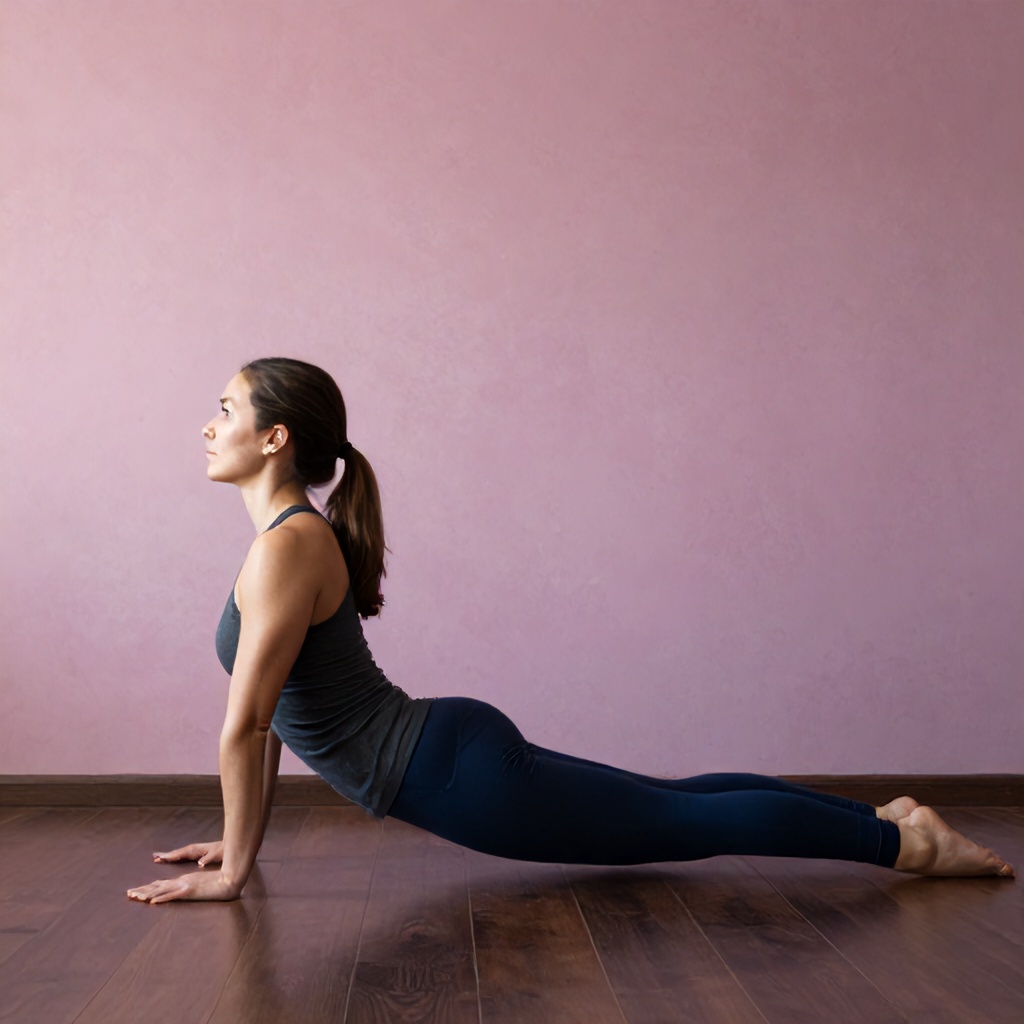
When practicing Cobra Pose (Bhujangasana) or other backbends, beginners often make the mistake of relying too much on momentum or pushing up with their hands, rather than engaging their back muscles. This can lead to compression in the lower spine and strain on the wrists and shoulders.

Another common error is letting the hips lift off the mat in Cobra, which shifts the focus away from the intended backbend. Some also tend to crunch their neck or look too far forward, creating tension.

Safe Backbending in Cobra

Lie on your belly with your legs extended and the tops of your feet pressing into the mat. Place your hands under your shoulders, with your elbows tucked in. Inhale and gently peel your chest off the floor, using the strength of your back muscles. Keep your hips grounded. Press lightly into your hands for support, but avoid pushing up too high. Keep your neck long and gaze slightly forward.

7. Seated Forward Bend

The seated forward bend (Paschimottanasana) is meant to stretch the hamstrings and spine. However, many yoga newbies round their upper back significantly, trying to reach their toes. This often stems from tight hamstrings and a lack of core engagement.

Trying to force the forehead to the knees without a long spine defeats the purpose. It can also lead to discomfort in the lower back if the spine is excessively rounded.

Forward Bend with a Long Spine

Sit with your legs extended in front of you. If your hamstrings are tight, place a cushion under your sitting bones or bend your knees slightly. Inhale and lengthen your spine, reaching your chest forward. Exhale and hinge from your hips, folding forward. Allow your hands to rest on your shins, ankles, or feet. The focus is on creating length in the spine, not on touching your toes. If you have a rounded back, it’s better to keep your knees bent and a long spine.

The Importance of Feeling and Intention

As Kirsty Gallagher consistently reminds her students, the true essence of yoga lies in feeling and intention, not in achieving advanced poses. Competitive yoga can lead to injuries and a disconnect from the practice’s mindful benefits.

Focusing on how your body feels after a yoga routine is a much better indicator of progress than comparing yourself to others. Even simple yoga moves, performed with awareness and intention, can lead to a body that feels better and a mind that is more at ease.

Listen to Your Body

Never push through pain. If a pose doesn’t feel right, or if you experience sharp or persistent discomfort, ease out of it or modify it. Your body will thank you for it. It’s better to do a modified pose with correct alignment and good intention than to force an advanced variation incorrectly.

By understanding and addressing these common alignment mistakes, you can deepen your yoga practice, prevent injuries, and truly experience the transformative power of yoga. Remember, patience and consistent practice are key to building strength and flexibility, allowing you to move towards more advanced poses safely and effectively. Your journey as a yoga newbie is about exploration and self-discovery, not about reaching an endpoint.

Black and White Yoga Line Drawings: Understanding Poses Clearly and Effectively

The Simple Power of Black and White Yoga Line Drawings

Black and white line drawings offer a remarkably clear and effective way to understand yoga poses.

These minimalist visuals strip away the distractions of color and complex shading, focusing solely on the essential lines that define a posture. For anyone practicing yoga, from absolute beginners to seasoned yogis, these simple forms serve as powerful educational imagery. They distill the essence of each asana, making them easier to grasp and replicate. Think of them as the blueprints for your body on the mat.

The beauty of line art in this context lies in its directness. Without the visual noise of a photograph or a detailed painting, your eye is immediately drawn to the critical alignment points. You can see the curve of the spine, the angle of the limbs, and the overall balance of the pose with striking clarity. This makes them an invaluable tool for learning new yoga postures or refining existing ones.

These drawings often feature abstract figures, emphasizing the shape and flow of the body rather than individual details. This abstract quality can be incredibly freeing, allowing you to interpret the pose through your own physical experience rather than trying to perfectly mimic a specific person’s form. The plain background further enhances this focus, ensuring that nothing detracts from the central subject: the yoga posture itself.

Understanding Anatomy Through Simple Forms

While they may appear simple, black and white line drawings can provide surprisingly insightful anatomical representation. They often highlight the skeletal structure and the basic body mechanics involved in each pose. This isn’t about showing every muscle fiber, but rather the fundamental framework that supports the movement and stability of the asana.

Consider a drawing of Warrior II. You’ll see the strong, grounded stance, the extended arms creating a straight line, and the torso aligned over the hips. The line art emphasizes the engagement of the legs, the open chest, and the steady gaze. It’s a visual cue for proper alignment that you can easily recall when you’re in the pose yourself. This graphic representation is far more accessible than complex anatomical charts for many people.

These illustrations can also subtly convey the energy flow within a posture. The lines might suggest dynamism or stillness, extension or grounding. It’s a form of artistic depiction that speaks directly to kinesthetic learners, those who understand best through movement and physical sensation. The monochrome palette, often just pure black lines on white, amplifies this focus on form and structure. It’s a visual guide that cuts through the clutter.

The artistic rendering in these drawings prioritizes clarity. You might see subtle variations in line weight to suggest depth or emphasis, but the overall impression is one of clean, uncluttered information. This makes them perfect for quick reference, whether you’re studying a new sequence or just need a reminder of how to set up a particular pose.

Versatility of Line Art in Yoga

The appeal of black and white yoga line drawings extends beyond pure instruction. They are also a beautiful form of yoga art in their own right. The elegance of a well-executed line illustration can be captivating, transforming a functional visual aid into something aesthetically pleasing.

These drawings can be found in various styles, from very precise and almost anatomical representations to more fluid and gestural interpretations. Some might lean towards a minimalist silhouette, capturing the outer form with minimal strokes. Others might incorporate subtle hints of the skeletal structure, providing a deeper understanding of how the body is positioned.

This adaptability means that line art can cater to different learning styles and aesthetic preferences. Whether you prefer a highly detailed posture illustration or a more abstract depiction, there’s likely a line drawing that resonates with you. They are a visual guide that can be as simple or as detailed as needed.

The use of plain backgrounds is a deliberate choice that enhances the impact of the line illustration. It ensures that the focus remains squarely on the yoga pose. There are no distracting elements, no busy patterns, just the pure form of the body in asana. This simplicity is key to their effectiveness as a learning tool.

These drawings are excellent for creating educational materials. Imagine a yoga studio wall adorned with a series of these line art pieces, each depicting a fundamental pose. They offer a constant, unobtrusive reminder of proper form and alignment. They are also fantastic for personal practice journals or digital study guides.

Key Poses Illustrated Through Line Art

Let’s look at a few common yoga poses and how line drawings effectively represent them.

Mountain Pose (Tadasana)

In a black and white line drawing, Tadasana appears deceptively simple. The illustration will show a standing figure with feet together or hip-width apart. The key elements highlighted are the straight spine, the shoulders relaxed down and back, the arms hanging naturally by the sides with palms facing forward or inward, and the head held high. The lines emphasize the grounding through the feet and the upward lift through the crown of the head. It’s a posture of presence and stability, and the line art captures this through its upright, balanced form.

Downward-Facing Dog (Adho Mukha Svanasana)

This iconic yoga posture is a perfect candidate for line illustration. The drawing will typically depict an inverted V-shape. The hands are planted firmly on the ground, shoulder-width apart, with fingers spread. The feet are hip-width apart, and the hips are lifted high. The drawing emphasizes the extension of the spine, creating a long line from the hands to the hips, and then a further line from the hips down to the heels. You can often see subtle lines indicating the engagement of the legs and the slight bend in the knees if that’s a common modification. The simplicity of the lines conveys the stretch through the hamstrings and calves, and the opening in the shoulders.

Warrior II (Virabhadrasana II)

Warrior II is all about power and stability. A line drawing will show one leg forward, bent at the knee, with the thigh parallel to the floor. The back leg is straight and strong, with the foot turned out. The torso is upright, stacked over the hips, and the arms are extended horizontally to the sides, parallel to the floor, with the gaze directed over the front fingertips. The lines here are crucial for showing the alignment: the front knee over the ankle, the hips open to the side, and the straight, powerful lines of the arms creating a sense of expansiveness. It’s a fantastic example of how line art can illustrate body mechanics.

Triangle Pose (Trikonasana)

Triangle Pose is a beautiful standing pose that involves a long, triangular shape. The line drawing will show the feet wide apart, one leg straight and the other bent slightly at the knee (depending on the variation). The torso hinges at the hip, reaching down towards the front leg, while the opposite arm reaches up towards the sky. The drawing emphasizes the straight line of the spine, the extension of the arms creating two opposing lines, and the open chest. You can see the tilt of the torso and the grounding through the feet. It’s a clear visual guide to achieving the elongated, expansive feeling of the pose.

Child’s Pose (Balasana)

Even a resting pose like Child’s Pose benefits from line illustration. The drawing would show a figure kneeling, with the torso folded forward over the thighs. The arms might be extended forward or resting alongside the body. The lines here convey a sense of surrender and release. The rounded back, the forehead resting gently on the mat, and the relaxed limbs are all communicated through simple, flowing lines. It’s a peaceful silhouette that instantly suggests comfort and restoration.

Why Choose Line Art for Your Yoga Practice?

The effectiveness of black and white line drawings in yoga stems from their ability to simplify complex information. They bypass the visual clutter that can sometimes accompany photographs or detailed illustrations, allowing the practitioner to focus on the fundamental aspects of each pose.

These drawings are incredibly versatile. They can be used as a quick reference during a practice session, a study tool for understanding alignment, or simply as beautiful artistic depictions of the yoga journey. The monochrome aesthetic lends itself to a sense of calm and focus, which is perfectly aligned with the spirit of yoga.

The abstract figures often employed in line art allow for personal interpretation. Instead of feeling pressured to match a specific body type or flexibility level shown in a photograph, you can use the lines as a guide to find your own optimal expression of the pose. This makes them more inclusive and encouraging for practitioners of all levels.

Furthermore, the clarity of the lines can help in understanding the subtle nuances of body mechanics. You can observe how the weight is distributed, how the joints are stacked, and how the muscles are engaged, all through the elegant simplicity of line illustration. This makes them a valuable resource for anyone looking to deepen their understanding of yoga anatomy and posture.

Ultimately, black and white line drawings offer a pure, unadulterated way to connect with yoga postures. They are a testament to the power of simplicity, proving that sometimes, the most effective way to communicate is through the most basic of forms. They are a visual language that speaks directly to the body and mind, making the practice of yoga more accessible, understandable, and beautiful.

Exit mobile version