High-intensity bodyweight training builds functional strength and cardiovascular endurance without requiring a single piece of gym equipment. You can achieve significant physical conditioning by focusing on movement quality and strict work-to-rest ratios within your own living room. This approach relies on the principle of progressive overload, where you consistently push your body to perform more repetitions or decrease rest times as your fitness improves.
The Mechanics of Bodyweight Circuits
Effective home workout routines prioritize compound movements that engage multiple muscle groups simultaneously. When you perform a push-up, you are not just targeting your chest; you are stabilizing your core, engaging your triceps, and activating your shoulders. This efficiency makes bodyweight exercises the foundation of minimalist fitness. By chaining these movements together into a circuit, you keep your heart rate elevated, effectively blending strength training with high-intensity interval training.
The structure of a successful circuit involves selecting four to six exercises that target different movement patterns. A balanced routine includes a push, a pull, a squat, a hinge, and a core movement. This ensures that you are not overworking one muscle group while neglecting others. For example, pairing a squat variation with a floor-based push movement allows your legs to recover while your upper body works, and vice versa. This alternating pattern is the engine of your workout intensity.
Designing Your Training Intensity
Intensity is not just about how fast you move; it is about the level of effort applied to every single repetition. To maximize your athletic performance, you must approach each set with intention. If you are performing air squats, focus on the depth of the squat and the explosive power on the way up. If you are doing planks, focus on the tension in your glutes and abdominals rather than simply holding the position until time expires.
Tracking your exercise sets is the most reliable way to ensure progress. Keep a simple logbook or a digital note on your phone to record the number of rounds completed and the time taken. When you return to the same circuit a week later, your goal is to beat your previous performance by even a small margin. This incremental improvement is the hallmark of sustainable fitness growth.
A Four-Week Fitness Challenge Framework
Consistency is the primary driver of results in any physical conditioning program. This four-week challenge is designed to build your capacity gradually, starting with manageable volume and increasing the density of work as you adapt. You do not need a home gym to see changes in your muscle toning or overall fitness aesthetic; you only need a clear plan and the discipline to execute it.
- Week One: Establish the baseline. Perform the circuit three times per week. Focus entirely on perfect form. If you cannot complete a movement with proper technique, modify it to a simpler version.
- Week Two: Increase the volume. Add one extra round to your circuit. If you were doing three rounds, move to four. Keep the rest periods consistent at 60 seconds between rounds.
- Week Three: Increase the density. Keep the number of rounds the same as week two, but reduce your rest periods to 45 seconds. This forces your body to recover faster between bouts of high-intensity effort.
- Week Four: Peak performance. Aim for maximum repetitions in each set while maintaining strict form. This is your test week to see how much your cardiovascular endurance and strength have improved.
Essential Movements for Home Fitness
Calisthenics relies on mastering basic human movements. These exercises are the building blocks of a strong, capable body. You should aim to master the mechanics of these movements before adding complexity or speed.
- Air Squats: Stand with feet shoulder-width apart. Lower your hips back and down as if sitting in a chair. Keep your chest up and ensure your heels stay planted on the floor throughout the movement.
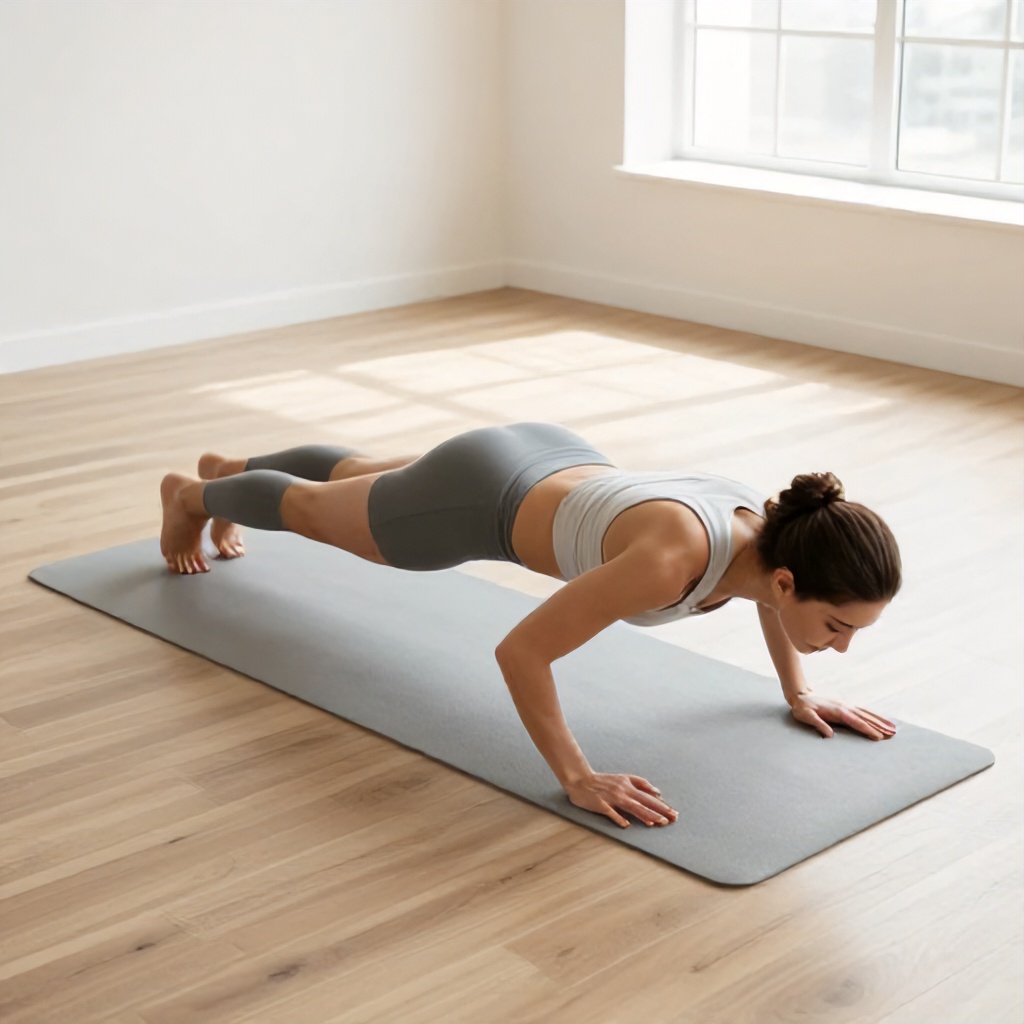
- Push-ups: Place hands slightly wider than shoulder-width. Keep your body in a straight line from head to heels. Lower your chest until it is an inch from the floor, then push back up with force.
- Lunges: Step forward with one leg and lower your hips until both knees are bent at approximately a 90-degree angle. Push off the front foot to return to the starting position.
- Mountain Climbers: Start in a high plank position. Drive one knee toward your chest, then quickly switch legs. This movement is excellent for spiking your heart rate and engaging your core.
- Plank: Hold a push-up position on your forearms. Keep your back flat and your core tight. This is a foundational exercise for building the stability required for more advanced calisthenics.
Managing Workout Motivation
Motivation often wanes when the novelty of a new routine wears off. To stay on track, focus on the process rather than the outcome. Instead of thinking about how your body will look in three months, focus on the satisfaction of completing today’s workout. When you view exercise as a non-negotiable part of your daily routine, it becomes a habit rather than a chore.
Environment plays a significant role in your success. Clear a dedicated space in your home for your workouts. Even if it is just a small corner of a room, having a specific place where you perform your exercises helps mentally prepare you for the effort ahead. Keep your workout gear visible and ready to go. If you have to spend ten minutes searching for your shoes or clearing space, you are more likely to skip the session.
Another effective strategy is to pair your workout with a specific time of day. Morning workouts are often more consistent because they happen before the demands of the day can interfere. If you are not a morning person, choose a time immediately after work or before dinner. The key is to make the decision once and stick to it, rather than negotiating with yourself every single day.
Optimizing Recovery and Performance
High-intensity training places significant stress on your central nervous system and muscles. Recovery is not a sign of weakness; it is a vital part of the training process. Without adequate rest, your performance will plateau and your risk of injury will increase. Prioritize sleep, as this is when your body repairs the micro-tears in your muscle fibers caused by exercise.
Hydration is equally important for maintaining your training intensity. Even mild dehydration can lead to a significant drop in strength and endurance. Drink water throughout the day, not just during your workout. If you find yourself feeling sluggish during your sessions, evaluate your hydration levels and your nutrition from the previous day.
Listen to your body. There is a difference between the discomfort of hard work and the sharp pain of an injury. If you feel pain in a joint or a specific muscle that does not feel like typical soreness, stop the exercise immediately. Modify the movement or swap it for an alternative that does not cause pain. Longevity in fitness is about staying in the game for the long haul, not pushing through an injury that will sideline you for weeks.
Advanced Variations for Continued Growth
Once you have mastered the basic movements, you can introduce variations to keep your training challenging. This prevents your body from adapting to the same stimulus and ensures continued progress. For example, instead of standard push-ups, try diamond push-ups to place more emphasis on your triceps. Instead of standard air squats, try jump squats to build explosive power.
You can also manipulate the tempo of your movements. Slowing down the eccentric, or lowering, phase of an exercise increases the time under tension for your muscles. Try taking three seconds to lower yourself into a squat, then explode upward. This simple change can make a standard movement feel significantly more difficult and effective for muscle toning.
Another way to increase intensity is through unilateral training. Exercises that use one limb at a time, such as Bulgarian split squats or single-leg glute bridges, force your body to work harder to maintain balance and stability. This also helps correct muscle imbalances, as your stronger side cannot compensate for your weaker side.
The Role of Mindset in Physical Conditioning
Your mental approach to training is just as important as your physical effort. Many people fail to see results because they treat their workouts as a passive activity. They go through the motions without truly engaging their muscles or focusing on the quality of their movement. To get the most out of your home fitness routine, you must be present during every set.
Visualize the muscles you are working. If you are doing a push-up, focus on the contraction of your pectoral muscles. If you are doing a lunge, focus on the engagement of your glutes and hamstrings. This mind-muscle connection is a proven technique used by athletes to improve performance and muscle activation. It turns a simple movement into a deliberate act of strength building.
Embrace the discomfort. High-intensity training is meant to be hard. When your heart rate spikes and your muscles begin to burn, that is the signal that you are pushing your boundaries. Instead of stopping, try to hold on for just five more seconds. Those final, difficult repetitions are where the most significant physiological adaptations occur. By consistently pushing past your comfort zone, you build not only a stronger body but also a more resilient mind.
Tracking Progress Beyond the Scale
The scale is a poor indicator of progress when you are focusing on strength training and bodyweight circuits. You might be losing body fat while simultaneously gaining muscle mass, which can result in the scale number staying the same. Instead of obsessing over weight, track your progress through performance metrics. Are you able to complete more repetitions in the same amount of time? Do you feel more energetic throughout the day? Is your form improving on difficult movements?
Take photos every four weeks to track changes in your fitness aesthetic. Sometimes, subtle changes in muscle definition are not immediately obvious in the mirror but become clear when you compare photos side-by-side. Use a measuring tape to track changes in your waist, chest, and limb circumference. These metrics provide a more accurate picture of your body composition changes than a simple weight reading.
Celebrate small wins. If you finally master a movement that you previously found difficult, acknowledge that achievement. If you complete a full week of workouts without missing a session, recognize your consistency. These small victories build the momentum needed to sustain a long-term fitness habit. Remember that fitness is a lifelong pursuit, not a destination. Every workout you complete is an investment in your future health and capability.
Building a Sustainable Routine
The best workout routine is the one you actually do. If you find that a four-day-a-week schedule is too demanding, start with two or three days. It is better to be consistent with a shorter, less frequent routine than to burn out after two weeks of an overly ambitious plan. As you build your base of fitness, you can gradually increase the frequency and intensity of your sessions.
Incorporate movement into your daily life outside of your formal workouts. Take the stairs instead of the elevator, go for a walk during your lunch break, or stand while working if possible. These small, non-exercise activities contribute to your overall energy expenditure and support your fitness goals. They also help keep your joints mobile and your body feeling limber.
Do not be afraid to adjust your routine based on how you feel. If you had a poor night of sleep or are feeling particularly stressed, a high-intensity session might not be the best choice. On those days, opt for a lower-intensity session, such as a mobility routine or a brisk walk. Flexibility in your approach ensures that you stay consistent over the long term, even when life gets in the way.
The Power of Minimalist Fitness
Minimalist fitness is about stripping away the unnecessary and focusing on the fundamentals that produce results. You do not need expensive equipment, fancy gym memberships, or complex supplements to build a strong, healthy body. The most effective tools are your own body weight and your commitment to consistent, high-quality movement.
By focusing on compound movements, progressive overload, and proper recovery, you can achieve a level of physical conditioning that rivals those who spend hours in a traditional gym. This approach is not only efficient but also highly adaptable to any schedule or environment. Whether you are at home, traveling, or working in a small office, you can always find the time and space to perform a high-intensity bodyweight circuit.
The simplicity of this method is its greatest strength. It removes the barriers that often prevent people from starting or sticking to a fitness program. When you realize that you have everything you need to succeed right now, the excuses disappear. You become the architect of your own fitness, responsible for your progress and empowered by your own efforts. Start today, stay consistent, and watch as your body and mind adapt to the challenge.
Final Thoughts on Long-Term Success
Building a strong, capable body is a marathon, not a sprint. There will be days when you feel strong and days when you feel tired. There will be weeks when you make rapid progress and weeks when you seem to stand still. This is the nature of physical training. The key is to remain patient and persistent, trusting the process and focusing on the small, daily actions that lead to long-term results.
Your fitness is a reflection of your daily habits. By choosing to prioritize your health through regular, high-intensity exercise, you are setting yourself up for a lifetime of vitality and strength. Keep your goals clear, your workouts focused, and your recovery a priority. You have the power to shape your body and improve your health through the simple, effective practice of bodyweight training. Stay committed to the challenge, and you will see the results of your hard work manifest in every aspect of your life.
As you continue your journey, keep learning and refining your approach. Read about new movement patterns, experiment with different circuit structures, and always look for ways to improve your form. The more you understand about how your body works and how it responds to training, the more effective your workouts will become. You are capable of far more than you realize, and every repetition brings you one step closer to your full potential.
Keep your focus on the present moment. When you are in the middle of a challenging set, do not worry about the next round or the end of the workout. Just focus on the current repetition. Give it your full attention and your best effort. This mindfulness will not only improve your performance but also make your workouts more rewarding. You are building a stronger version of yourself, one movement at a time.
Finally, remember that your fitness journey is uniquely yours. Do not compare your progress to others. Everyone starts from a different place and has different goals. Focus on your own growth, celebrate your own milestones, and stay true to your own path. With dedication and the right framework, you can achieve a level of fitness that supports your lifestyle and enhances your well-being for years to come.