Mastering the Wall Squat for Lower Body Strength
The wall squat, often called a wall sit, serves as a foundational isometric exercise that builds significant lower body strength without requiring heavy gym equipment. By pressing your back firmly against a vertical surface, you isolate the muscles in your legs and core, forcing them to maintain tension over an extended period. This movement pattern relies on static contraction, meaning your muscles work hard while your joints remain stationary. It is a staple in physical therapy exercise routines because it minimizes impact on the knees while maximizing quadriceps engagement.
Understanding the Mechanics of Proper Alignment
Correct kinetic alignment prevents unnecessary strain on your joints and ensures that your muscles perform the intended work. When you lean against a wall, your spine should maintain its natural curvature, meaning you should not force your lower back to flatten completely against the surface. Instead, focus on keeping your shoulder blades and the back of your head in contact with the wall. This setup creates a stable base for your bodyweight training session.
Positioning Your Feet and Legs
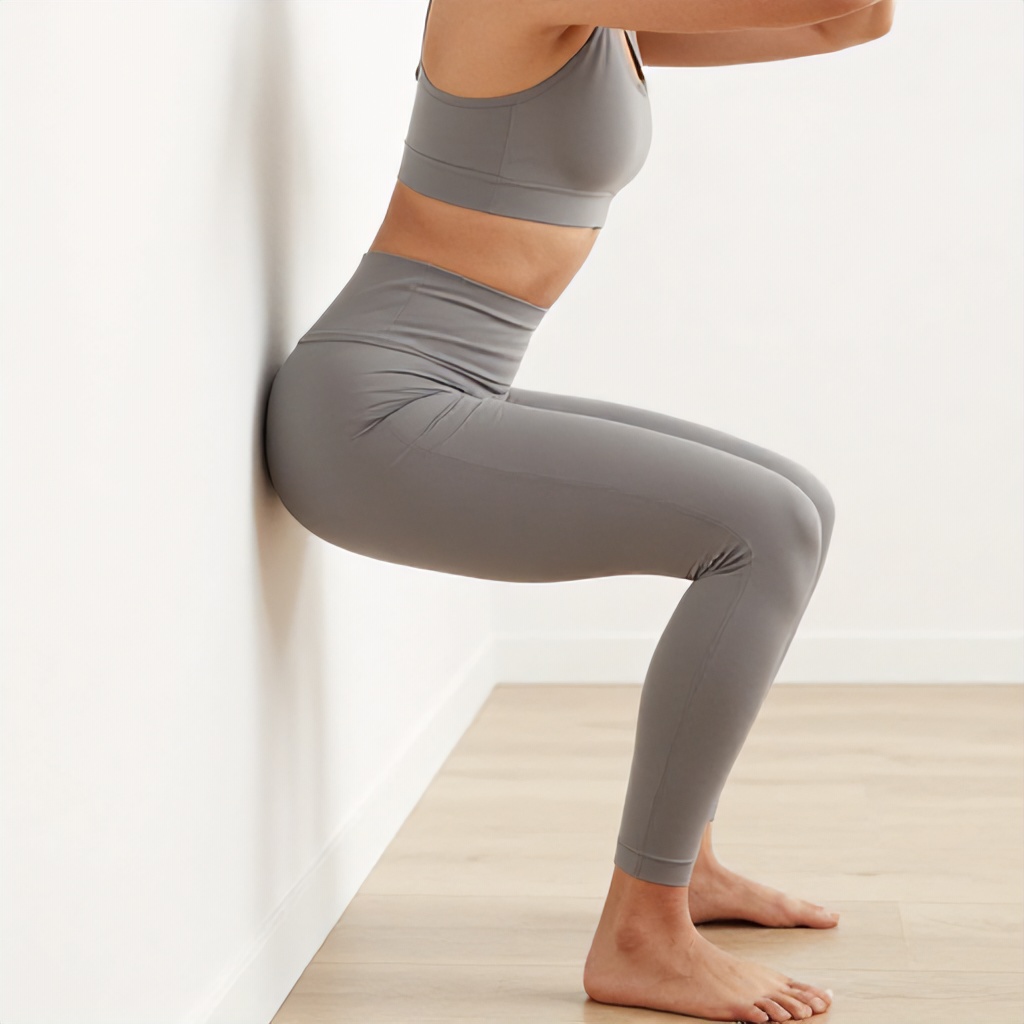
Your feet should be placed about two feet away from the wall, roughly hip-width apart. As you slide down, your knees should align directly over your ankles. If your feet are too close to the wall, your knees will push forward past your toes, which increases pressure on the patellar tendon. If your feet are too far out, you lose the vertical support needed for effective glute activation. Aim for a ninety-degree angle at the knee joint, as this position optimizes lower extremity strength development.
Maintaining Spinal and Core Stability
Core stability acts as the anchor for your entire body during this movement. Engage your abdominal muscles as if you are bracing for a light tap to the stomach. This internal pressure protects your lumbar spine from arching excessively. Keep your chest open and your shoulders relaxed, avoiding the tendency to hunch forward. Proper exercise posture requires a neutral neck position, so look straight ahead rather than down at your feet or up at the ceiling.
Step-by-Step Execution for Beginners
Beginners often struggle with the duration of the hold, so start with short intervals to build endurance safely. Focus on form before you worry about how long you can stay in the position. Quality movement patterns always trump quantity when it comes to muscle stabilization.
- Stand with your back flat against a sturdy wall.
- Walk your feet forward until they are about two feet from the base of the wall.
- Slowly slide your back down the wall until your thighs are parallel to the floor.
- Check that your knees are directly above your ankles and not caving inward.
- Distribute your weight evenly across your entire foot, pressing through your heels.
- Hold the position while breathing steadily, avoiding the urge to hold your breath.
- Push through your heels to return to a standing position when the set is complete.
The Role of Muscle Engagement
The wall squat is highly effective because it forces multiple muscle groups to work in harmony. While the quadriceps are the primary movers, the glutes and hamstrings provide the necessary support to keep your pelvis stable. This functional movement mimics the mechanics of sitting down and standing up, which is a vital skill for daily life. By practicing this, you improve your overall workout biomechanics and prepare your body for more complex movements like weighted squats or lunges.
Quadriceps Engagement and Development
Your quadriceps, the large muscles on the front of your thighs, bear the brunt of the load during a wall sit. Because you are holding a static position, these muscles undergo constant tension, which promotes endurance and muscle toning. Over time, this consistent stress leads to improved muscle fiber recruitment. You will notice that as your quadriceps grow stronger, your ability to perform other lower body workouts increases significantly.
Glute Activation and Pelvic Control
Many people forget to engage their glutes during this exercise, but they are essential for maintaining the correct squat depth and pelvic tilt. Squeeze your glutes throughout the hold to ensure your hips remain stable. This activation prevents the lower back from taking on too much of the load. When your glutes are firing correctly, you create a balanced system that protects your joints from excessive wear and tear.
Common Mistakes to Avoid
Even simple exercises can be performed incorrectly if you are not paying attention to your body. Watch for these common pitfalls to ensure your training remains safe and effective.
- Allowing your knees to cave inward toward each other, which puts stress on the ligaments.
- Lifting your heels off the ground, which shifts the weight onto the toes and increases knee pressure.
- Slouching or rounding your shoulders, which compromises your spinal alignment.
- Holding your breath, which can cause lightheadedness and prevents oxygen from reaching your working muscles.
- Dropping your hips too low, which can strain the hip flexors if you lack the necessary flexibility.
Advanced Variations for Continued Progress
Once you can comfortably hold a standard wall squat for sixty seconds, you might want to increase the intensity. Adding variety keeps your muscles challenged and prevents the plateau that often occurs with bodyweight training. Always ensure your foundational form is perfect before attempting these variations.
Single-Leg Wall Sits
Lifting one foot off the ground while in the squat position forces your core and the working leg to compensate for the imbalance. This variation is excellent for identifying and correcting muscle imbalances between your left and right sides. Keep your hips level throughout the movement to ensure the load is distributed correctly.
Weighted Wall Squats
Holding a dumbbell or a weight plate against your chest adds resistance to the exercise. This increases the demand on your quadriceps and glutes, accelerating muscle growth. Start with a light weight and focus on maintaining your posture against the wall. If you feel your back pulling away from the wall, the weight is likely too heavy.
Pulse Sets
Instead of holding a static position, perform small, controlled pulses at the bottom of the squat. Move up and down just an inch or two while keeping your back against the wall. This increases the time under tension and adds a dynamic element to the isometric exercise. It is a great way to fatigue the muscles at the end of a workout session.
Integrating Wall Squats into Your Routine
Consistency is the key to seeing results with any fitness technique. You do not need to spend hours on this exercise to see improvements in your lower body strength. Incorporating three sets of forty-five to sixty seconds into your regular routine is often enough to see significant changes in muscle endurance and joint stability over a few weeks.
Frequency and Recovery
Your muscles need time to recover after a workout, especially when you are focusing on strength building. Aim to perform wall squats three to four times per week, allowing at least one day of rest between sessions. If you feel persistent pain in your joints, stop immediately and assess your form. Soreness in the muscles is normal, but sharp pain in the knees or lower back is a sign that you need to adjust your technique or reduce the intensity.
Combining with Other Movements
Wall squats work well as a finisher for a lower body workout or as a standalone exercise during a quick home session. You can pair them with glute bridges or calf raises to create a comprehensive lower body circuit. Because they require no equipment, they are perfect for travel or days when you cannot make it to the gym. By focusing on the quality of your movement patterns, you build a foundation that supports all your other athletic endeavors.
The Science of Isometric Training
Exercise physiology tells us that isometric training is highly effective for building strength at specific joint angles. When you hold a wall squat, you are training your nervous system to recruit more muscle fibers simultaneously. This is known as motor unit recruitment. The more efficiently your brain can signal your muscles to fire, the stronger you will become. This type of training is particularly useful for athletes who need to maintain stability in awkward positions, such as skiers or cyclists.
Joint Alignment and Long-Term Health
Proper joint alignment is not just about performance; it is about longevity. By keeping your knees, hips, and ankles in the correct position, you reduce the risk of chronic issues like patellofemoral pain syndrome. The wall squat teaches your body how to distribute weight evenly, a skill that translates to better form during walking, running, and lifting heavy objects in your daily life. Think of this exercise as a way to calibrate your body for safer movement.
Building Functional Strength
Functional movement is the ability to perform everyday tasks with ease and without injury. Because the wall squat mimics the mechanics of sitting and standing, it directly improves your ability to perform these tasks with better control. As you age, maintaining this type of lower extremity strength becomes even more important for balance and independence. By practicing this move, you are investing in your future mobility.
Final Considerations for Safe Practice
Always listen to your body. If you have a history of knee or back injuries, consult with a professional before starting a new exercise program. They can provide personalized advice on how to modify the movement to suit your specific needs. Remember that the goal is to improve your health, not to push through pain that could lead to injury. Keep your movements slow, controlled, and intentional.
Focus on the sensation in your muscles rather than the clock. If you find your form breaking down at thirty seconds, stop there and rest. It is better to perform thirty seconds of perfect reps than sixty seconds of poor form. Over time, your endurance will naturally increase, and you will find yourself holding the position for longer periods with ease. Stay patient with your progress and celebrate the small wins, like improved stability or a deeper squat depth.
The wall squat is a simple yet powerful tool in your fitness arsenal. It requires nothing more than a wall and a bit of focus, yet it delivers consistent results for those who practice it regularly. By paying attention to your kinetic alignment and muscle engagement, you can transform this basic move into a cornerstone of your physical health. Keep your back flat, your core braced, and your breathing steady, and you will be well on your way to building a stronger, more resilient lower body.
As you continue to refine your technique, you will likely notice that other exercises become easier as well. The strength you build in your quadriceps and glutes will support you in everything from climbing stairs to carrying groceries. This is the beauty of functional training; it makes life outside the gym feel just a little bit lighter. Keep showing up for yourself, keep practicing, and enjoy the process of becoming stronger every single day.