Consistency beats intensity every single time you try to build a new habit. A 30-day home fitness challenge works because it removes the friction of decision-making by providing a clear, pre-planned roadmap for your movement. You do not need a gym membership, expensive equipment, or hours of free time to see physical changes. You only need a small patch of floor space and the willingness to show up for twenty minutes a day.
The Framework for Sustainable Movement
Most people fail at fitness challenges because they start with an intensity level that is impossible to maintain. When you commit to a 30-day plan, the goal is not to exhaust yourself on day one. The goal is to build the identity of someone who exercises daily. This requires a shift in perspective. Instead of viewing exercise as a punishment for what you ate, view it as a maintenance task for your body, similar to brushing your teeth or charging your phone.
Habit formation relies on the concept of the two-minute rule. If a workout feels daunting, commit to doing just two minutes of it. Once you start, the momentum usually carries you through the rest of the session. This challenge uses a progressive overload model, meaning the difficulty increases slightly each week to ensure your muscles adapt and grow stronger without leading to burnout or injury.
Preparing Your Environment
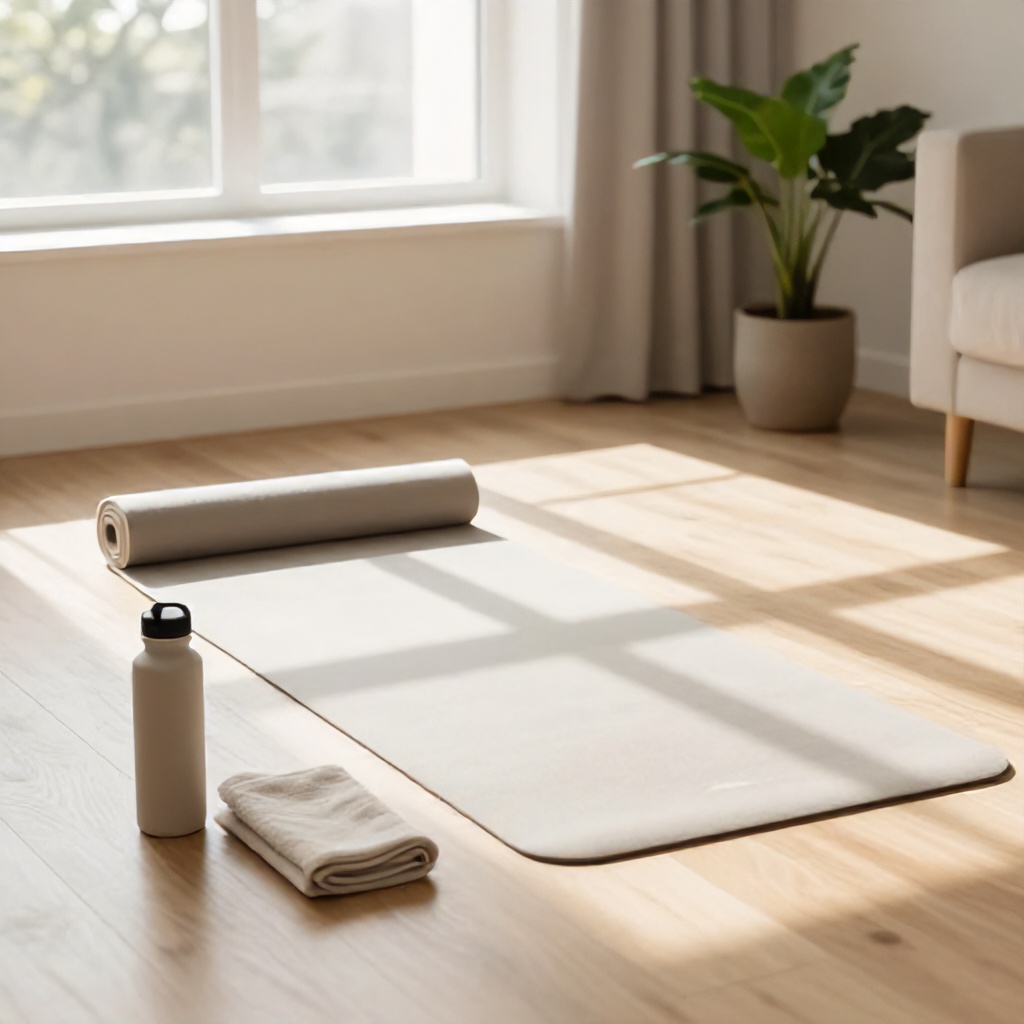
Your physical environment dictates your behavior more than your willpower does. If your workout clothes are buried in a drawer, you will skip the workout. If your yoga mat is rolled up in a closet, you will find an excuse to avoid it. Keep your gear in plain sight. Place your mat in the middle of your living room the night before. Lay out your sneakers right next to your bed. These small visual cues act as triggers that nudge you toward action before your brain has a chance to talk you out of it.
Designate a specific time for your movement. Morning workouts often see higher success rates because they happen before the chaos of the day sets in. If you are not a morning person, attach your workout to an existing habit. For example, commit to doing your circuit immediately after you finish your workday or right before you start cooking dinner. This is called habit stacking, and it is the most effective way to anchor a new routine into your life.
The 30-Day Workout Structure
This plan follows a four-week cycle. Each week introduces a new focus, starting with mobility and foundational strength, then moving into endurance and high-intensity intervals. You will perform these movements using only your body weight, which forces you to focus on form and control rather than just moving heavy objects.
- Week 1: Foundations and Form. Focus on slow, controlled movements. If you cannot perform a squat with perfect posture, do not add speed.
- Week 2: Increasing Volume. Add two repetitions to every exercise you performed in week one.
- Week 3: Shortening Rest Periods. Reduce your rest between sets from sixty seconds to forty-five seconds.
- Week 4: Peak Intensity. Increase the duration of your workout by five minutes and focus on explosive movements.
Core Movements for Every Day
These four movements form the backbone of your routine. They target every major muscle group and require zero equipment. Master these before you attempt any complex variations.
- Bodyweight Squats: Keep your heels planted and your chest upright. Imagine sitting back into an invisible chair.
- Push-ups: Maintain a straight line from your head to your heels. If you need to drop to your knees, do so, but keep your core engaged.
- Lunges: Step forward with one leg and lower your hips until both knees are bent at a ninety-degree angle. Alternate legs.
- Plank: Hold your body in a straight line, supporting your weight on your forearms and toes. Squeeze your glutes to protect your lower back.
Weekly Routine Breakdown
Consistency requires a schedule that accounts for recovery. You cannot train at maximum effort seven days a week. This schedule balances high-effort days with active recovery to ensure your central nervous system has time to repair.
Monday: Strength Focus
Perform three rounds of the following circuit. Rest for sixty seconds between rounds. Start with ten squats, ten push-ups, ten lunges, and a thirty-second plank. This session builds the baseline strength needed for the rest of the week. Focus on the mind-muscle connection. Feel your quadriceps working during the squats and your chest engaging during the push-ups.
Tuesday: Cardio and Mobility
Today is about getting your heart rate up and improving your range of motion. Spend twenty minutes doing a mix of jumping jacks, high knees, and mountain climbers. Follow this with ten minutes of deep stretching. Focus on your hamstrings, hip flexors, and shoulders. Mobility work is often ignored, but it is the secret to preventing the aches and pains that cause people to quit their fitness journey.
Wednesday: Active Recovery
Do not sit on the couch all day. Active recovery means moving your body in a way that does not strain your muscles. Go for a brisk thirty-minute walk, practice gentle yoga, or spend time foam rolling. The goal is to increase blood flow to your muscles, which helps clear out metabolic waste products and reduces soreness. Treat this day as a reward for the hard work you put in on Monday and Tuesday.
Thursday: Strength and Endurance
Increase your volume from Monday. Perform four rounds of the circuit. Increase your repetitions to twelve for each movement. If you find this too easy, slow down the tempo of your movements. Taking three seconds to lower yourself into a squat is significantly harder than dropping down quickly. This time under tension forces your muscles to work harder without needing extra weight.
Friday: High-Intensity Intervals
Use a timer for this session. Perform each exercise for forty seconds, followed by twenty seconds of rest. Complete four cycles of this pattern. The intensity should be high enough that you cannot hold a conversation while working. This type of training improves your cardiovascular health and burns calories long after the workout is finished.
Saturday: The Long Session
Dedicate forty-five minutes to movement. This can be a long hike, a bike ride, or a longer, slower version of your home circuit. Use this time to experiment with new movements or simply enjoy the feeling of being active. The goal is to associate movement with enjoyment rather than just a chore to be checked off a list.
Sunday: Rest
Total rest. No structured exercise. Use this time to prepare your meals for the upcoming week or reflect on your progress. If you feel guilty for resting, remind yourself that muscle growth happens during rest, not during the workout itself. Your body needs this time to repair tissue and replenish energy stores.
Tracking Your Progress
Data provides the objective evidence you need to stay motivated. When you feel like you are not making progress, looking at your log will show you the truth. Use a simple notebook or a digital spreadsheet to record your reps, sets, and how you felt after each session. Do not rely on the scale as your only metric. The scale fluctuates based on water retention, salt intake, and sleep quality.
Instead, track your performance metrics. Can you do more push-ups today than you could on day one? Is your heart rate lower after the same amount of exercise? Do you feel more energetic throughout the day? These are the real indicators of fitness. Take a photo on day one and another on day thirty. You will likely see changes in your posture and muscle tone that the scale simply cannot capture.
Overcoming Common Obstacles
Life will inevitably get in the way. You will have days where you are tired, busy, or simply unmotivated. The key is to have a plan for these moments. If you have a busy day, do not skip the workout entirely. Do a five-minute version. Five minutes is better than zero. It keeps the habit alive and prevents the mental slide that happens when you miss a day.
If you feel soreness, do not stop. Soreness is a normal part of the adaptation process. If the pain is sharp or localized in a joint, that is a sign to stop and adjust your form. If the pain is a dull ache in your muscles, keep moving. Gentle movement often alleviates soreness faster than total inactivity. Listen to your body, but learn to distinguish between the discomfort of growth and the pain of injury.
Nutrition and Hydration
Exercise is only one half of the equation. You cannot out-train a poor diet. Focus on simple, whole foods. Increase your protein intake to support muscle repair. Aim for a serving of protein with every meal, such as eggs, chicken, beans, or Greek yogurt. Protein provides the building blocks your body needs to recover from your daily workouts.
Hydration is equally important. Dehydration leads to fatigue, headaches, and decreased performance. Keep a water bottle with you throughout the day. If you find plain water boring, add a slice of lemon or cucumber. Aim to drink enough water so that your urine is a pale yellow color. This is a simple, practical way to ensure your body has the fluids it needs to function at its peak.
The Psychology of the 30-Day Goal
The thirty-day timeframe is short enough to feel achievable but long enough to create a genuine shift in your habits. By the time you reach day thirty, you will have performed dozens of repetitions of each movement. Your brain will have mapped these patterns, making them feel more natural and less like a struggle. This is the point where fitness stops being a challenge and starts being a part of your lifestyle.
Celebrate your small wins. Did you finish a workout when you really wanted to stay in bed? That is a win. Did you choose a healthy snack instead of processed junk? That is a win. These small victories compound over time. By the end of the month, you will not just be stronger physically; you will have built the mental resilience to tackle other challenges in your life.
Maintaining Momentum After Day 30
Once the thirty days are up, do not stop. Use the momentum you have built to set a new goal. Maybe you want to increase your push-up count, or perhaps you want to start incorporating light weights. The specific goal matters less than the commitment to continue moving. You have already proven to yourself that you can show up for thirty days straight. That is a powerful piece of evidence to carry forward.
Review your notes from the past month. What worked? What did you struggle with? Use this information to refine your routine. If you hated the jumping jacks, replace them with a different cardio move. If you found the morning workouts difficult, try moving them to the evening. Fitness is not a one-size-fits-all endeavor. It is a process of constant iteration and adjustment based on your own unique needs and preferences.
Keep your environment optimized. Keep your gear accessible. Keep your goals small and manageable. If you fall off the wagon, do not let one missed day turn into a missed week. Get back on track immediately. The most successful people are not the ones who never fail; they are the ones who return to their routine the fastest after a setback. You have the tools, the plan, and the knowledge to make this work. Start today, keep it simple, and focus on the process rather than the outcome.
Your body is an adaptive machine. It responds to the demands you place upon it. If you demand movement, it will become more efficient at moving. If you demand strength, it will build the necessary tissue to support that strength. This thirty-day challenge is your opportunity to send a clear signal to your body about what you want it to become. Stay consistent, stay patient, and trust the process of incremental progress.
Remember that the hardest part of any workout is the transition from doing nothing to doing something. Once you are in motion, the rest is easy. Use your environment, your schedule, and your tracking methods to make that transition as smooth as possible. You are building a foundation that will serve you for years to come. Every squat, every push-up, and every plank is an investment in your future self. Make those investments count.
As you progress through the weeks, pay attention to how your clothes fit and how your energy levels change. These are the real rewards. The physical changes will come, but the mental clarity and the sense of accomplishment are immediate. You are in control of your health. You are the architect of your daily habits. Use this thirty-day plan as the blueprint to build a stronger, more capable version of yourself, one day at a time.
Final check: have you prepared your space for tomorrow morning? If not, do it now. Lay out your clothes, clear your floor space, and set your alarm. The first step is the most important one. Once you take it, you are already on your way to completing the challenge. Keep your focus narrow, keep your intensity steady, and enjoy the process of becoming a more active person.