Tabata workouts offer a powerful, time-efficient way for women, especially those over 40, to boost their fitness and achieve sustained weight loss through short duration workouts that fit into even the busiest schedules.
What Exactly is a Tabata Workout?
A Tabata workout is a specific type of high-intensity training, often called a 4-minute workout, that follows a precise structure: 20 seconds of intense exercise followed by 10 seconds of rest, repeated eight times. This entire cycle totals just four minutes, making it an incredibly efficient cardio workout for women looking to maximize their time.
The method was developed in the mid-1990s by Dr. Izumi Tabata, a Japanese scientist. He originally used this protocol to train Olympic speed skaters, aiming to improve both their aerobic and anaerobic systems simultaneously. His research showed remarkable results, demonstrating that these short, intense bursts of exercise could significantly enhance athletic performance.
Tabata vs. HIIT: What’s the Difference?
While often grouped under the umbrella of HIIT workout or high-intensity training, Tabata is actually a very specific form of it. All Tabata is HIIT, but not all HIIT is Tabata. Think of Tabata as a super-charged, highly structured version of HIIT.
Here’s a clear breakdown of the key differences:
The Facts About Tabata
- Work Interval: 20 seconds
- Rest Interval: 10 seconds
- Heart Rate Goal: Extremely high, pushing above 100% of maximum effort (original studies aimed for 170% of VO2 max, which is your body’s maximum oxygen uptake capability)
- Total Workout Time: 4 minutes (for one complete Tabata round)
The Facts About HIIT
- Work Interval: Generally 1-2 minutes
- Rest Interval: Varies widely, often 30 seconds to 2 minutes. A common ratio is 1:1 (1 minute work, 1 minute rest) or 1:2 (1 minute work, 2 minutes rest), but it can be adjusted.
- Heart Rate Goal: 80-95% of maximum heart rate, as advised by organizations like the American Council on Exercise (ACE)
- Total Workout Time: Typically 20-40 minutes
As you can see, the Tabata workout pushes the exercise intensity to an extreme level for a very short duration, aiming for a higher heart rate training zone than typical HIIT. This makes it particularly effective for quickly improving cardiovascular fitness and promoting fat burning.
Why Tabata Matters for Women Over 40
Many women over 40 find themselves struggling with weight management and energy levels. The Tabata workout offers a potent solution for several reasons:
-
Efficient Weight Loss for Women: The high intensity of Tabata workouts creates an “afterburn effect,” meaning your body continues to burn calories at an elevated rate even after your workout is finished. This metabolic boost is crucial for weight loss for women.
-
Muscle Building and Maintenance: As we age, maintaining muscle mass becomes increasingly important. High-intensity training, including Tabata, stimulates muscle building, which in turn helps with sustained weight loss by increasing your resting metabolism. Stronger muscles also support bone health, a key concern for women over 40 fitness.
-
Time-Saving: The primary appeal of Tabata is its brevity. A full 4-minute workout can be squeezed into the busiest of days, eliminating the “no time” excuse. This makes it an ideal component of home fitness routines.
-
Improved Cardiovascular Health: Despite its short duration, Tabata significantly improves your VO2 max, which is a key indicator of cardiovascular fitness. This means a healthier heart and better stamina for everyday activities.
-
Workout Motivation: The quick, intense nature of Tabata can be a great motivator. Knowing you only have to push hard for four minutes can make it easier to start and stick with your fitness programs.
Many popular fitness programs, including some Beachbody workouts, incorporate principles of Tabata and other HIIT workout styles to help individuals achieve their fitness goals, demonstrating their effectiveness in real-world scenarios for getting in shape and maintaining it.
How to Perform a Tabata Workout Safely and Effectively
While Tabata is short, its intensity demands proper execution to be safe and effective. It’s not about going through the motions; it’s about giving maximum effort during those 20-second intervals.
Choosing Your Exercises
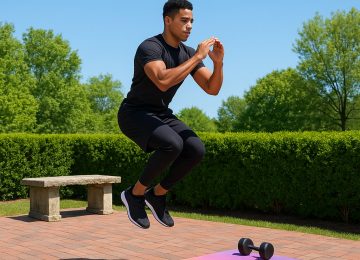
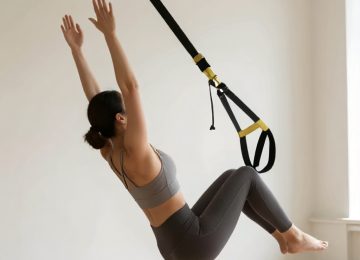
The beauty of Tabata is its versatility. You can use almost any exercise, but bodyweight exercises are excellent for home fitness routines and require no equipment. The key is to select movements that allow you to work hard and engage large muscle groups. Examples include:
- Squats (bodyweight or jump squats)
- Push-ups (on knees or toes)
- Lunges (alternating legs)
- Burpees
- Mountain climbers
- High knees
- Plank jacks
You can choose one exercise for all eight rounds, or alternate between two different exercises (e.g., squats for rounds 1, 3, 5, 7 and push-ups for rounds 2, 4, 6, 8) to target different muscle groups.
The Importance of Warm-up and Cool-down
Even for a 4-minute workout, a proper warm-up and cool-down are non-negotiable. A 5-minute dynamic warm-up (light cardio, dynamic stretches) prepares your body for the intense effort, reducing injury risk. A 5-minute cool-down (static stretches) helps with recovery periods and flexibility.
Understanding the Intensity
Dr. Izumi Tabata himself emphasizes that while the workout is intense, it can be adapted. For someone at an advanced fitness level, it means pushing to near-failure during the 20 seconds. For a beginner HIIT participant, it means working as hard as you can, safely. You should be breathing heavily, unable to hold a conversation, and feel a significant burn. Listen to your body and adjust the exercise intensity as needed.
Sample Tabata Workout for Beginners
This beginner HIIT example focuses on foundational bodyweight exercises. Remember to warm up first!
- Round 1: Bodyweight Squats (20 seconds work, 10 seconds rest)
- Round 2: Push-ups (on knees or toes) (20 seconds work, 10 seconds rest)
- Round 3: Bodyweight Squats (20 seconds work, 10 seconds rest)
- Round 4: Push-ups (on knees or toes) (20 seconds work, 10 seconds rest)
- Round 5: Bodyweight Squats (20 seconds work, 10 seconds rest)
- Round 6: Push-ups (on knees or toes) (20 seconds work, 10 seconds rest)
- Round 7: Bodyweight Squats (20 seconds work, 10 seconds rest)
- Round 8: Push-ups (on knees or toes) (20 seconds work, 10 seconds rest)
After these 8 rounds, immediately move into your cool-down stretches. This short duration workout pack a powerful punch.
Integrating Tabata into Your Fitness Routine
You can incorporate Tabata workouts a few times a week, either on their own or as a finisher after a longer strength or cardio session. For women over 40, starting with 2-3 Tabata sessions per week, with rest days in between, is a great strategy for getting in shape.
Many fitness apps are available that guide you through Tabata timers, making it easy to track your work and recovery periods. Simply search for “Tabata timer” on your app store (there are options for both Apple and Android devices).
Consistency is key for sustained weight loss and overall fitness. Even on days when you feel low on workout motivation, knowing you only need four minutes of high-intensity training can be enough to get you moving.
Beyond the 4 Minutes: Maximizing Your Results
While the core Tabata protocol is four minutes, you can string together multiple Tabata rounds with short breaks in between (e.g., 1-2 minutes rest between each 4-minute Tabata circuit) to create a longer, more comprehensive cardio workout for women. For example, doing three different Tabata circuits back-to-back with short breaks would give you a 12-minute high-intensity training session.
Remember that exercise is just one piece of the puzzle for weight loss for women. Pairing your Tabata efforts with a balanced diet, adequate sleep, and stress management will yield the best results for your overall health and sustained weight loss journey.