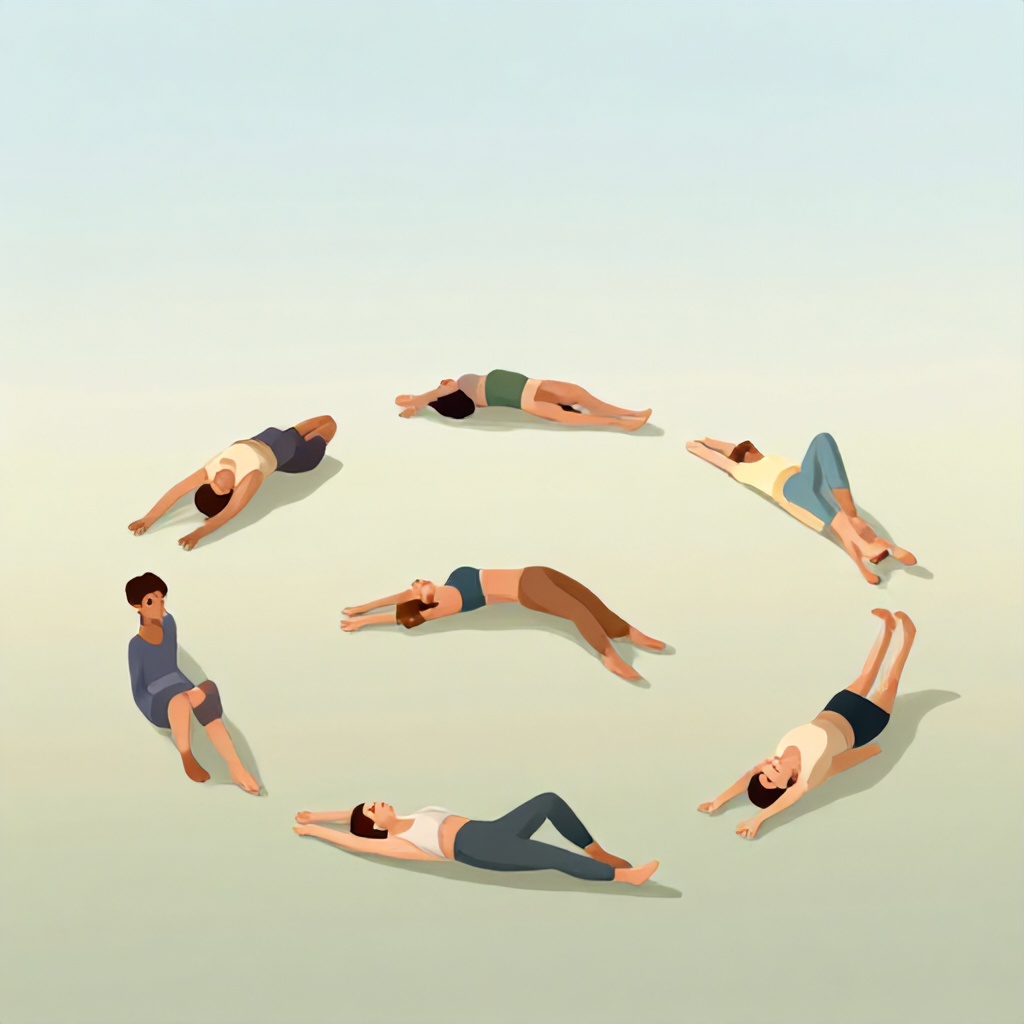
Integrating specific yoga poses into your daily routine offers a powerful, accessible way to significantly reduce stress and promote deep relaxation. This practice, rooted in ancient traditions, provides a holistic approach to calming the nervous system, easing mental tension, and fostering a profound sense of peace within the body and mind.
Understanding Stress and Yoga’s Role
Stress is an unavoidable part of modern life, manifesting in countless ways from tight shoulders and restless sleep to anxious thoughts and irritability. When left unmanaged, chronic stress can have detrimental effects on both our physical and mental well-being, impacting everything from digestion to immune function. Finding effective coping mechanisms is not just beneficial; it’s essential for a healthy, balanced life.
How Stress Impacts Us
Our bodies are wired with a “fight or flight” response, a primal mechanism designed to protect us from immediate danger. While incredibly useful in acute situations, this system often gets triggered by everyday stressors like deadlines, traffic, or even social media. Constant activation of this response leads to elevated cortisol levels, increased heart rate, and muscle tension, keeping us in a state of hyper-alertness that drains our energy and resilience.
The Mind-Body Connection in Yoga
Yoga, through its unique combination of physical exercises, breath control, and mindfulness, directly addresses the physiological and psychological symptoms of stress. It creates a bridge between the mind and body, allowing you to consciously influence your internal state. The asanas, or physical poses, release stored tension in the muscles, while focused breathing techniques (pranayama) activate the parasympathetic nervous system, signaling the body to relax and restore. This deep connection cultivates body awareness, helping you recognize and respond to early signs of stress before they escalate.
Designing Your Stress-Relief Yoga Infographic
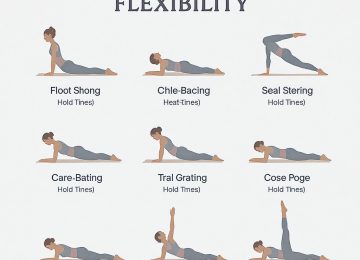
An instructional infographic serves as an excellent visual tool for anyone looking to incorporate yoga for stress relief. Its visual nature makes complex sequences easy to understand and follow, providing a quick reference for a calming practice. A well-designed infographic can empower individuals to take charge of their well-being, offering clear, actionable steps towards greater tranquility.
Why an Infographic Works
Visual learning is incredibly effective. An infographic distills essential information into bite-sized, digestible chunks, making it less intimidating than a lengthy text. For yoga, where proper form and sequence are important, visuals can convey instructions far more efficiently than words alone. It’s perfect for a quick check before or during a yoga flow, ensuring you remember the key aspects of each pose.
Essential Elements of a Helpful Infographic
A truly useful yoga infographic for stress relief should prioritize clarity and simplicity. Opt for a minimalist design with a clean background to reduce visual clutter, allowing the focus to remain on the poses themselves. Each pose should be depicted with clear illustrations or photographs, ideally showing someone in activewear demonstrating the correct alignment. Include the pose name, a brief description of its benefits for stress relief, and simple, step-by-step instructions. Consider color-coding sections or using icons to make it even easier to skim and understand. The goal is educational content that is immediately actionable.
Key Yoga Poses for Calming the Mind and Body
Certain yoga poses are particularly effective at soothing the nervous system, releasing tension, and promoting a sense of inner calm. These relaxing movements can be strung together to form a gentle yoga flow or practiced individually whenever you feel the need to de-stress. They are foundational elements of therapeutic yoga and wellness practices.
Child’s Pose (Balasana)
This gentle resting pose is a fundamental part of many hatha yoga and vinyasa flow sequences. It offers immediate comfort and a sense of grounding, making it an excellent starting point for stress relief. Child’s Pose gently stretches the hips, thighs, and ankles while calming the brain and helping to alleviate stress and fatigue. It encourages introspection and a release of tension in the back and neck.
- Start on your hands and knees, big toes touching, knees wide apart (or together for a deeper back stretch).
- Sink your hips back towards your heels.
- Extend your arms forward with palms down, or rest them alongside your body with palms facing up.
- Rest your forehead on the mat, allowing your shoulders to soften.
- Breathe deeply, feeling your belly press against your thighs with each inhale.
- Hold for several breaths, or as long as needed.
Downward-Facing Dog (Adho Mukha Svanasana)
A cornerstone of yoga practice, Downward-Facing Dog is an invigorating yet calming pose that stretches the entire body. It lengthens the spine, strengthens the arms and legs, and can help to relieve headaches, insomnia, and fatigue. The inversion aspect of the pose gently reverses blood flow, which can be very soothing for the nervous system and is a fantastic way to build both flexibility and strength building.
- Begin on your hands and knees, wrists under shoulders, knees under hips.
- Spread your fingers wide, pressing firmly through your palms.
- Tuck your toes and lift your hips up and back, forming an inverted V-shape with your body.
- Straighten your arms and legs as much as comfortable, keeping a slight bend in the knees if your hamstrings are tight.
- Let your head hang freely, gaze towards your navel or thighs.
- Press your heels towards the mat (they don’t have to touch).
- Hold for 5-10 breaths.
Cat-Cow Pose (Marjaryasana-Bitilasana)
This flowing movement sequence gently warms up the spine and connects breath with movement, making it a perfect active meditation. Cat-Cow improves spinal flexibility and can relieve back pain, while the rhythmic motion soothes the mind. It’s a wonderful way to release tension held in the back and shoulders, promoting body awareness and gentle movement.
- Start on your hands and knees, wrists under shoulders, knees under hips.
- As you inhale, drop your belly towards the mat, lift your chest and tailbone (Cow Pose).
- As you exhale, round your spine towards the ceiling, tuck your chin to your chest (Cat Pose).
- Flow between these two poses for 5-10 cycles, coordinating each movement with your breath.
Puppy Pose (Uttana Shishosana)
Puppy Pose is a beautiful heart opener that gently stretches the spine and shoulders. It is less intense than Downward-Facing Dog but offers similar benefits for lengthening the back and calming the mind. This pose can help to alleviate chronic stress and tension in the upper back, making it a valuable addition to any relaxing movements sequence.
- Begin on your hands and knees, hips directly over your knees.
- Walk your hands forward, keeping your hips stacked over your knees.
- Lower your chest towards the mat, resting your forehead gently down.
- Keep your arms active, lifting your elbows slightly off the floor.
- Feel the gentle stretch in your spine and shoulders.
- Hold for 5-8 breaths.
Triangle Pose (Trikonasana)
Triangle Pose is a standing pose that grounds and energizes simultaneously. It stretches the hips, groins, hamstrings, and calves, strengthens the legs, and opens the chest and shoulders. This pose can help relieve backache, especially when practiced with proper alignment, and stimulates the abdominal organs. It promotes balance and stability, which can be very centering for a stressed mind.
- Stand with your feet wide apart, about 3-4 feet. Turn your right foot out 90 degrees, left foot slightly in.
- Extend your arms parallel to the floor, palms down.
- Reach forward with your right hand, extending your torso over your right leg.
- Lower your right hand to your shin, ankle, or a block outside your right foot.
- Extend your left arm straight up towards the ceiling, gazing at your left thumb or straight ahead.
- Keep both legs strong and engaged, maintaining a long spine.
- Hold for 5 breaths, then repeat on the other side.
Legs-Up-The-Wall Pose (Viparita Karani)
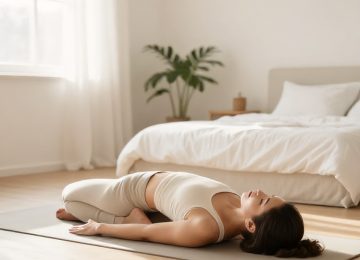
This restorative pose is incredibly calming and rejuvenating. Legs-Up-The-Wall helps to alleviate fatigue, mild backache, and headaches. It gently stretches the hamstrings and can be very beneficial for easing anxiety and promoting restful sleep. It’s one of the most effective asanas for winding down at the end of a long day.
- Sit with one hip against a wall.
- Swing your legs up the wall as you lie back, so your torso is perpendicular to the wall and your legs are resting straight up.
- Adjust your distance from the wall so your tailbone is comfortable.
- Rest your arms out to the sides, palms up, or place one hand on your belly and one on your heart.
- Allow your body to relax completely.
- Stay for 5-15 minutes, breathing naturally.
Corpse Pose (Savasana)
Often considered the most challenging yet most important yoga pose, Savasana is a pose of complete relaxation. It allows the body to absorb the benefits of the practice and integrates the physical and mental work. This pose is essential for deep stress relief, promoting mental quietude and physical restoration. It’s the ultimate calming technique.
- Lie flat on your back, legs extended, feet falling open naturally.
- Arms resting alongside your body, palms facing up, slightly away from your torso.
- Close your eyes and allow your body to become heavy, sinking into the mat.
- Release any tension in your face, jaw, and shoulders.
- Breathe naturally, observing the rise and fall of your abdomen.
- Remain still and quiet for 5-10 minutes.
Creating Your Own Relaxing Yoga Flow
While an infographic provides a great template, the true power of yoga for stress relief comes from personalizing your practice. Building a short, effective yoga flow that suits your body and your time constraints can make a significant difference in your daily well-being. Think of it as a guided practice tailored just for you.
Structuring a Short Sequence
A simple stress-relief sequence can be as short as 10-15 minutes. Start with gentle warm-up movements like Cat-Cow to prepare the spine. Move into some standing poses like Downward-Facing Dog or Triangle Pose to build a little warmth and strength. Then, transition to floor-based, more restorative poses such as Puppy Pose or Child’s Pose. Always conclude with Legs-Up-The-Wall or Corpse Pose for deep relaxation. The key is to create a sense of flow, moving mindfully from one pose to the next.
Importance of Breath
The breath is the anchor of your yoga practice, especially when seeking stress relief. Conscious, deep breathing (pranayama) directly influences your nervous system, slowing your heart rate and calming your mind. Focus on lengthening both your inhales and exhales. Try a simple technique like “box breathing” (inhale for four, hold for four, exhale for four, hold for four) during resting poses to deepen your relaxation. This attention to breath is a core component of therapeutic yoga.
Listen to Your Body
Yoga is not about pushing yourself into extreme positions. It’s about meeting your body where it is each day. If a pose feels uncomfortable or painful, ease out of it or modify it. Use props like blankets, blocks, or cushions to support your body. For example, a folded blanket under the knees in Child’s Pose can provide extra comfort. Honoring your body’s limits is a vital aspect of a sustainable and beneficial practice, fostering true body awareness.
Beyond the Poses: Integrating Mindfulness
Yoga is more than just physical exercises; it’s a pathway to mindfulness. The physical practice prepares the body and mind for deeper states of awareness and presence. Integrating mindfulness into your yoga and daily life enhances the stress-relieving benefits exponentially, extending the calming effects beyond the mat.
Mindfulness in Yoga
Mindfulness in yoga means paying attention to the present moment without judgment. It involves noticing the sensations in your body, the rhythm of your breath, and the thoughts that arise in your mind, without getting carried away by them. This practice of observation helps to create a space between you and your reactions, allowing you to respond to stress more thoughtfully rather than react impulsively. It cultivates a deeper sense of body awareness and connection.
Brief Meditation Techniques
Even a few minutes of focused meditation can significantly reduce stress. After your yoga flow, or even independently, sit comfortably and close your eyes. Focus on your breath, feeling each inhale and exhale. When your mind wanders, gently guide it back to your breath. There are many guided practice options available online if you prefer a little assistance. These calming techniques teach your mind to be less reactive and more present, building mental resilience.
Connecting Yoga to Daily Life
The principles learned on the yoga mat can be applied to everyday situations. When you feel stress rising, take a moment to pause, notice your breath, and observe your physical sensations. This simple act of mindful awareness can prevent the stress response from taking over. Integrating these wellness practices into your daily routine transforms yoga from an occasional activity into a lifestyle of sustained calm and presence.
Making Yoga a Regular Practice for Lasting Calm
Consistency is the true key to unlocking yoga’s profound benefits for stress relief and relaxation. A sporadic practice will offer temporary relief, but a regular commitment builds resilience, deepens your connection to self, and creates lasting changes in your ability to manage life’s challenges. Think of it as an investment in your long-term mental and physical health.
Consistency is Key
Even short, regular sessions are more effective than infrequent long ones. Aim for 10-15 minutes of yoga three to five times a week. This consistency allows your body and mind to adapt, making the poses feel more natural and the relaxation more accessible. Over time, you’ll notice improved flexibility, increased strength, and a greater sense of calm that extends throughout your day, even when you’re not on the mat. This consistent engagement with asanas and mindful movement is what truly makes a difference.
Finding Your Time and Space
To establish a regular yoga practice, find a time that works best for you and create a dedicated space, however small. This could be first thing in the morning to set a calm tone for the day, or in the evening to unwind before bed. A quiet corner in your home, free from distractions, can become your personal sanctuary for peace. Even a simple mat on the floor with a clean background can be enough. Making the practice accessible and convenient increases the likelihood that you’ll stick with it.
The Long-Term Benefits
Committing to yoga for stress relief yields cumulative benefits. Beyond immediate relaxation, you’ll likely experience improved sleep, enhanced mood, better focus, and a stronger immune system. Regular practice cultivates emotional regulation and a greater capacity for joy and contentment. This holistic approach to well-being, often referred to as therapeutic yoga, empowers you to navigate life’s complexities with greater ease and a profound sense of inner peace. It’s a journey towards a more balanced and harmonious existence, built on the foundation of self-care and mindful movement.