Building a Sustainable Daily Fitness Routine
Consistency beats intensity every single time you step onto your living room floor. A structured home workout plan removes the decision fatigue that often kills motivation before a single movement begins. By following a set rhythm, you stop guessing what to do and start focusing on the actual work. This seven-day cycle balances muscle building, cardiovascular health, and necessary recovery to keep your body moving without leading to burnout.
The Weekly Framework
This home exercise program relies on a mix of bodyweight exercises and intentional rest. You do not need a gym membership or expensive equipment to see results. The goal is to establish a habit of physical activity that integrates into your existing schedule.
- Monday: Full Body Strength
- Tuesday: Active Recovery and Mobility
- Wednesday: Lower Body Focus
- Thursday: Core and Stability
- Friday: Upper Body Strength
- Saturday: Cardiovascular Endurance
- Sunday: Full Rest and Reset
Monday: Full Body Strength
Start your week with compound movements that engage multiple muscle groups. These exercises provide the most efficiency for your time investment. Perform three sets of each movement with 60 seconds of rest between rounds.
- Bodyweight Squats: 15 repetitions. Keep your heels planted and your chest upright.
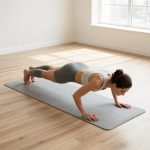
- Push-ups: 10 to 12 repetitions. Lower your chest until it is inches from the floor.
- Reverse Lunges: 10 repetitions per leg. Step back with control to protect your knees.
- Plank: Hold for 45 seconds. Keep your spine neutral and your glutes engaged.
Tuesday: Active Recovery and Mobility
Rest does not mean sitting on the couch all day. Active recovery keeps your joints lubricated and improves your range of motion for the coming days. Dedicate 20 minutes to gentle movement.
- Cat-Cow stretch: 2 minutes to wake up the spine.
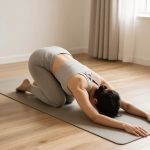
- Child’s Pose: 2 minutes to open the hips and lower back.
- Brisk walking: 15 minutes outside or around the house.
- Neck and shoulder circles: 1 minute to release tension from desk work.
Wednesday: Lower Body Focus
Your legs contain the largest muscle groups in your body. Training them properly increases your metabolic rate and builds functional strength for daily life. Focus on controlled tempo during each repetition.
- Glute Bridges: 20 repetitions. Squeeze at the top of the movement.
- Lateral Lunges: 10 repetitions per side. Focus on shifting your weight into the working heel.
- Calf Raises: 20 repetitions. Use a wall for balance if necessary.
- Wall Sit: Hold for 40 seconds. Keep your thighs parallel to the ground.
Thursday: Core and Stability
A strong core acts as the foundation for every other movement you perform. This session targets the abdominals, obliques, and lower back muscles to improve your posture and athletic performance.
- Dead Bug: 12 repetitions per side. Press your lower back firmly into the floor.
- Bird-Dog: 10 repetitions per side. Keep your hips square to the floor.
- Side Plank: 30 seconds per side. Lift your hips high to engage the obliques.
- Mountain Climbers: 45 seconds of steady pace. Maintain a flat back throughout.
Friday: Upper Body Strength
Focus on your chest, back, and arms to build pushing and pulling strength. If you find standard push-ups too difficult, drop to your knees to maintain proper form. Quality of movement always takes priority over repetition counts.
- Pike Push-ups: 8 repetitions. This variation targets your shoulders.
- Superman: 15 repetitions. Lift your chest and legs simultaneously to strengthen the posterior chain.
- Tricep Dips: 10 repetitions using a sturdy chair or the edge of a sofa.
- Arm Circles: 30 seconds forward and 30 seconds backward to finish the session.
Saturday: Cardiovascular Endurance
Cardio improves your heart health and stamina. You can choose any activity that elevates your heart rate for 30 minutes. This is the time to get sweaty and push your limits.
- High Knees: 30 seconds on, 30 seconds off for 10 rounds.
- Jumping Jacks: 45 seconds on, 15 seconds off for 10 rounds.
- Burpees: 10 repetitions followed by 1 minute of rest. Repeat 5 times.
- Shadow Boxing: 3 minutes of continuous movement. Rest for 1 minute. Repeat 4 times.
Sunday: Full Rest and Reset
Sunday is for physical and mental recovery. Your muscles repair and grow during periods of rest, not during the workout itself. Avoid strenuous activity today. Focus on hydration, sleep, and preparing your environment for the next week.
Establishing Your Fitness Regimen
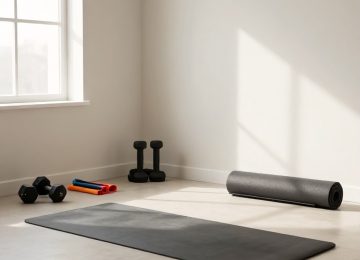
Success in any fitness regimen depends on the environment you create. Lay out your workout clothes the night before. Clear a specific space in your home that is always ready for exercise. When the space is ready, the friction to start is significantly lower.
Tracking Progress
Keep a simple log of your repetitions and how you felt during the session. You do not need complex software. A physical notebook or a basic digital note works perfectly. Seeing your progress over four or eight weeks provides the feedback loop necessary to keep going when motivation wanes.
Managing Intensity
Listen to your body. If you feel sharp pain, stop immediately. Soreness is normal, but injury is not. Adjust the repetition counts based on your current fitness level. If a movement feels too easy, increase the tempo or decrease the rest periods. If it feels too hard, reduce the repetitions and focus on perfecting your technique.
The Role of Consistency
Consistency is the secret to long-term health. A mediocre workout done consistently will always outperform a perfect workout done once a month. If you miss a day, do not try to double up the next day. Simply resume the plan as scheduled. Life happens, and the ability to get back on track is what separates those who reach their goals from those who quit.
Sustainable Habits for Longevity
Physical conditioning is a lifelong pursuit. Avoid the trap of trying to change everything at once. Focus on mastering these seven days before worrying about advanced variations. As your strength increases, you can add weight or increase the duration of your sessions. Start where you are, use what you have, and do what you can.
Hydration plays a massive role in your performance. Drink water throughout the day, not just during your workout window. Proper sleep allows your nervous system to recover from the stress of exercise. If you are not sleeping well, your progress will stall regardless of how hard you work in the living room.
This structured workout plan provides the scaffolding for a healthier life. It removes the guesswork and provides a clear path forward. Stick to the schedule, track your small wins, and watch how your body responds over the coming months. Your health is a direct result of your daily habits, and now you have the plan to build better ones.